Ancestry · Iphexar · Midralis
Goblinoid
 Common
“I have spent forty years documenting what the Subjugation period destroyed and what it did not. I have documented seventeen distinct Goblinoid cultural traditions that were suppressed or destroyed during the period of subjugation. I have recovered fragments of four. The other thirteen I know only by the shape of their absence: the gaps in practice, the rituals that reference ceremonies nobody can describe anymore, the festivals that have no origin stories because the people who knew the origin stories did not survive to tell them. The Goblinoids did not lose their history. It was taken.”
— Eonlogos, Celosian ArchivistOverview
Goblins, Hobgoblins, and Bugbears are three distinct peoples. “Goblinoid” is the umbrella term institutions and outsiders use; within Goblinoid communities, you will hear “the Three Peoples” far more often. They share a common origin, a language base, and a history of exploitation that neither the Concordiax’s records nor the Auridian Union’s legal frameworks have fully reckoned with. That history is still arriving.
The Auridic Liberation Edict of the 4th Age formally ended state-sanctioned Goblinoid subjugation within Auridia and created legal personhood where before there had been legal property. What it did not create, and what continues to be negotiated community by community and institution by institution, is material equality, cultural recovery, or acknowledgment of what the Subjugation period actually was. The communities navigating the distance between legal recognition and any of those things are doing so without a map.
Physical Features
- Three peoples, markedly different in build: Goblins are smallest at 3’0”–4’0”, Hobgoblins run 5’6”–6’2”, and Bugbears are the largest at 6’0”–7’6”
- Elemental imprint from the Exodus is sometimes visible as a slight coloration in the eyes, drifting toward the dominant imprint’s hue; Goblinoid communities read this immediately and most others miss it entirely
- Lifespan 50–80 years standard; rarely reaching 90
What a Short Life Means
Goblinoid lifespan is one of the shortest of any mortal race. Longer-lived races often misread this as impulsiveness or inability to plan. The truth is arithmetic: a Goblinoid who has watched five generations of their community live and die within their own lifetime has a different relationship to urgency than an Åel watching centuries accumulate. Goblinoid culture acts now because a short life demands a different relationship to time. What gets done gets done now. That is accurate prioritization.
The Three Peoples
The three subgroups share origin and language roots but differ significantly in physical profile, cultural tradition, historical experience of the Subjugation period, and their present-day institutional position. Each is detailed below.
The Three Peoples
Goblins
Urban, adaptable, densely networked
Goblins are the most numerous of the Three Peoples and the most urbanized. Their long concentration in cities during the Subjugation period produced, paradoxically, one of the most adaptable and resourceful cultures in Midralis: a people who learned how to find value in what others discarded and opportunity in what others overlooked. Goblin culture prizes ingenuity, lateral thinking, and the social intelligence of people who have had to build everything from the margins. Those same skills are increasingly in demand at the center now, a situation the community is still learning how to occupy without losing what made those skills worth having.
The reputation other races hold for Goblins: chaotic, untrustworthy, impulsive. It is a product of subjugation, not character. People locked out of formal contracts build informal ones. People locked out of institutions build personal networks. What looks like chaos from outside is frequently the Obligation Web operating at speed in an environment where speed was necessary. The specific Goblin vice is territorial pride so fierce it turns petty: inter-community rivalry between Goblin neighborhoods that have each built something from nothing and developed a genuine inability to share that ground with others who did the same thing nearby. The pride is earned. The pettiness is also real.
Physical Features
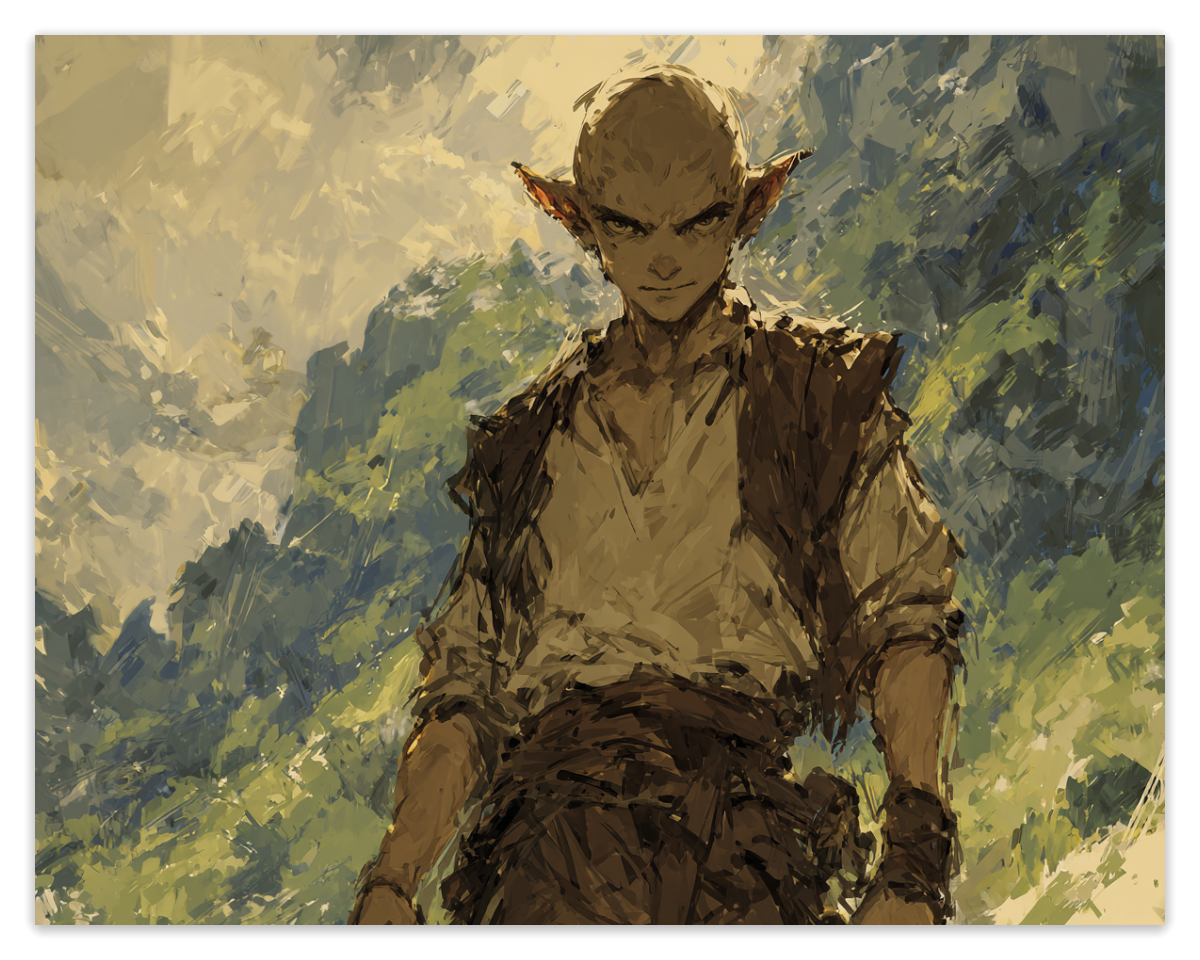
- Height 3’0”–4’0”; slight in build
- Sharp, mobile features; large ears that work as social signaling instruments, flattening, raising, and angling in ways non-Goblins rarely read correctly
- Skin in greens and yellows; deeper greens in forest populations, tawnier yellows in desert communities
- Large eyes adapted for low-light; in bright conditions they read as wide open and overly attentive to those unfamiliar with Goblin faces
- Goblins mature in their early teens, earlier than any other race in Midralis
The Three Peoples
Hobgoblins
Institutional, earned hierarchy, Kiriyan Steppes center
Hobgoblins are the most institutionally integrated of the Three Peoples, carrying advantages and costs their communities are still reckoning with. Their military discipline and capacity for organization allowed some communities to negotiate conditional autonomy during the Subjugation period: self-governance in exchange for martial service. The Kiriyan Steppes became the primary center of Hobgoblin culture, a region where their military traditions had enough space and distance from institutional oversight to develop on their own terms. Hobgoblin culture is built around structure: hierarchy that is earned rather than inherited, discipline that is practiced rather than demanded, and a form of collective honor that holds both the community together and the hierarchy accountable.
Hobgoblin hierarchy has elaborate internal mechanisms for challenge and earned advancement. In principle, anyone can challenge those above them through demonstrated competence and the community’s judgment. In practice, the challenge system requires challengers to meet standards the current hierarchy sets, on timelines the current hierarchy controls, before witnesses the hierarchy has cultivated across decades. The elder who has held position too long knows exactly what the challenge threshold looks like. They helped write it. The specific Hobgoblin vice is earned hierarchy becoming a mechanism for silencing dissent. The younger Hobgoblin who sees clearly that the current senior is wrong faces a choice between a formal challenge they may lose on procedural grounds and a deference the hierarchy reads as appropriate while the challenger experiences it as complicity.
Physical Features
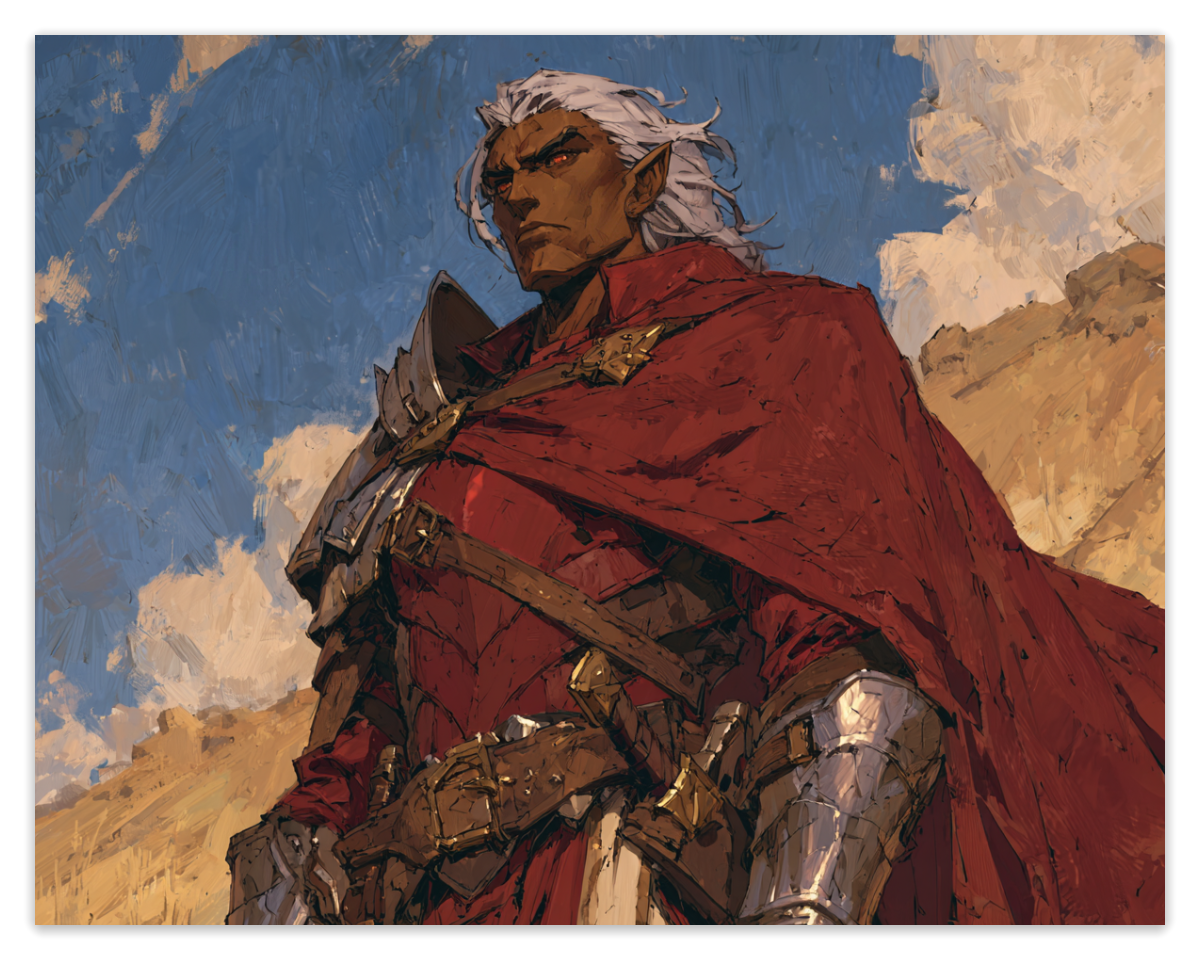
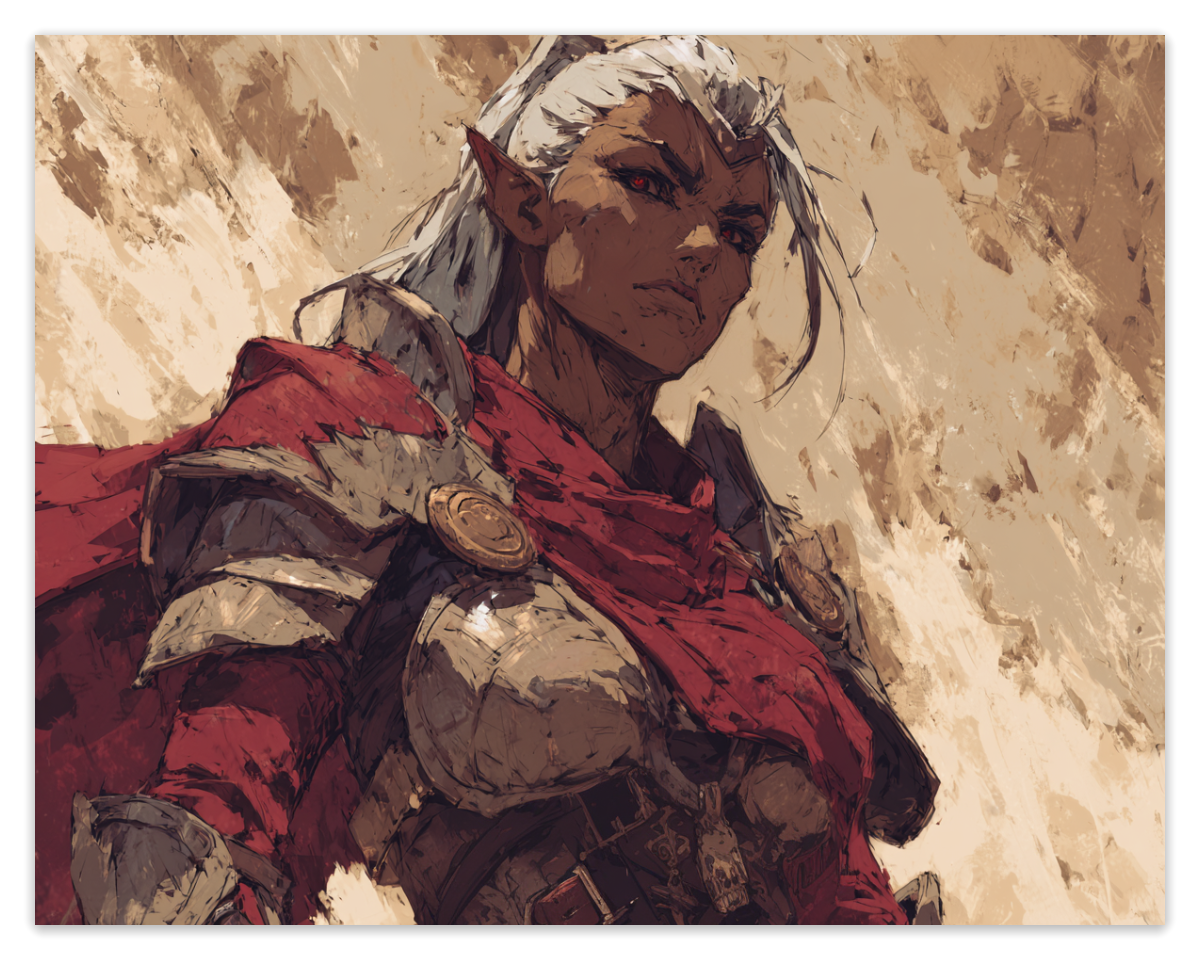
- Height 5’6”–6’2”; muscular, well-proportioned
- Harder, more angular features than Goblins; faces that read as controlled rather than expressive
- Skin deep reds and burnt oranges, occasionally into dark browns
- Hair typically white or silver; among the most consistent physical markers of the subgroup
- Eyes most commonly orange or deep red; the most powerful individuals develop a faint luminous quality in the irises
The Three Peoples
Bugbears
Spiritual, densely oral, most misrepresented
Bugbears are the most systematically misrepresented of the Three Peoples. The reputation attached to them, brutish, simple-minded, dangerous, was constructed by those who benefited from Bugbear labor and enforced by systems that made challenging it costly. The imposed reputation covers something else entirely. Bugbear culture is among the most deeply spiritual in Midralis. Bugbears maintain the strongest connection to ancestral memory and Echo practice of the three subgroups: a tradition of communing with the echoes of those who came before, treating the dead as present in a different register, understanding identity as something that accumulates across generations rather than beginning and ending with the individual.
Bugbear oral tradition is extraordinarily dense, compressed specifically because communities learned during the Subjugation period to hold enormous amounts of cultural memory in forms that could survive hostile conditions. The apparent simplicity other races read as limited intelligence is frequently the surface of something far more layered. The specific Bugbear vice is ancestral memory keepers’ authority becoming a mechanism for social control. The keeper who maintains that the ancestors said something specific about a current decision is providing irreplaceable guidance. The keeper who has noticed that their interpretation tends to align with what current leadership wants, and has not interrogated that alignment, is something different. Bugbear communities have no formal mechanism for distinguishing between the two cases. Both things are true, and communities know it.
Physical Features
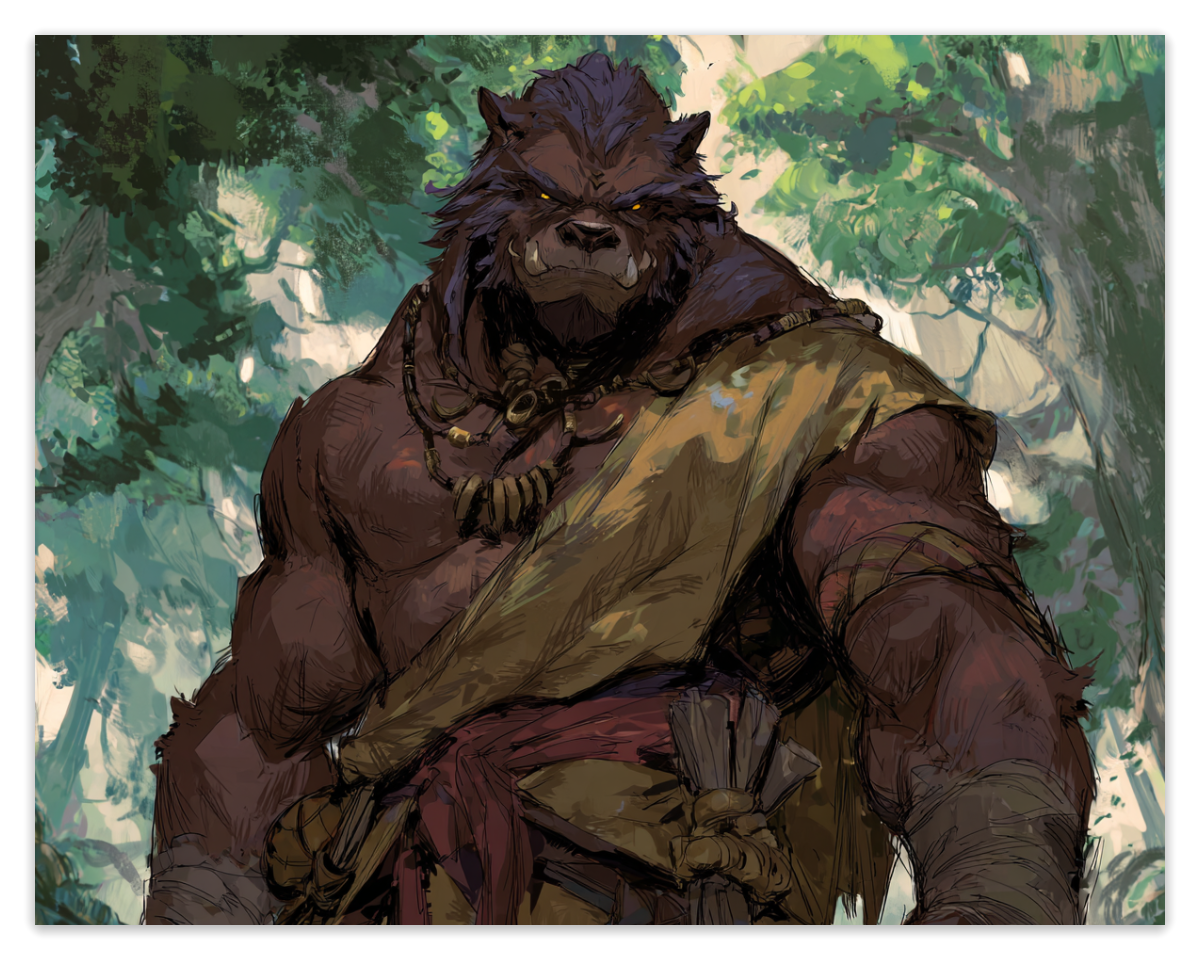
- Height 6’0”–7’6”; the largest of the Three Peoples by a considerable margin
- Powerfully built; broad and heavy features; significant body hair ranging from coarse dark brown to deep red, lighter in high-altitude populations
- Move quietly when they choose to, despite their size; for Bugbears, arriving quietly is understood as a choice, not a limitation
Origin & History
The Exodus from Veraldié
Goblinoids originated in Veraldié, the fey realm. Their oral traditions have always known this, though the full circumstances of how they left were not understood until much later. The common account across all three subgroups describes an Exodus: a time when Goblinoid communities in Veraldié were approached by powerful entities offering what they most needed: a way out. The land of Veraldié had grown difficult. The promises spoke of open territory, abundance, a world where Goblinoid peoples could build without the constraints and dangers of the realm they were leaving. They were guided through the Places of Power and into Midralis.
What they found was nothing like what they had been offered. Midralis was already occupied, already organized, already structured around peoples who had been there for centuries, with institutions and prejudices shaped accordingly. Goblinoids arrived into a world that had already decided what to do with them before they got there: extract what was useful and classify the rest. Who orchestrated the Exodus, and what they stood to gain, remains unknown. The oral tradition is clear that there was a deception. It cannot name the deceivers. That absence is its own kind of wound.
Transit Imprinting: The Elemental Signature
During the Exodus, different Goblinoid communities transited through different convergence points, each with its own elemental resonance, and that resonance burned a permanent signature into the Spira of those who passed through it. This imprinting is heritable: the descendants of those who transited through a Fire-resonant Place carry that signature generations later, regardless of where they subsequently live. Proximity to these sites reveals and amplifies what is already written; it cannot create what was never burned in.
Conservatory scholars have catalogued the mechanism and given it a name: ancestral Prismal conditioning. The Conservatory’s analysis captures the mechanism and misses the cultural weight the Places of Power carry in Goblinoid tradition. They are an origin story, an assertion of identity, a source of lineage pride, and the structuring principle around which Goblinoid communities organize marriage, political alignment, and questions of prestige.
The Subjugation Period
The period of systematic Goblinoid subjugation lasted from the early 2nd Age through the Auridic Liberation Edict of the 4th Age: a span of time encompassing more generations of Goblinoid life than most non-Goblinoid institutions have existed. The Three Peoples did not experience the Subjugation period in the same way. Those differences shaped what emerged.
Goblins bore the heaviest share of the burden: numerically the largest of the three peoples, most concentrated in urban labor contexts, most visible to the institutions and prejudices of Midralian society. Hobgoblins negotiated conditional autonomy in some regions, maintaining their own hierarchical structures in exchange for cooperation with whoever was in a position to demand it. That arrangement preserved cultural heritage while producing a class stratification that the post-Edict era has not dissolved. Bugbears were extracted for the most physically demanding labor. Their size and strength were reframed by those who benefited as evidence of brutishness, a constructed reputation that proved useful enough to those in power that it was maintained and spread until it became the assumed truth. The worst of it was the suppression of Bugbear spiritual practice.
Seventeen distinct cultural traditions did not survive the Subjugation period; they were never formally suppressed, simply never taught, because the people who carried them were not alive long enough to pass them on. What survived did so through the Obligation Web and through the compressed oral tradition that Bugbear communities developed specifically to hold cultural memory through hostile conditions.
The Obligation Web
The Obligation Web is the most important thing the Subjugation period did not manage to destroy. It survived because it was invisible to the institutions trying to destroy it: not a temple, not a written code, not a named organization, but a network of reciprocal obligations between families, communities, and lineages that functions at once as social safety net, governance mechanism, and memory-keeper.
The Obligation is not financial debt. It is an accounting of what is owed between people: obligations of labor, protection, hospitality, skill-sharing, and witness. When a family needs something, they do not pay for it first. They call on an obligation that exists between their lineage and another. The receiving family acknowledges the call and provides what is needed. The obligation transfers. These obligations accumulate across generations, are inherited by descendants, and are tracked through oral accounting that designated community elders maintain. A Goblin family arriving in a new city with nothing in their pockets arrives with something more durable: whatever obligations their lineage has established. If their great-grandmother once sheltered another community’s people for a winter, that obligation still runs. They call it. The other community provides. The obligation transfers. This is not charity. It is the accumulated social capital of generations, carried in memory rather than money, and substantially harder to steal than property.
The form varies across the Three Peoples. Goblin Obligation webs are the densest and most laterally connected: urban life under emergency conditions demanded networks that could activate across many families quickly. Hobgoblin Obligation networks are more formalized, with formal protocols for calling and acknowledging obligations that reflect the earned-hierarchy tradition. Bugbear Obligation networks are the oldest and most spiritually integrated, recognizing ancestral obligations, what is owed to the dead as well as the living, in ways the other subgroups acknowledge differently or not at all.
A Disputed Obligation
A Hobgoblin community in the Kiriyan Steppes holds a record claiming that a Goblin lineage owes three seasons of smith-labor, incurred when the Hobgoblin community sheltered Goblin refugees during the Subjugation period. The Goblin lineage’s elder acknowledges the shelter. She contests whether shelter given during a period when refusal would have dishonored the Hobgoblin community was an Obligation at all, or simply what decency required. The Hobgoblin elder says the record is the record. The Goblin elder says the record was written by people who had leverage and calls that a different thing from debt. Both elders are right about something. The obligation has not been called in forty years. It sits in the record. Everyone knows it is there.
Where It Goes Wrong
The Obligation Web is not a clean system. It developed under emergency conditions and carries the flaws of something built in a crisis. Obligations incurred under duress during the Subjugation period sometimes bind communities in ways the people now holding them did not choose and do not consider fair. The elder who maintains the oral record is the person whose interpretation governs. The elder who is wrong, or motivated by something other than accuracy, faces social pressure and reputation damage, but no formal corrective structure beyond community opinion. Community opinion can also be wrong.
Inter-subgroup obligations are the most politically charged. When a Hobgoblin community holds a historical obligation on a Goblin community incurred during a period when Hobgoblin conditional autonomy was experienced by Goblins as cooperation with their oppressors, the question of whether the obligation is legitimate is not merely an accounting dispute. It is a political argument about whether the period that created the obligation was legitimate enough for the obligation to hold. The Obligation Web survives because communities have accepted it as the framework. That acceptance is not unconditional.
Transit Imprint Culture
The elemental imprint every Goblinoid lineage carries from the Exodus runs deeper than biology. It is one of the primary organizing principles of Goblinoid social life, shaping marriage preference, political alignment, and social prestige in ways that cut across subgroup boundaries and produce some of Goblinoid society’s most charged inter-subgroup tensions.
Marriage and Imprint Compatibility
Within Goblinoid communities, marriage preference runs strongly toward imprint-compatible partners. A Fire-imprint family prefers to marry their children into Fire-imprint lineages where possible. Imprint-compatible marriages produce children who carry the full strength of both lineages’ imprint; cross-imprint marriages produce something more diluted, and the lineage feels that. The imprint is lineage identity. Marrying within it is maintaining the lineage’s character across generations.
Cross-imprint marriages are common and accepted, carrying real social meaning: a deliberate choice to merge two lineage traditions, typically driven by Obligation Web politics, practical necessity, or the calculation that the political alliance is worth the imprint dilution. The children of cross-imprint marriages occupy a defined social position, marked by both lineages and fully claimed by neither, often taking on roles that require cross-community navigation precisely because their lineage makes them unusually suited to it.
Imprint as Political Identity
Inter-community political alliances within Goblinoid society form as readily along imprint lines as along subgroup lines, sometimes more readily. A Fire-imprint Goblin urban quarter and a Fire-imprint Hobgoblin Steppe community may find natural alignment in political disputes that pit Fire-imprint communities against Earth-imprint communities, even across the subgroup divide. This imprint solidarity across subgroup lines sometimes yields to subgroup loyalty, but it is real and has produced some of the more surprising cross-subgroup political coalitions in post-Edict organizing.
Not all imprints carry equal social prestige. Fire and Earth carry the highest aggregate prestige within Goblinoid communities, reflecting how many communities passed through Fire- and Earth-resonant Places during the Exodus. The Bugbear ancestral tradition’s position is the most significant counter-claim: the ancestral memory keepers hold that all imprints are equally sacred because the Exodus itself is equally sacred, and that to rank imprints by prestige is to accept the framing of those who chose the routes, a framing that was imposed, not earned. This position has significant moral weight in inter-subgroup political contexts. In practice, the prestige differential operates in daily social interactions regardless, and the Bugbear communities who argue most vocally that imprint ranking is an imposed frame are sometimes doing so from a position of carrying imprints that rank below Fire and Earth. The argument is principled. It is also strategic. Both things are true, and the communities making it have been carrying both without apparent contradiction for a long time.
Ordinary Life
The Subjugation period and its aftermath form the political and historical context within which ordinary Goblinoid life proceeds, and it proceeds constantly. A Goblinoid household is a place where food is cooked, children are raised, elders are cared for, arguments happen over small things, and the Obligation Web’s daily demands are negotiated alongside everything else.
Childhood and Coming of Age
Goblinoid children grow up fast. Goblins reach full adulthood in their early teens, earlier than any other race in Midralis. Goblin communities treat early adulthood as real: a thirteen-year-old Goblin is expected to begin holding adult Obligation relationships, contributing labor that counts toward the web, and taking on responsibilities that longer-lived cultures would not yet extend. The warmth of Goblin community childhoods runs alongside this early seriousness, not against it. Children are real people, held to real standards.
Hobgoblin coming-of-age is formalized: a public assessment of martial and disciplinary competence, evaluated by senior community members, that results in a formal change of status. The assessment covers more than physical competence. It includes demonstrated understanding of the earned-hierarchy tradition, Obligation Web knowledge, and, in the most rigorous communities, a public accounting of the young Hobgoblin’s existing Obligation relationships and what they owe and what is owed to them. Failure at the assessment carries no shame on its own. Failure without preparation does.
Bugbear children are introduced to ancestral memory practice early. The entry point is the simplest imaginable: learning the names of the dead. Before a Bugbear child can manage complex Echo practice, they are taught to speak the names of their lineage’s significant ancestors, not as prayer or rote memorization, but as active acknowledgment that these individuals remain present in a different register. The child who can say twenty names correctly, with the right rhythm and breath pattern, has begun the practice. By the time a Bugbear reaches adulthood, the name-list has grown to include hundreds.
What Goblins Celebrate
Goblin celebrations are loud, dense, and organized around the same network logic that governs everything else in Goblin community life. The Obligation Web has a festival dimension: annual gatherings where outstanding obligations are publicly called and acknowledged, and where new ones are created through gift exchange and shared labor that Goblin festival tradition formalizes. These are the most joyful events in Goblin communal life, the moment when the web is most visible and most openly celebrated as the thing that keeps the community alive. The humor at Goblin festivals is pointed, quick, and frequently turns on a specific absurdity: a family that has owed a harvest-worth of labor for four generations because of a bet that has been declining to be called ever since. The story of the original bet, improved with each retelling, is itself part of the celebration.
What Hobgoblins Consider Shameful
Hobgoblin shame is organized around failure to meet stated standards, the actual failure to do what you said you would do, to be what you demonstrated you were, to maintain the discipline you claimed as your own. A Hobgoblin who loses a challenge fairly walks away with their standing intact. A Hobgoblin who loses a challenge they should have declined to enter, who overestimated their preparation or entered for reasons of pride rather than readiness, carries a weight the community recognizes and does not name. The weight is legible and real, and it fades when demonstrated competence addresses it. A Hobgoblin who challenges a position they are not prepared to hold, wins through luck, and then governs badly carries the deepest form of Hobgoblin shame: the shame of having taken something before they were ready and then proving it.
How Bugbears Mourn
Bugbear mourning is extended and communal in ways that outsiders who witness it sometimes find overwhelming. When a Bugbear dies, mourning belongs to the whole community. The community gathers, and the gathering continues in rotating shifts for a period that scales with how much the dead person held in memory: the more they carried, the longer the gathering. The grief is practical: the community needs to ensure that everything the dead person held in memory is either fully received by another keeper or formally acknowledged as temporarily lost, requiring future reconstruction. The mourning period is both grief and archival transfer, and the two functions cannot be separated without damaging both. Bugbear communities that have lost a keeper without adequate succession preparation enter a state described in other languages as something like mourning inside mourning: grief for the person layered over grief for the ancestors who are now, through the keeper’s loss, less present than they were.
Internal Tensions
Identity Fracture: Do the Three Peoples Constitute One Race?
The designation “Goblinoid” is politically functional and culturally contested. The three subgroups share origin, language roots, and elemental affinity heritage. Where they diverge is everywhere else: their historical experiences of the Subjugation period, the cultural heritage they lost or preserved, their current institutional standing, and what they want the future to look like.
Within Goblinoid political organizing, the question of unity versus distinctness is never fully settled. When unified action benefits all three subgroups, the Goblinoid umbrella serves a function. When the needs of one subgroup conflict with the interests or assumptions of another, the umbrella can flatten what it claims to contain. Bugbear communities in particular have experienced “Goblinoid unity” as a framework that sometimes centers Goblin and Hobgoblin concerns while treating Bugbear-specific issues as secondary. There is no resolution to this tension in the current era. It is a living argument within Goblinoid communities, not an answered question.
Class Stratification: The Differential Legacy
Hobgoblins emerged from the Subjugation period with more institutional capital than the other two subgroups. The autonomy Hobgoblin communities negotiated was real and hard-won, and the martial service that earned it carried genuine cost. But the outcome is a differential the Auridic Liberation Edict did not dissolve. Goblins and Bugbears entered the post-Edict era with less accumulated cultural heritage, less institutional standing, and less capacity to participate in the formal mechanisms through which the law was being made real.
This stratification produces friction within Goblinoid political spaces and is exploited by outside actors who prefer Goblinoid communities divided. It also produces Goblinoid leaders who are acutely aware of it and build cross-subgroup coalitions deliberately, because the costs of fracture outweigh the costs of imperfect solidarity.
Affinity Disposition: Skewed
Goblinoid elemental expression is shaped by the Places of Power through which their ancestors transited during the Exodus. Earth and Fire are dominant across the aggregate population, reflecting the two most commonly transited Place types. Individual communities may vary significantly: a lineage with a Fire-dominant transit imprint may show Fire distributions well above 20% within that community. This community-level variance is the most important caveat to reading the aggregate table: it understates the Prismal capacity of any individual Goblinoid community whose imprint lineage runs strong. Darkness and Light are both suppressed, consistent with an origin shaped by elemental rather than divine Prisma. Empyreal is vanishingly low.
This table reflects population-level Spira tendencies; individual and community variation can be substantial.
| Spiritual Expression | Distribution (%) |
|---|---|
| Nature | 9.5 |
| Wind | 8.0 |
| Anima | 7.5 |
| Mind | 7.0 |
| Fire | 10.5 |
| Metal | 6.5 |
| Earth | 11.0 |
| Aqua | 7.5 |
| Electricity | 7.0 |
| Ice | 7.0 |
| Thunder | 8.5 |
| Darkness | 4.0 |
| Light | 5.5 |
| Empyreal | 0.5 |
Modern-Day Emergence
The post-Edict era has left unanswered what Goblinoid life looks like when survival under subjugation is no longer the organizing principle. The legal framework changed in Auridia. The institutional disadvantage, the cultural losses, the prejudices embedded in non-Goblinoid communities: these change more slowly, unevenly, and in some places not at all.
The Auridic Liberation Edict covers Auridia and stops at the Azure Expanse. The Hino Federation of States operates under its own legal framework, which has not abolished slavery on the same terms or timeline. This creates a fault line running directly through Goblinoid communities divided across the Azure Expanse: Goblinoids in Auridia are formally free citizens; Goblinoids in Kyou are subject to legal structures that vary by Federation member state, some of which still permit forms of bound labor the Auridian Edict would not recognize as legitimate. The Edict drove the slave trade underground; it now routes through Azure Expanse passages, northern Grandal margins, and the thin administrative edges of the Kiriyan Steppes.
The post-Edict political landscape contains Goblinoid leaders, military figures, and community organizers who carry the weight of being among the first generations with the chance to build something of their own choosing. Some made deals with the institutions that once oppressed them. Some are building things that will outlast them. Some are failing publicly in ways their enemies use to argue the Edict was premature. None of them had a guide.
The relationship with Myûr communities is the most economically complex inter-racial dynamic Goblinoids deal with. Goblinoid labor has been most heavily integrated into Myûric institutional contexts, making the Myûric-Goblinoid exploitation record the most extensively documented of any. In the Kiriyan Steppes, Erdenezuun Myûric communities and Hobgoblin communities share contested terrain with a long history of friction: not a formal war, but a permanent low-intensity competition for resources, grazing rights, and trade routes. What both sides officially ignore is that Hobgoblin Obligation webs and Erdenezuun clan networks have, in documented cases, established cross-community obligations that hold the most stable arrangements in the region together.
The internal generational argument runs alongside the Forever Wars. The Kiriyan Steppes have been a three-front conflict zone for long enough that it has acquired a name: the Forever Wars of the Steppes. Three peoples compete there: none fully in control of the terrain, each with legitimate claims, each under different institutional pressures. Hobgoblin communities defend territory on which they built their cultural identity. Erdenezuun Myûric clans treat the same routes as ancestral trade corridors. Ork populations from the south, their own displacement and marginalization pushing them into the same contested space, are the third front. The intensity varies: some areas are genuinely lethal, some are low-grade friction sustained mostly by memory and economic pressure, and some have achieved arrangements that hold as long as nobody tests them. The Concordiax has classified the situation as a local matter. The people living in it have found the classification meaningless.
The relationship between Hobgoblin communities and Ork populations in this space is among the most consistently misrepresented in the broader historical record. What gets written is racial animosity. What actually operates is competition between two marginalized peoples for recognition and territory in a space that more powerful actors find convenient to keep contested. Individual alliances exist when practical necessity outweighs inherited grievance. They are not rare. They are also not the dominant pattern. The dominant pattern is unresolved grievance on both sides and very little institutional interest in resolution, which suits the interested parties just fine.
Within Goblinoid communities, the sharpest political argument of the current era is not about the Edict or what it failed to provide. It is about what comes next and who gets to define it. A generation has come of age after the Edict with no personal memory of the Subjugation period, impatient with political frameworks organized around what was lost. They know the history in detail; the Obligation Web and oral tradition have made certain of that. What they are pushing against is the assumption that history should remain the primary lens for Goblinoid identity and politics. The generation that lived it, or was raised by those who did, does not always know how to hold this impatience without flinching. The argument is ongoing and unresolved. It is, from the outside, recognizably the argument of a people who might survive long enough to have a future worth disagreeing about.

A Note on Goblinoids
The Obligation Web has no term for a lineage with no outstanding obligations. The closest construction translates as something like “a lineage that has not yet needed anything, or has not yet given anything, or has not been paying attention.” It is not used as a compliment.
Language Notes
Gom is the shared language across all three subgroups, also called Goblin Tongue in older scholarly literature. The Conservatory’s documentation has consistently underestimated both the depth and the consequences of its regional and subgroup dialectal variation.
The Shared Base and Its Limits
Goblin and Hobgoblin dialects of Gom have diverged enough that communication between speakers requires effort and goodwill. The divergence runs through grammar and register rather than sound. Gom encodes social hierarchy and Obligation Web status in ways Diplomata cannot preserve: the grammatical register in which you address someone signals your assessment of the Obligation relationship between your lineage and theirs, and getting the register wrong carries weight. It either overestimates the claim you are making on someone or underestimates it, and both errors carry social weight. A non-Goblinoid speaker who has learned the common-base vocabulary has the words without the fluency, speaking a language stripped of most of its social content. Outsiders sometimes experience this as Goblinoids being unusually patient with their poor Gom. What actually happens: Goblinoids adjust for a speaker who, by virtue of standing outside their community, operates entirely outside the Obligation register.
The Obligation Register
The Gom vocabulary for Obligation relationships is the most developed and culturally loaded part of the language. Gom has distinct terms for obligations incurred under duress versus obligations incurred freely; for obligations that have been called and not yet fulfilled versus obligations being held in reserve; for obligations that have passed through more than one lineage transition versus obligations that remain between the original parties. The question of which term applies in a given circumstance is not always settled, and the argument about which term applies is frequently the whole argument. Diplomata translation of Gom Obligation vocabulary produces consistent losses that Goblinoid communities dealing with Concordiax translators have stopped expecting to fix. They have instead developed specific Gom formulations designed to be misunderstood in particular ways, losing the Obligation register content while conveying the practical intent correctly, which functions adequately for commercial and legal purposes, and Goblinoid speakers refer to it privately as “speaking Diplomata while speaking Gom.”
What Gets Left Untranslated
Goblinoid speakers in mixed inter-subgroup or inter-racial contexts maintain the grammatical shell of Gom or Diplomata while withholding the social register content underneath it, or performing it without meaning it. From outside, the performance of goodwill is indistinguishable from actual goodwill: the same words, the same register, the same apparent legibility. What is absent is the Obligation Web encoding underneath. A Hobgoblin leader who greets a Goblin delegation in technically correct Gom but in the neutral register, rather than the Obligation-weight register, is saying something specific about where the delegation stands in the obligation relationship between the two communities. The delegation receives this information. They may respond in kind or they may respond by shifting register themselves. The non-Goblinoid observer in the room hears a cordial greeting and a cordial response and understands nothing of what has passed.
Bugbear Ancestral Registers
Bugbear speech carries ancestral registers preserved from the pre-Exodus period that other subgroups may not recognize and that outsiders almost never do. These registers contain terminology preserved specifically because it resisted translation into the languages of those who subjugated Bugbear communities: the invisibility of the ancestral register was deliberate, not accidental, and Bugbear communities developed the practice of maintaining them in forms that sounded, to outsiders, like rhythmically unusual Gom rather than a distinct linguistic layer. The ancestral registers are used in mourning practice, in the speaking of names during Echo practice, and in the community decision-making practices that invoke ancestral authority. None of it is made available to outsiders. Bugbear communities have not been in a hurry to change this.
Systems & Campaigns
- Pathfinder 2e Goblin / Hobgoblin Ancestry
- Draw Steel TBD
- Daggerheart Goblin Heritage
- D&D 5e+ Goblin / Hobgoblin / Bugbear Race
- Realmfall Saga Active