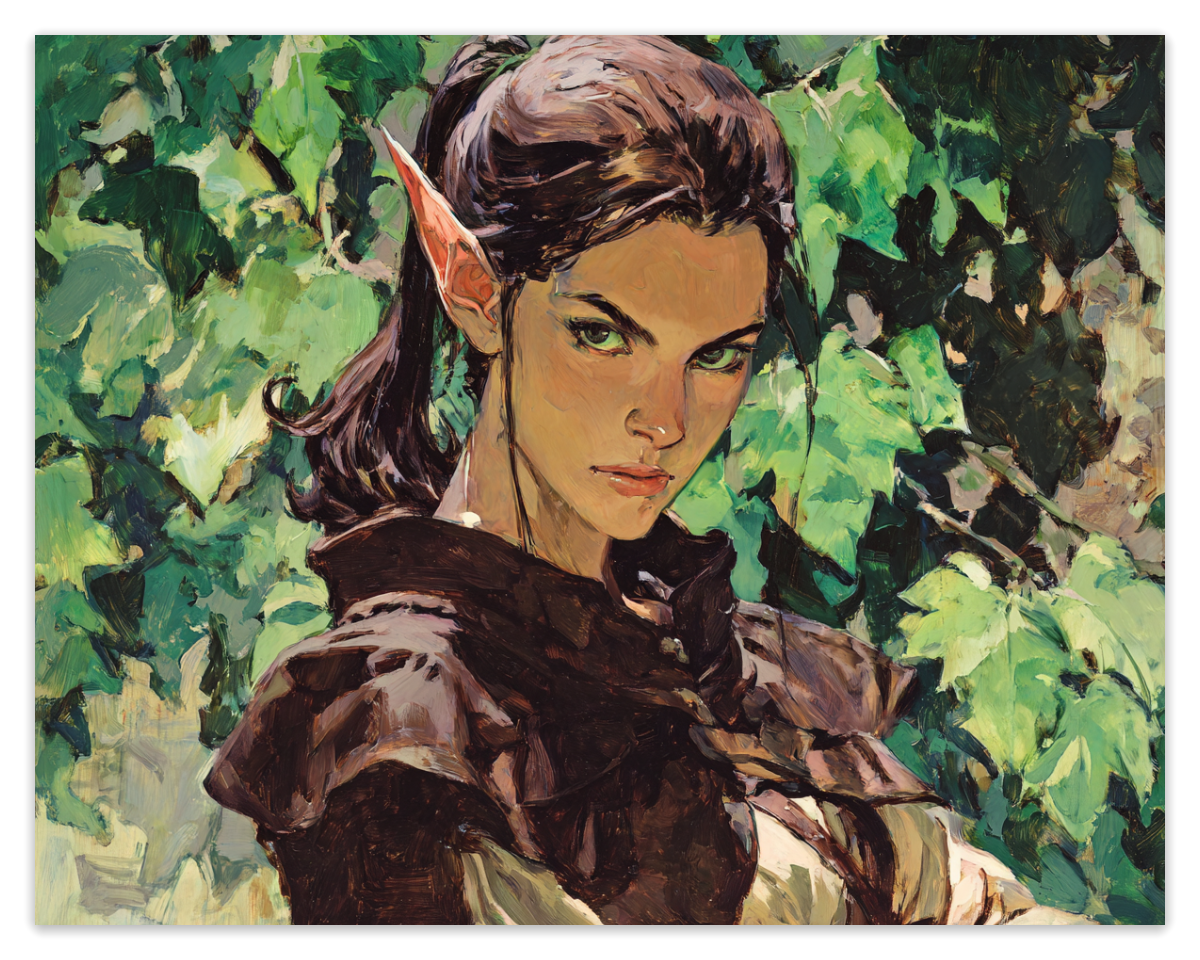
Ancestry · Iphexar · Midralis
Åel
 Rare
Rare
“One does not study the Åel without eventually concluding that longevity is less a gift than a specific kind of wound. They remember what Midralis was. They have watched what it became. Something accumulated in the space between those two things, and the Åel carry it in a way that scholars call wisdom and the Åel themselves call caution. I have spent enough time among them to suspect they are describing the same weight.”
— Eonlogos, Celosian ArchivistOverview
The Åel of Midralis are the descendants of beings that were never mortal in any conventional sense, living mortal lives in a world constitutionally less saturated with divine energy than the one their ancestors came from. The Åelvarin who stayed in Veraldié are still there. The Åels who crossed into Midralis have been carrying that diminishment ever since, long before the New Age began its count.
The Åelvarin, from whom all Åels descend, are still in Veraldié. Ancient, unchanged, aware of their Midralis-bound descendants in the way very old things are aware of young things that share their origin. The Åels here are their distant children, shaped by long ages of adaptation to a world much thinner than home. Outside observers who see Åel longevity and Prismal depth tend to conclude they are looking at a people in their prime. They are looking at a people who remember something better than what currently exists, and who have been deciding what to do about it for longer than most civilizations have existed.
What they decided, largely, was not to spend themselves. A species that cannot replace its losses at the rate mortal races can does not risk its remaining individuals on institutional entanglements that produce casualties. The Concordiax classifies Åel Prismal practice. It does not fully understand it. That gap has suited the Åel well.
Origin & History
A People From Elsewhere
Veraldié is one of three realms that scholarship associates with the shattering of what older traditions call a divine source, an act of cosmological violence before the New Age that produced Midralis, Veraldié, and Xum as its three residues. Midralis emerged as the neutral material world. Xum took shape from corrupted energy. Veraldié was shaped by uncorrupted divine essence, and it retains that character: a realm where Prisma is not a current running through things but the substance of things, where the Åelvarin formed not by evolution but by direct expression of what the realm is made of.
This is the scholarly framework. How accurately its language of “shattering” and “residue” describes what actually happened, rather than approximating something mortal scholarship cannot fully reach, is genuinely contested. The Åels do not often correct the framework itself. They tend to correct the certainty with which it is delivered.
The Migration
At some point before the Elemental Cataclysm, a number of Åelvarin crossed from Veraldié into Midralis. What survives of their reasons is not enough to establish a single account. What survives suggests it happened faster than Åelvarin communities typically move.
The scholarly theories are three, and none has displaced the others. The first holds that something happened within Veraldié: a rupture, a conflict between factions of the Åelvarin themselves, something serious enough that departure was preferable to remaining. The haste of the crossing and the fact that no unified community structure survived the migration intact both support this reading. The second theory frames the migration as foresight rather than flight: a group of Åelvarin who perceived that Veraldié's conditions were shifting in ways that would eventually require adaptation, and chose to adapt proactively into Midralis rather than later under pressure. The third, held by very few, suggests the migration was not entirely voluntary: that something in Midralis called them, whether through Prismal phenomena, divine directive, or a mechanism that leaves no trace in any surviving record. Åelian scholars privately consider the third theory the most interesting and publicly decline to endorse it.
Those who made the crossing began calling themselves Åels, distinguishing themselves from the Åelvarin who remained. Millennia of adaptation followed: distinct cultures forming, relationships to local Prisma Currents developing, the gradual divergence into the five subraces that exist today.
The Elemental Cataclysm
The Cataclysm did not merely test Åel resilience. It ended a version of the Åel world that has not been rebuilt. Their cities and established communities were destroyed. The Cataclysm's Prismal chaos was especially lethal to a species whose deep attunement left them more exposed to Current disruption than shorter-lived, less Prisma-sensitive races. The exact losses were not documented because no institutional infrastructure survived intact to document them.
What the surviving Åels did in the aftermath was map. Their Prismal relationship, which had contributed to the losses, also positioned them to read the post-Cataclysm Current configurations faster than any other species. Within the first centuries of the New Age, Åel practitioners had assembled Prismal maps of Neo Midralis that no other community had yet produced in comparable depth. This gave them institutional standing in the early New Age that they subsequently chose, largely, not to leverage toward political authority. Whether this was wisdom or trauma expressing itself as wisdom is a question some Åel scholars ask privately.
Skepticism and Withdrawal
The Modern Gods emerged from mortal belief in the New Age's first centuries, shaped by what the surviving populations needed. The Åel's relationship to them was complicated from the beginning. The Åel remember what divine presence looked like before the Cataclysm, and they carry a calibrated sense of what the Modern Gods are and what they are not that most mortal races lack the historical reference point to develop. The Modern Gods are real. Their record on the questions that matter most, the Cataclysm chief among them, does not invite unconditional trust.
The sharpest Åel critique is not theological. It is operational. The divine structures of the New Age are maintained by forces whose interests do not demonstrably align with mortal wellbeing, and the Cataclysm represents a failure that those structures have not adequately accounted for. This conviction produces the most withdrawn Åel communities, whose wards rank among the most sophisticated in Midralis, and whose engagement with outside institutions is measured out like a rationed resource. It also produces, in less insular Åel individuals, a quality of attention to institutional claims that other ancestries sometimes mistake for cynicism. It is not cynicism. It is the skepticism of people who have seen what happens when too much is trusted too quickly.
This skepticism does not produce a single Åel position. The Solhari negotiate with the Concordiax; the Dravar do not acknowledge it exists in any meaningful sense; the Serath hold a middle stance they rarely articulate clearly, even to each other. On the Modern Gods specifically, some Åel communities practice worship quietly as a personal matter without making institutional claims about it. Others treat any devotion to the New Age’s gods as a form of civilizational forgetting, an assessment they do not keep private. The fault line runs roughly between those who believe engagement with the current world’s structures is the only viable strategy and those who believe the current world’s structures are temporary and patience is cheaper than compromise.
Population, Fertility & the Weight of Loss
Åel rarity is not primarily a consequence of withdrawal. It is a biological fact. A female Åel might produce two or three children across a seven-hundred-year lifespan, with decades between each pregnancy. In Veraldié, whose conditions sustained Åelvarin communities across timescales that make this arithmetic work, the reproductive rate was not a constraint. In Midralis, without the specific generative support of a Prisma-saturated divine realm, it produces a population that does not absorb catastrophic losses.
The Cataclysm was catastrophic. The Åel population before Year 0 N.A. was not large by mortal standards. The gap the Cataclysm opened has never closed. Åel communities in the 4th Age are aware, in practical terms, that they cannot afford the losses mortal species absorb routinely. A single bad season does not threaten a Myûr community's long-term viability. The equivalent loss for an Åel community might not be recovered within the living memory of anyone currently alive.
Death and the Temporal Gap
The death of a young Åel, by which is meant anyone under three centuries, is a specific category of loss that has no direct equivalent in shorter-lived cultures. A Myûr who loses a forty-year-old friend has lost someone who lived a meaningful life. An Åel who loses a two-hundred-year-old companion has lost someone with eight centuries of potential remaining: someone who was, in developmental terms, young. The grief is real and the loss is also prospective: what would those eight centuries have produced, known, built, become? That question does not close. It accumulates.
The reverse is equally true. Myûr friends age and die within what feels, from an Åel perspective, like a compressed sequence of events. That is not dismissal; it is simply the shape of time from inside a very long life, and the grief is real even when the rhythm of it is different. The Serath in Kyou, who have lived alongside Myûr communities longer than any other Åel group, have developed something like fluency in this dissonance. They approach shorter-lived companions with a quality of attention that those companions often describe as the feeling of being known completely. Not everyone finds this comfortable.
Physical Features
- Lean and tall build with a lightness of proportion that does not match perceived mass: a trace of Veraldié’s lower gravitational density carried forward in the body across generations
- Pointed ears across all subraces, universally recognized, and the first thing strangers notice; rarely what matters most about any given Åel
- Skin, hair, and eye color vary significantly by subrace; no single Åel aesthetic holds across all five
- Prismal luminescence in the eyes is the single trait most Åel wish strangers would ask about less, because the question almost always leads somewhere uncomfortable
Fantastical Physical Traits
- Prismal luminescence – A faint light quality in the eyes, present across all Åel regardless of subrace. It intensifies during active Prismal working or strong emotion. This is not bioluminescence; it is Prismal Signature made visible on the surface of the iris. The colour varies by subrace and individual: Vael'ir eye-light tends toward cold silver-blue, Vaenar toward green-gold, Serath toward amber or violet.
- The body as Prismal record – An Åel’s body carries the history of their Prismal working in physical markers invisible to untrained observation. Conservatory practitioners at advanced assessment levels can read which Hues were worked most intensively, which significant Prismal events left their mark, and in some cases the rough era in which formative workings occurred. The Åel know this. The most private Åel communities maintain wards that block Prismal assessment not to hide their capabilities, but to protect their histories.
The Five Subraces
The Åelvarin's migration and divergence across Midralis produced five distinct subraces over millennia. Each carries its own physical adaptation, cultural orientation, and Spiritual Expression tendency. They are populations shaped by specific historical and environmental pressures, genuinely distinct communities with distinct social consequences.
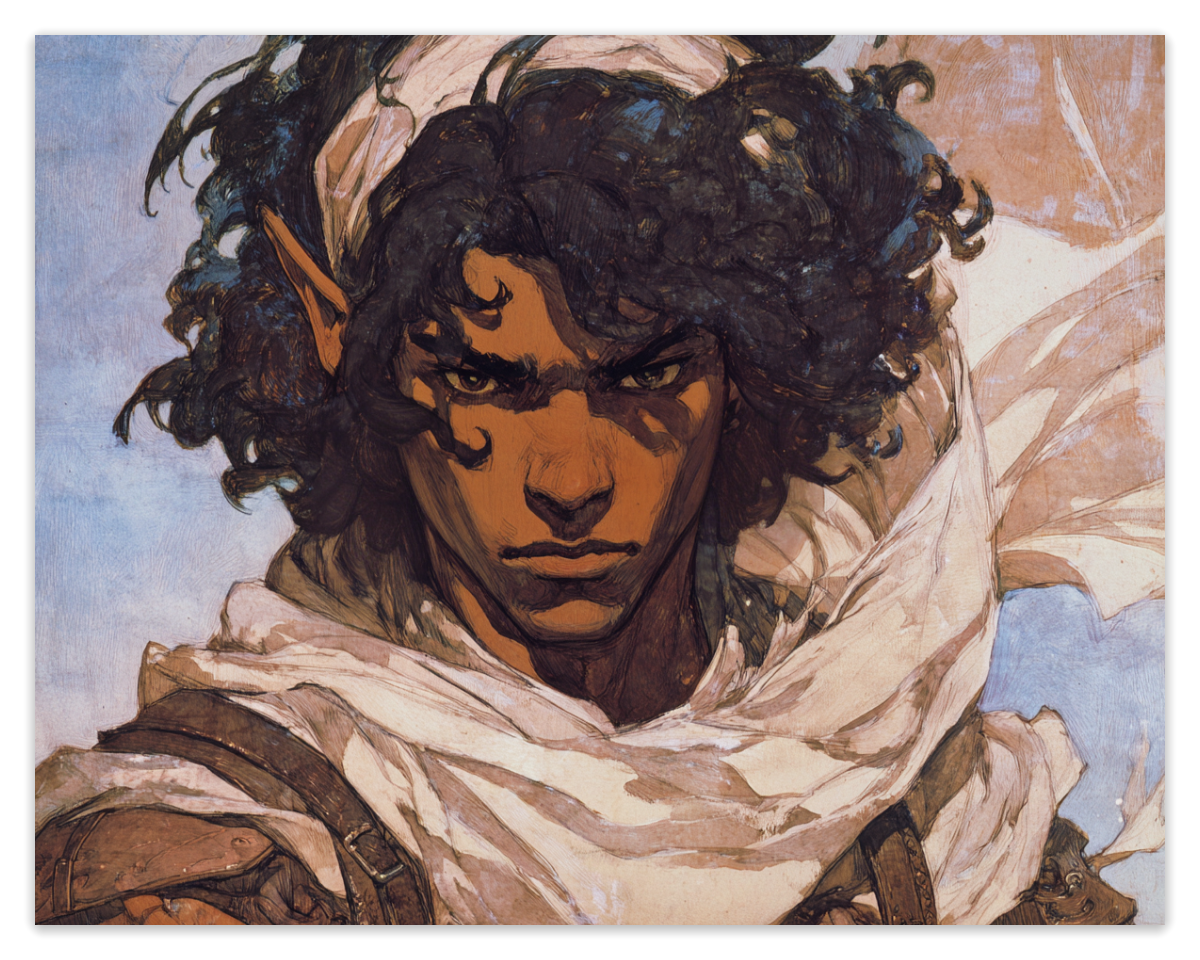
The only Åel subrace that has developed a working institutional relationship with the Concordiax, not through submission but through negotiation across centuries. The Vasterien desert does not reward insularity. The Solhari learned to engage, and engagement practiced across long generations produced a cross-ancestry fluency no other Åel group has developed to the same degree. In Vasterien they are the Åel most other ancestries have actually met, which is itself a form of political position.

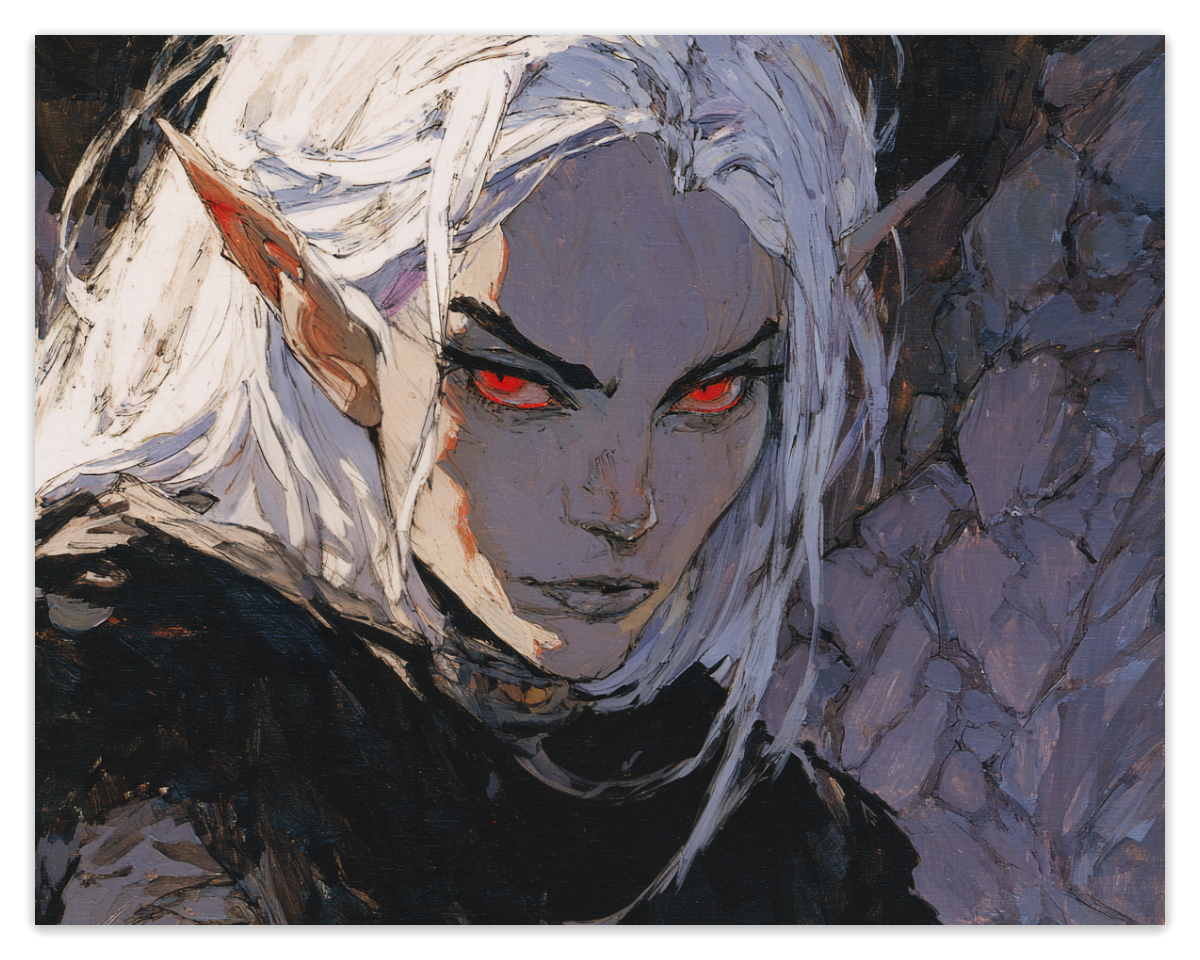
Among the most insular Åel communities post-Cataclysm, occupying the underground world beneath Midralis. The Dravar chose the Depths for a specific reason: density. Not Prismal density in the surface sense, but the compressed intensity of an environment where everything is more present, more saturated, more consequential. Their wards rank among the most theoretically sophisticated in Midralis, built for depth rather than scale. The Conservatory has been studying them for decades without producing results the Dravar consider worth acknowledging.

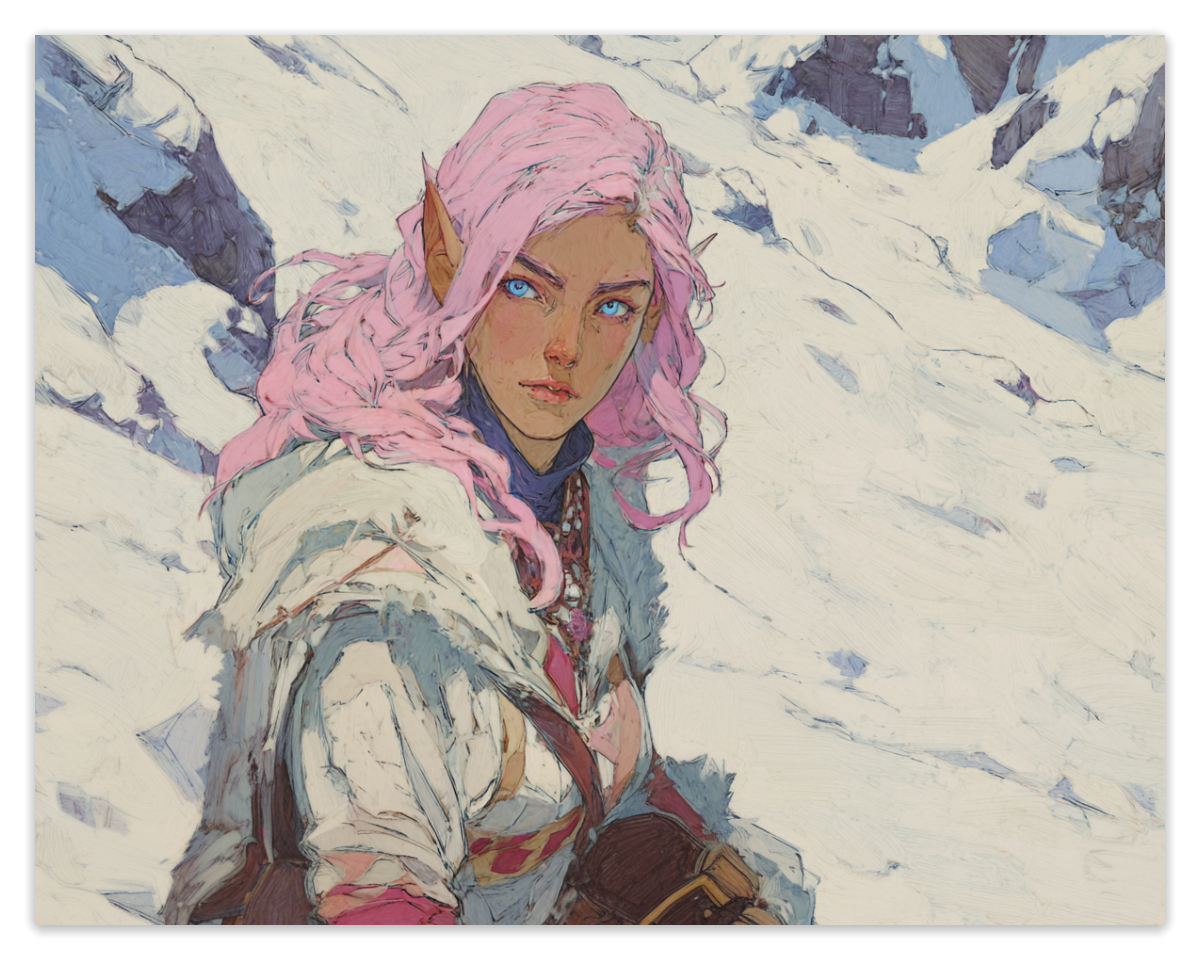
The most physically resilient subrace and the one with a living connection to the Åelvarin of Veraldié that other subraces have largely lost. The cold and silence of their environments strip away the noise that prevents other Åel from perceiving that connection clearly. Three diverged populations exist: in Eisvar in the far north, the Greymargin in the far south, and the Kält region in between. What they know about Veraldié that no other subrace retains, they have not written down. What they remember of the pre-migration era is older than any institutional archive.
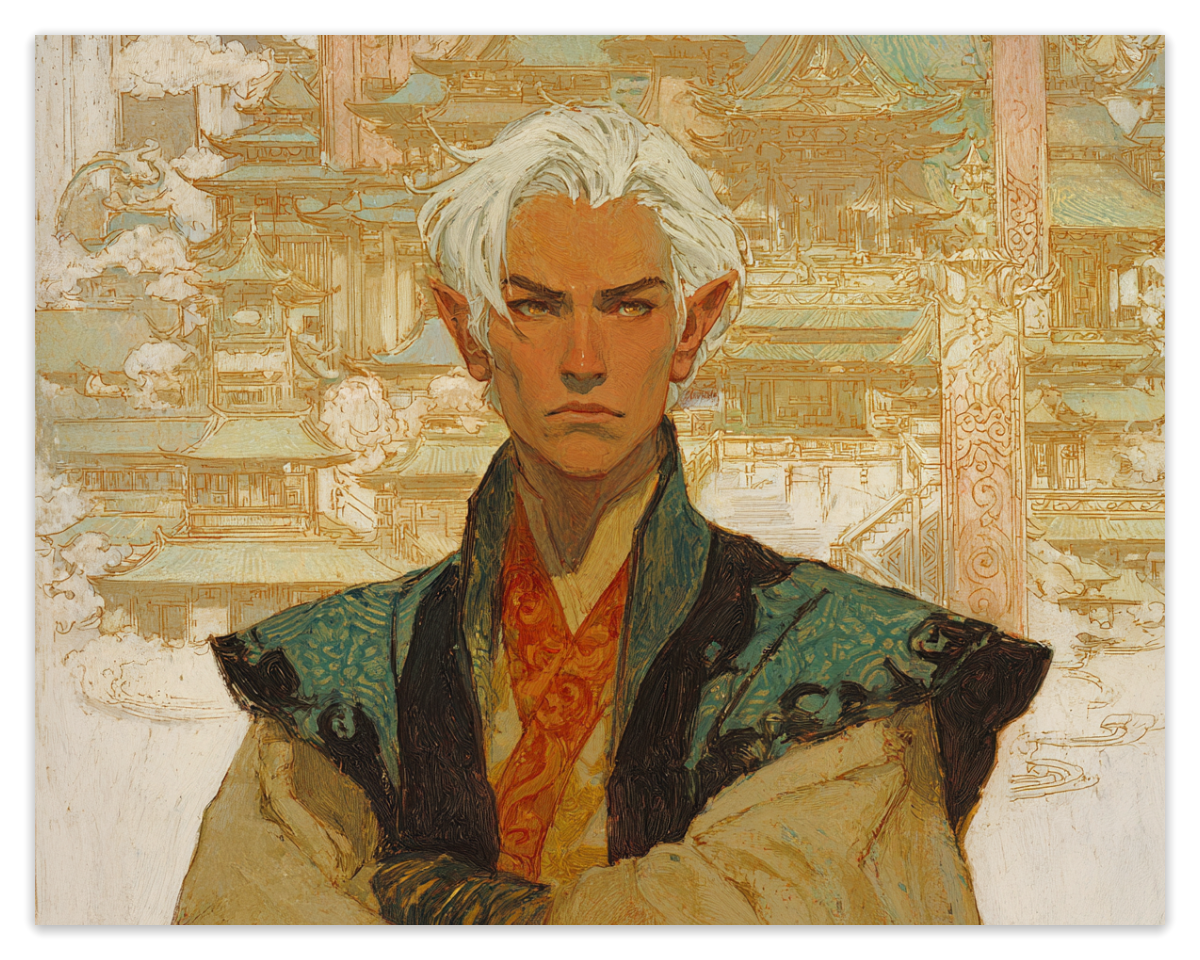
The urban Åels, concentrated in the Hino Federation where they occupy ceremonial and institutional positions no other ancestry has historically had the standing to claim. The Serath were there before the aristocracy existed. Their institutional memory predates every political structure in Kyou that has since tried to classify them. In practice this means they hold the roles no one else has the historical standing to claim: hereditary ceremonial positions in founding houses, arbitration authority in disputes with pre-Federation roots, clan genealogies that function as legal documents in Kyou courts. Their relationship with Kyoshin Myûr communities is the longest sustained Åel-Myûr cohabitation in Midralis.


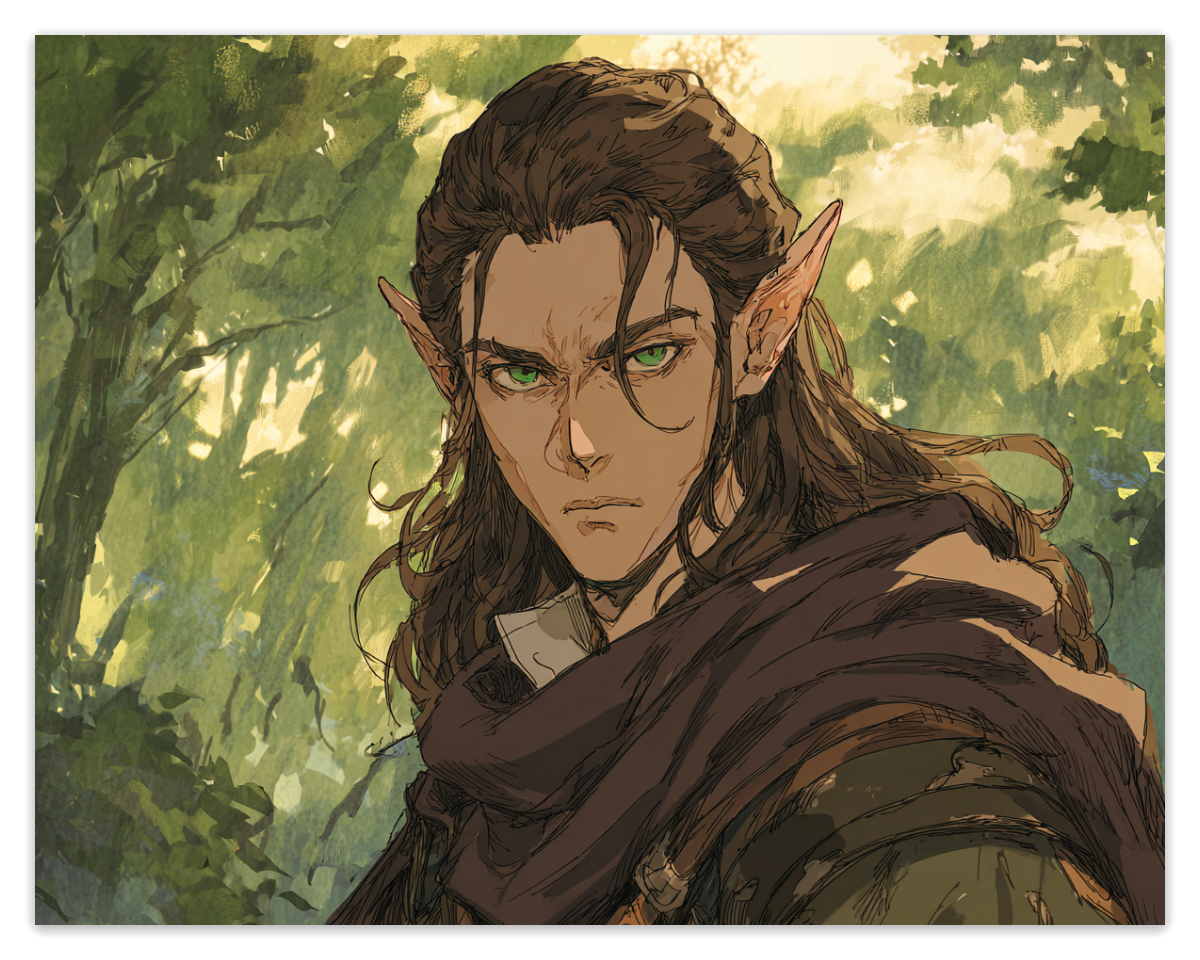
Forest-dwellers whose oldest communities have occupied threshold positions between Midralis and Veraldié-adjacent space long enough that the boundary has become a feature of their local geography rather than an anomaly. What this produces in practice: Vaenar communities do not experience time the same way their neighbors do. Visitors consistently report losing track of days. The Vaenar themselves do not find this remarkable. Their appearance is the most varied of any Åel group, often described by outsiders as looking like something that grew rather than grew out, which the Vaenar consider an accurate observation and a poor summary.

A Note on the Åelvarin
The Åelvarin remain in Veraldié in the current era. They are not gods, not Guardians, and not precisely archfey, though that is the closest approximation mortal scholarship has developed, and the label is not entirely wrong. What they are is a category for which mortal language has not developed adequate vocabulary, because the vocabulary was built to describe things that emerged from Midralis, and the Åelvarin did not.
The Åels of Midralis are their distant descendants, not their contemporaries. Contact between the two groups is rare, irregular, and consistently transformative for the mortal Åel who experiences it; every documented account describes the Åel who experienced it as needing years to fully integrate what happened. The Åelvarin appear aware of their Midralis-bound descendants in the way that very old things are aware of young things that share their origin: fully present to the encounter, and operating from a context in which the mortal Åel’s entire lifespan is a detail.
Affinity Disposition: Skewed
The Åel exhibit a skewed Spiritual Expression distribution reflecting their Veraldié origin. Light is the most elevated, not in the theological sense of moral alignment but in the cosmological sense of a species whose origin realm was shaped by uncorrupted divine energy. Nature, Ice, and Wind follow. Empyreal sits notably above the mortal baseline, which the Ninefold Conservatory’s classification committee has been attempting to categorize correctly for several decades without resolution.
The social implications of the Light elevation are real and underexamined. Light expression in the Åel context produces specific biases in how they assess clarity and completeness in knowledge: a tendency toward demanding full illumination of a situation before acting on partial information. This is not always practical in crisis conditions. Åel communities aware of this tendency have developed specific cultural practices to counteract it. Communities not aware of it have sometimes been very slow to respond to things they should have responded to faster. The Cataclysm, in some Åel internal scholarship, is read as the largest single example of this failure mode.
This table reflects population-level Spira tendencies; individual variation always applies.
| Spiritual Expression | Distribution (%) |
|---|---|
| Nature | 9.5 |
| Wind | 8.5 |
| Anima | 7.0 |
| Mind | 7.0 |
| Fire | 7.0 |
| Metal | 6.0 |
| Earth | 7.0 |
| Aqua | 7.0 |
| Electricity | 7.5 |
| Ice | 8.5 |
| Thunder | 7.0 |
| Darkness | 6.5 |
| Light | 10.0 |
| Empyreal | 1.5 |
Åelūmyr
Åelūmyr are the offspring of Åel and Myûr pairings, the only cross-species reproductive combination documented to consistently produce viable offspring. No other mortal ancestry is reproductively compatible with the Åel in any documented case. Dracovian-Åel pairings are sterile. Dwarven-Åel pairings are sterile. The compatibility is specific to Myûr, and it has no widely understood biological explanation. The Ninefold Conservatory has catalogued the phenomenon. The mechanistic account of why it is true, why Myûr specifically, remains unestablished in any public scholarly record.
Myûr fertility is dramatically higher than Åel fertility, so Åelūmyr are numerically more common than the Åel population itself would suggest. Åel-Myûr pairings across the long centuries of the New Age have produced a population that is small but meaningful; enough that most larger settlements in Midralis have at least one Åelūmyr resident, even when no full Åel community is nearby. Åelūmyr are, in a practical sense, the most common point of contact many Myûr individuals have with Åel ancestry.
Biological Profile
Åelūmyr lifespans range from approximately 150 to 400 years, significantly longer than Myûr and significantly shorter than Åel, and variable enough that the range reflects genuine biological diversity rather than a consistent intermediate. Prisma Potential is elevated above Myûr baseline, typically three to four stars depending on which parent's heritage expresses more strongly. Echo Potential is similarly intermediate. Pointed ears are typically present but less pronounced than in full Åel. Prismal luminescence in the eyes is typically present at lower intensity and less consistently activated.
Åelūmyr can reproduce with both Myûr and Åel partners. Offspring of an Åelūmyr-Myûr pairing are typically Myûr with slightly elevated Prisma Potential and a marginal lifespan extension. Offspring of an Åelūmyr-Åel pairing are typically Åelūmyr with stronger Åel heritage expression. Over generations of consistent Åel-adjacent pairing, lines can stabilize toward something close to full Åel expression, which several Serath clan families have documented across their recorded genealogies.
Social Position
Åelūmyr occupy a socially complex position that neither Åel nor Myûr communities have fully resolved into stable frameworks. In Åel communities, Åelūmyr are received with genuine warmth and a specific quality of melancholy: they represent the Åel's relationship with mortality in a direct form, a reminder that engagement with shorter-lived peoples produces people who are themselves shorter-lived. In Myûr communities, Åelūmyr navigate a mixture of genuine regard for their Åel heritage and the subtle Myûric tendency to treat Åel-adjacent people as exotic rather than simply themselves. Neither reception is hostile. Both, in different ways, fail to see the Åelūmyr clearly.
The Serath communities of Kyou, which have lived alongside Myûr communities longer than any other Åel group, have developed more robust social frameworks for Åelūmyr, including institutional roles that explicitly draw on their specific position as legible in both directions. Whether this is a model for other regions or a specifically Kyou artifact of the Federation's plural structure is an open question.
The biological asymmetry carries political weight that compounds over generations. Myûr noble houses and merchant lineages with documented Åelūmyr heritage navigate that heritage differently depending on where they operate. In Kyou, it confers a quiet prestige. In Auridia’s Concordiax-adjacent institutions, it raises questions about allegiance that no one asks openly but no one forgets. Some Myûr families suppress the heritage entirely. Others display it. A number of Åel clans, the Serath especially, quietly maintain genealogical records tracking which Myûr lineages carry Åel ancestry. They have not explained why they find this worth knowing.
Language Notes
Åel speak Älven, a language with two roots that reflect the fact that it has been living in two worlds simultaneously. The Veraldié layer is the older stratum: patterns, registers, and grammatical structures that developed in a realm of divine essence, carrying conceptual weight that Midralis-born languages have no direct equivalent for. The Midralis layer developed across the long ages of Åel settlement here, shaped by contact with Myûr, Dwarven, and other regional tongues, and by the practical demands of living in a world that does not share Veraldié’s underlying assumptions.
The result is a language that speakers of other tongues find simultaneously beautiful and difficult to follow. Älven carries registers for states of being, temporal relationships, and Prismal experience that Diplomata lacks the architecture to translate cleanly. When an Åel switches to Diplomata mid-conversation, something is typically being simplified for the benefit of whoever they are speaking with. They rarely mention this. Most non-Åel speakers never notice.
The Concordiax administers Diplomata through the Verbum ritual, the activation process that grants a speaker permanent fluency. In practice this means the Concordiax controls who speaks Diplomata and under what terms, a form of institutional leverage that most of Midralis navigates without questioning. The Åel do not navigate it; they go around it. Åel communities, whose Prismal traditions predate the Concordiax by more generations than the Concordiax has existed, perform the Verbum ritual within their own holds. Åel newborns who receive it at home never pass through Concordiax channels at all. The Concordiax is aware of this. They have not moved against it, partly because compelling Åel communities is genuinely difficult, and partly because formally asserting authority over Verbum administration in Åel territory would require acknowledging how much of their control depends on compliance rather than capacity.
Each subrace uses Älven within community contexts, for Prismal working, and for the things Diplomata cannot carry. The Serath in Kyou also speak the regional standards of the Hino Federation natively, and their Älven carries Federation grammatical patterns that other Åel subraces find subtly strange. The Vael'ir dialect is considered the most archaic form of Älven still in active use, closest to what linguists believe the Veraldié stratum originally looked like.
Systems & Campaigns
- Pathfinder 2e Elf Ancestry
- Draw Steel Elf Ancestry
- Daggerheart Elf Heritage
- D&D 5e+ Elf Race
- Realmfall Saga Active