Ancestry · Iphexar · Midralis
Dwarf
 Uncommon
“They keep better records than anyone else in Midralis, including records of what other people owe them. I have never met a Dwarf who forgot a debt. I am not certain they are capable of it.”
— Eonlogos, Celosian ArchivistOverview
Dwarves are defined not by stone and smithcraft but by their relationship to permanence. They build things that last because they believe that what is not preserved is lost, and what is lost cannot be recovered. That is a civilizational conclusion, reached through the most expensive possible evidence: the Solosomor Empire, the greatest Dwarven civilization in recorded history, was destroyed. The knowledge it contained was partially destroyed with it. The Dwarves who survived inherited both the ruins and the memory of what the ruins had been.
The craft ethic, the clan archive system, the ancestor inscription tradition, the practical atheism regarding the Modern Gods: all of these flow from the same root. They built something extraordinary, watched it fall, and organized their entire culture around ensuring it does not happen again.
Dwarven society is structured through clans: groupings defined by the intersection of terrain, craft, and lineage. A clan is an economic unit, a cultural archive, and a political bloc. Lineage is the foundation, not the whole structure. Clan affiliation shapes how a Dwarf speaks, what they build, where they feel at home, and who they trust. The register, vocabulary, and legal precision of inscription work all vary by clan. The archive is Dwarven law, memory, social fabric, and theology simultaneously, none of those functions cleanly separable from the others.
Origin & History
Old Midralis
The origins of Dwarven civilization reach into Old Midralis, the world before the Elemental Cataclysm, though how far back is not known. Dwarven oral tradition holds that the first Dwarves emerged from the stone itself, shaped by the deep pressures of the earth over ages beyond counting. Scholars who have studied it note it neither confirms nor denies divine shaping. The earth is not a god in Dwarven cosmology, but neither is it merely geology. It is something older, something that remembers.
The Solosomor Empire
The Solosomor Empire is the defining historical event in Dwarven cultural memory: not the Elemental Cataclysm, not the Great Migration, not the rise of any kingdom. Solosomor. At its height in Old Midralis, Solosomor built things that are still standing. Roads beneath Auridia that Myûr administrations maintain without fully understanding. Vault-seals that no surface institution has matched. A Prismal engineering tradition called forge-craft, the systematic application of Prismaturgy to metalwork, weapons, and construction at industrial scale, that has not been replicated in the four Ages since. Their mastery was their own: built through accumulated knowledge, generational refinement, and a cultural relationship to quality that did not distinguish between a ceremonial blade and a drainage channel.
In the centuries before Year 0, Solosomor's greatest forge-engineers completed what Dwarven oral tradition calls the Godkiller, though the name varies across clans and is never spoken in polite company. It was a class of engineered constructs capable of inflicting harm on beings of divine and draconic nature. Whether this was conceived as a deterrent, a bargaining chip, or a genuine instrument of war is a question Dwarves who know the story have argued about for four Ages. What is not argued: it worked.
The Stonebane Wars
The official account outside Dwarven communities attributes the fall of Solosomor to Prismal overreach: a catastrophic forge-accident, an Overbinding event of civilization-scale proportions. The Concordiax-adjacent histories carry this account. It is, at best, incomplete.
What followed the Godkiller's demonstration was the Stonebane Wars. Divine beings and draconic powers moved against Solosomor with a coordination that the Dwarven account records as overwhelming. A civilization built for depth was not built for prolonged surface warfare: forge-cities were cut off, Chromavein extraction collapsed, and without new Thaumacore the Machina that had powered the Empire's labor and defense could not be maintained. The technological edge eroded over decades into irrelevance. The Solosomor heartland was not damaged. It was gone.
Dwarven oral tradition, preserved in Runescript in the Stoneheart deep archives, holds that the full account of why this happened has not yet been assembled. The deepest records carry a specific quality of unease: observations that never quite became conclusions, questions that were never formally asked. Those records remain, and the unease in them has not been read carefully enough by anyone currently living.
Post-Solosomor and the Elemental Cataclysm
The survivors of Solosomor's fall scattered across Old Midralis across generations. They carried craft knowledge, oral tradition, and the specific memory of what Prismaturgy had cost them. One conclusion hardened into identity before the New Age began: the gods had been watching, had known what was being built, and had not intervened. The Elemental Cataclysm came generations later. Dwarves survived it as they have survived most catastrophes, by going deeper. The deep holds and clan vaults that post-Solosomor communities had built were more structurally sound than surface civilizations when the landscape was remade. Not all survived, but the core held where the stone held. In Dwarven cultural framing, the Cataclysm is a second proof: the things built well survived. The things built poorly did not.
The Spreading
In the New Age, Dwarven communities spread across Midralis's remade geography. Dwarves call this the Spreading rather than the Great Migration, a term they find too dramatic for what was fundamentally an organized resettlement. The dispersal accelerated the differentiation of the four major clan identities that persist in the 4th Age.
Physical Features
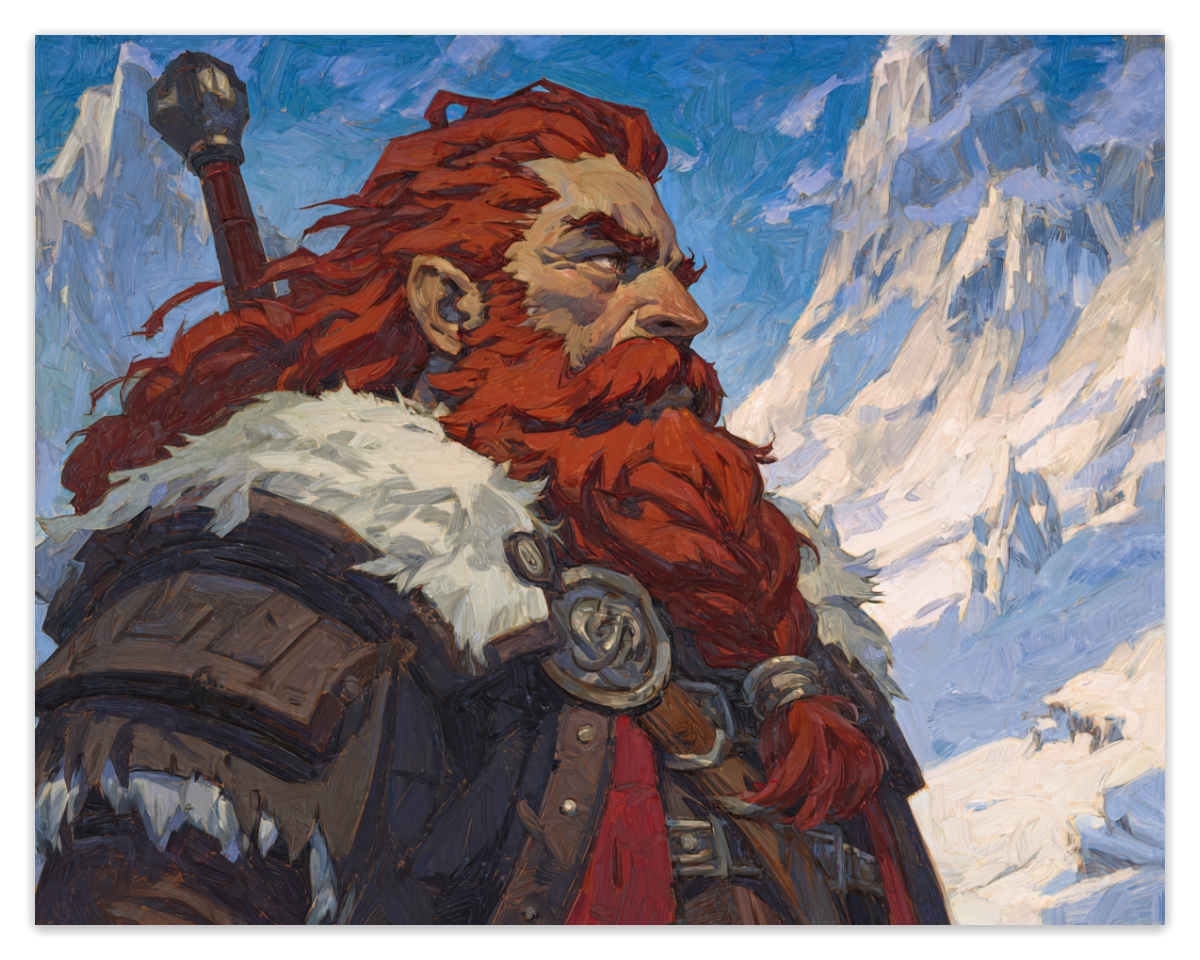
- Compact and low-centered build, 4’5” to 5’2”, substantially denser than height suggests. A Dwarf and a Myûr of similar apparent size differ significantly in weight.
- Low-light vision, not full darkvision but substantially better than surface races; an adaptation that deepens across generations of underground living.
- Lifespan 350 to 450 years; exceptional individuals reach 500.
Physical Notes
Beard grammar — Facial hair in Dwarven communities is inscribed, not simply maintained. The braiding patterns, adornments, and weights encode lineage, outstanding obligations, craft standing, and clan affiliation in a visual grammar other Dwarves read with precision. A Dwarf’s beard is, technically, a legal document. In a dispute before clan elders, it is submitted as evidence.
Heritable clan markers — Each clan’s environment has produced heritable physical adaptations that do not reverse with relocation: a Stoneheart raised on the surface still carries pale skin and reflective eyes.
- Ironbeard
- Altitude flush — Permanent capillary redness at the cheekbones, nose bridge, and knuckles from generations of high-altitude exposure. Does not fade indoors.
- Skin: ruddy copper to warm iron-brown
- Hair: dark brown to iron-grey, silvering early
- Eyes: amber, gold-brown, or slate-grey
- Stoneheart
- Reflective eyes — Pale irises that briefly hold light in dim conditions. Surface-dwellers find it instinctively unsettling.
- Ashen complexion — Grey to pale slate; does not fully reverse with surface exposure.
- Skin: ashen grey to pale slate
- Hair: white, silver, or pale ash-blonde
- Emberclan
- Thermal freckling — Melanin concentration from generations of intense radiant heat, infrared-driven rather than UV. Carried even by those who have never worked a forge.
- Wavy or curly hair — A heritable result of persistent geothermal humidity.
- Skin: deep volcanic sienna to red-brown
- Eyes: ember-amber, copper-orange, or gold
- Sandbeard
- Iris variability — The broadest eye color range of any Dwarven clan, including an amber-green hazel found nowhere else. Variability within a single family functions as a population marker.
- Skin: deep golden-brown to bronze
- Hair: golden-brown to warm black, sun-bleached lighter than natural
Theology: The Divine Estrangement
Dwarves do not, as a race, worship the Modern Gods. They acknowledge divine beings exist; they simply see no reason to engage with them on terms those beings set. That posture has hardened over centuries into cultural norm, to the point where most Dwarves call it practical atheism: the gods exist, they are simply not worth petitioning.
The roots of this estrangement are in the Stonebane Wars. The Dwarven read is direct: Solosomor built something that threatened divine beings. The divine beings, directly or through proxies, ensured Solosomor was destroyed. The gods did not intervene to save Dwarven lives. They intervened to protect their own. The Elemental Cataclysm confirmed the pattern: the gods made decisions, Dwarves bore the consequences, and no one asked.
Ancestor veneration fills the space worship occupies in other cultures: acknowledgment of the dead through Runescript inscription, through clan oral history, through the maintenance of deep records that ensure no Dwarven name is truly lost. A Dwarf remembered in Runescript in a Stoneheart archive is not gone. For Dwarves, craft applied to memory and theology are the same thing.
A minority tradition exists, mostly in Ironbeard communities and among surface-dwelling Dwarves, that treats the Modern Gods as simply another institutional power to engage on practical terms. It does not call itself a sect. It does not recruit. It simply does not share the majority’s conviction that disengagement is the only reasonable position.
The Empyreal affinity rate, the lowest of any mortal race, is what Dwarven scholars describe as the theological estrangement made biological, their phrase rather than a settled conclusion. Whether divine forces noticed this and responded, or whether the estrangement produced the affinity drift through mechanisms the Ninefold Conservatory cannot fully explain, is a question Dwarven scholars raise only in contexts where they are sure no Modern God worshippers are present.
The Archive: Name, Debt, and Memory
The principle that emerged from the Long Silence: what is not preserved is lost, and what is lost cannot be recovered. Applied to the archive, this means the quality of inscription is not a clerical function. It is the most consequential craft a Dwarf will ever practice. A forgemaster who makes an excellent blade has made something excellent. An archivist who makes an excellent inscription has made something that will govern that family's legal standing, social position, and access to clan resources for the next three hundred years.
The name-inscription system functions simultaneously as legal record and moral judgment, and the two functions are deliberately kept inseparable: not by accident, but because the ambiguity is useful. Law and moral judgment that can be cleanly separated will eventually be separated by someone with an interest in the separation. A name inscribed fully and well is a legal document establishing the individual's claims, obligations, and relationships. It is also a moral statement: the clan has evaluated this person's life and found it worthy of full record. An obligation is an obligation, and the archive records both.
Debt Follows the Name
Debt in Dwarven culture is not personal. It is inscribed. When a Dwarf incurs a significant obligation, that debt is recorded in the archive against their name. When they die, the debt does not die with them. It transfers to the lineage and must be settled within a generation or the name acquires a formal marking indicating outstanding obligation. It is inheritable and can accumulate across generations. Outsiders describe Dwarven debt repayment as almost compulsive in its promptness. It is the behavior of a people who know that dying with debts means your descendants pay them.
The archive also records when debts are settled early, when obligations are discharged with more than was required, and when a lineage has maintained a clean record across multiple generations. A lineage with three centuries of clean archive record has something a newly wealthy Myûr merchant cannot purchase. It can only be earned across time, and the archive shows exactly how long it took.
What Makes a Bad Death
In Dwarven culture, not all deaths are equal. A Dwarf killed in a mining accident with a clean archive and settled debts can receive a full and honored inscription. A Dwarf who dies peacefully in their four-hundredth year with outstanding obligations and disputed work does not receive one. The categories that produce damaged inscriptions: dying with significant unsettled debts; dying with formal craft commitments not completed; dying in circumstances the clan elders determine to have brought disrepute to the lineage; and dying in exile without reconciliation, which is the heaviest of all. A Dwarf whose name has been removed from the archive through formal exile, who dies without having the removal reversed, receives no inscription at all. The archive does not acknowledge that they were ever there.
The Four Clans
Dwarven clans are governance structures, cultural traditions, professional orientations, and political blocs simultaneously; lineage is only one part of what a clan is. A clan's home environment shaped what it built; what it built shaped how it thought; how it thought shaped who it became. The four major clans are not in permanent harmony. In the 4th Age, the primary source of inter-clan tension is the Thaumacore reconstruction question: whether the Emberclan should attempt to rebuild the Solosomor-era Machina, who would have access to the capability if they did, and who would have authority to govern how it was used. Every major Dwarven political conversation in the current era carries this question.
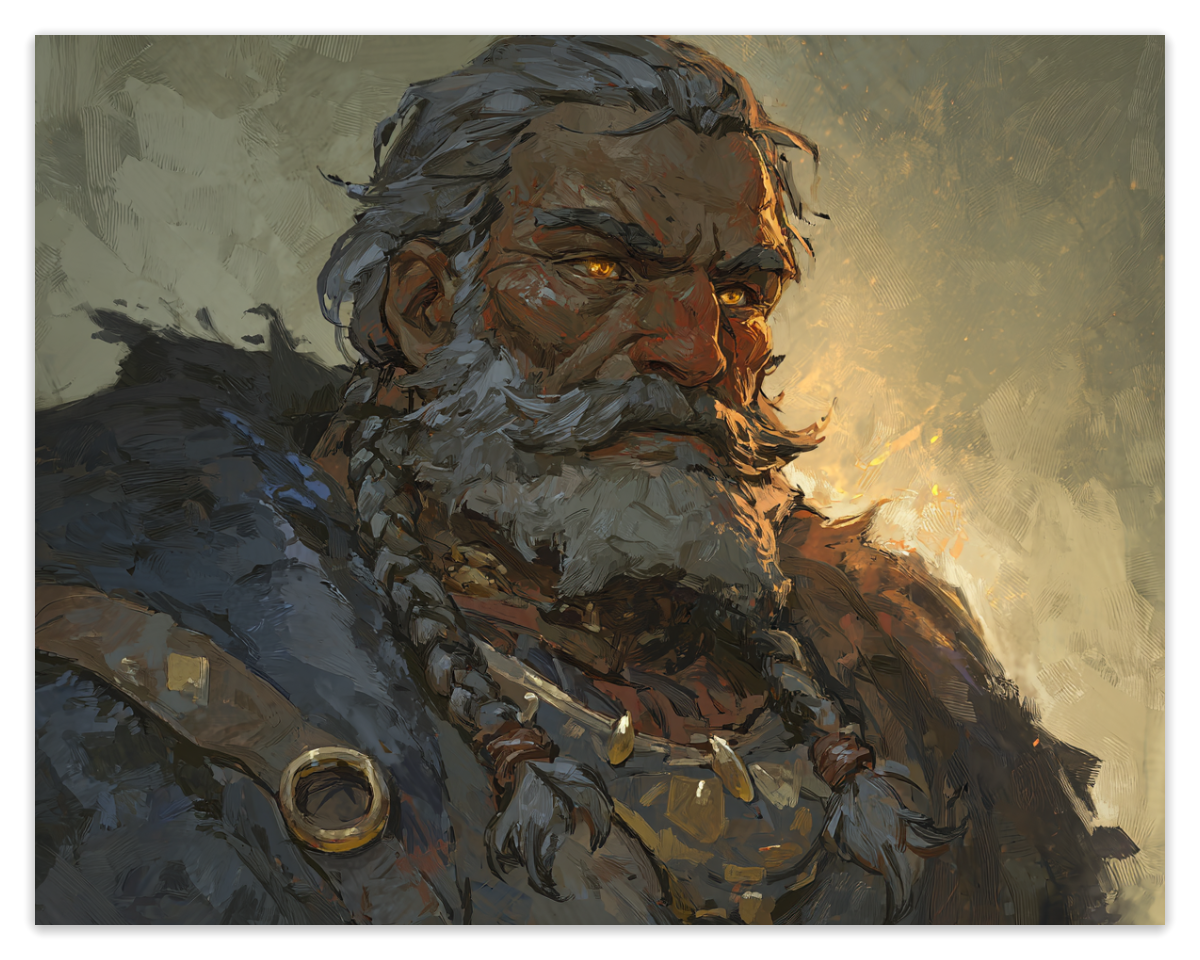
The most visible Dwarven clan in the 4th Age and the face most Myûr have actually met. After the Spreading, the Ironbeards made a deliberate choice to position themselves as reliable, skilled, and politically manageable. What they trade in reputation for accessibility, they gain in economic leverage. Their archive relationship is the most transactional of the four clans: meticulously maintained because a clean record is economically valuable, and pushed at its interpretive edges whenever archive law creates commercial friction. The other three clans think the Ironbeards have compromised too much of Solosomor's inheritance for surface comfort. The Ironbeards privately think the others have not understood something basic: the civilizations that wait in deep holds for the world to come to them tend to wait a long time.

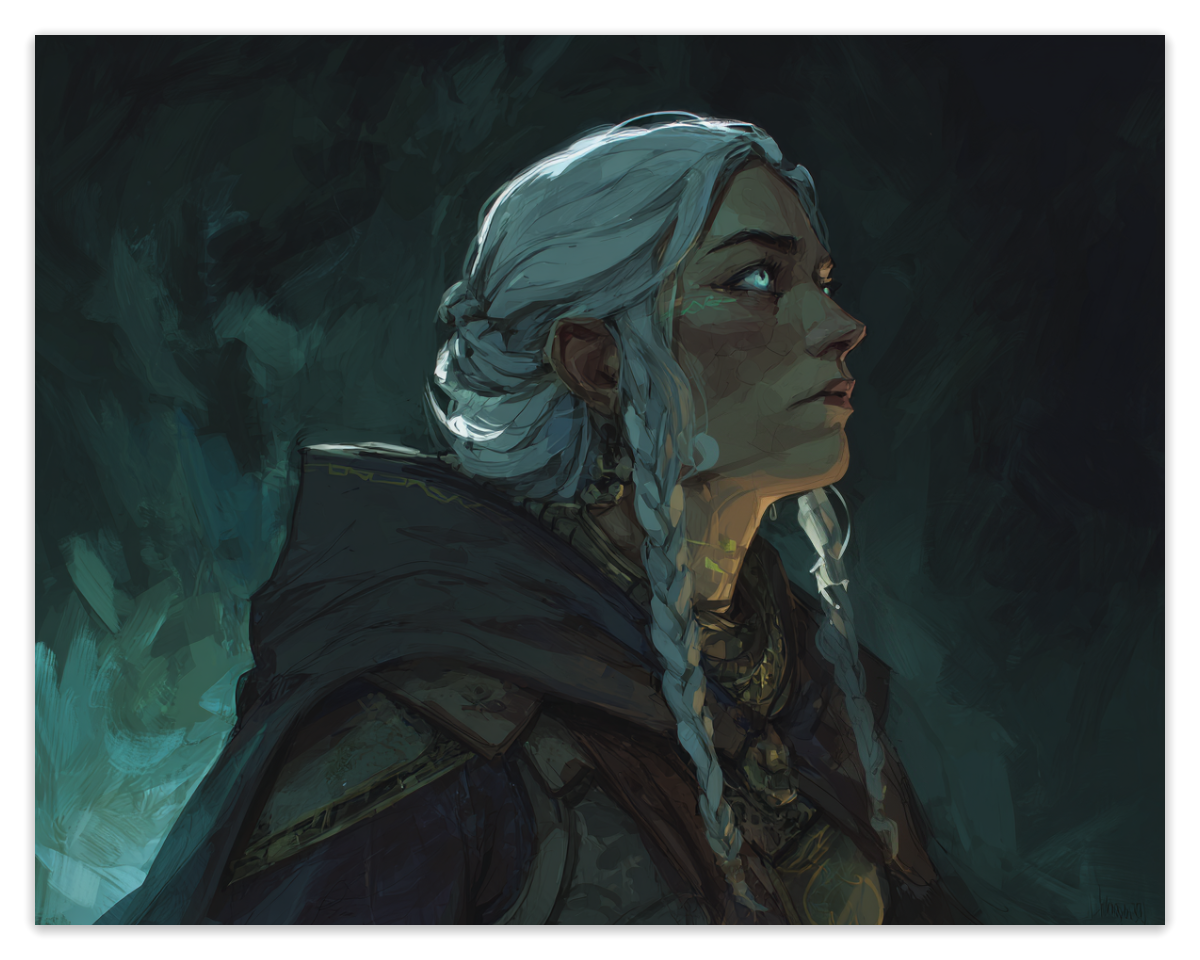
Archivists and guardians of what Solosomor built. Nothing preserved gets used without careful consideration; nothing considered is done quickly. Their deep holds contain the most extensive surviving records of the Solosomor Empire. They hold disproportionate influence over how archive disputes are resolved across all clans, a consequence of being the people who wrote the interpretive philosophy that governs the legal and moral record. They consider this a responsibility rather than a privilege, and they are sincere about this, which does not prevent it from functioning as power.

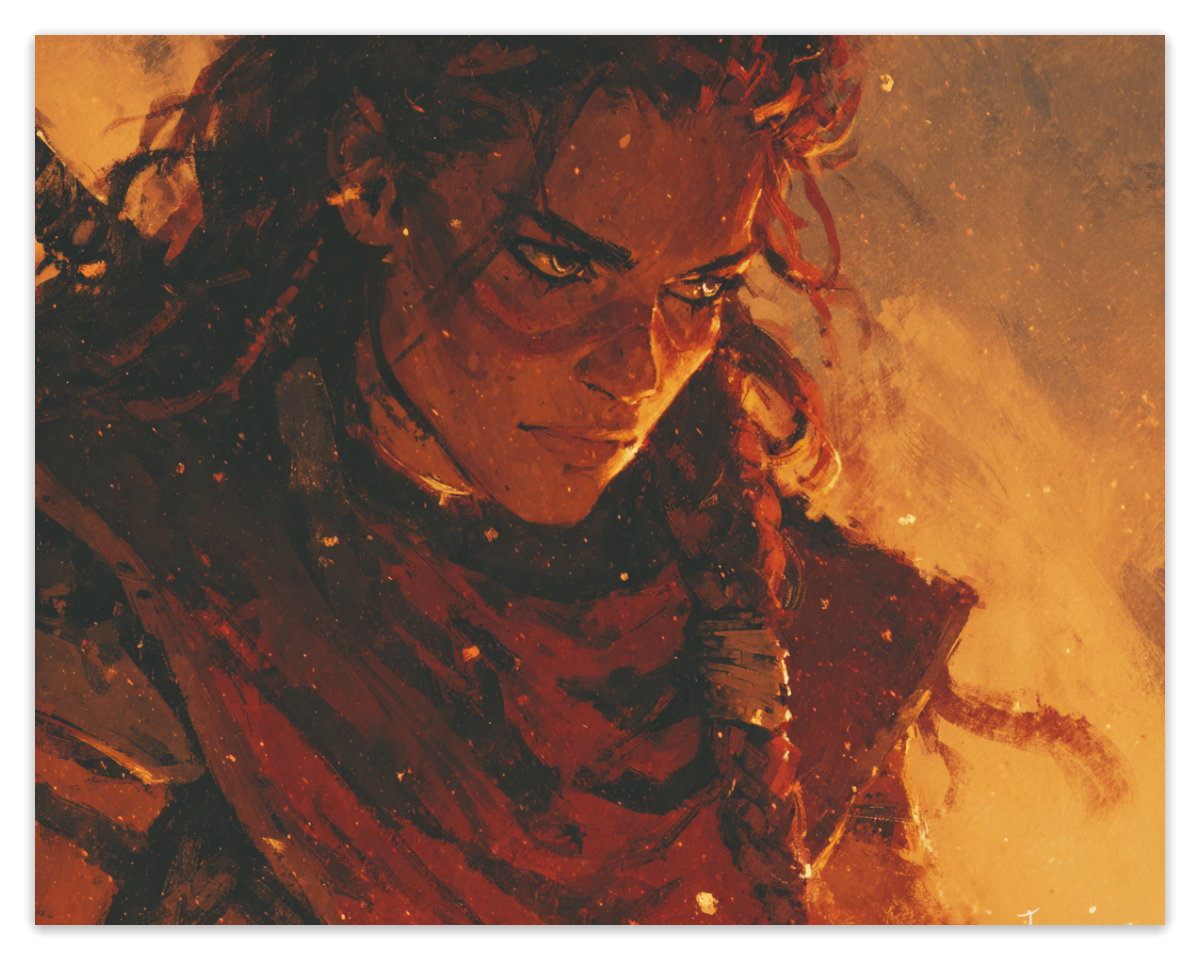
The clan most directly descended from Solosomor's core population, and the one for whom the Empire's fall is a living inheritance rather than distant history. The Emberclan fault line runs between those who carry Solosomor as shame and those who carry it as desecrated pride. Neither faction is marginal. Their territories contain the only known Chromavein deposits in mapped Midralis, the raw material required for Thaumacore production. Whether or not the Emberclan ever rebuilds the Machina, the fact that they sit on what the reconstruction would need makes them a target for any faction with the ambition to try.

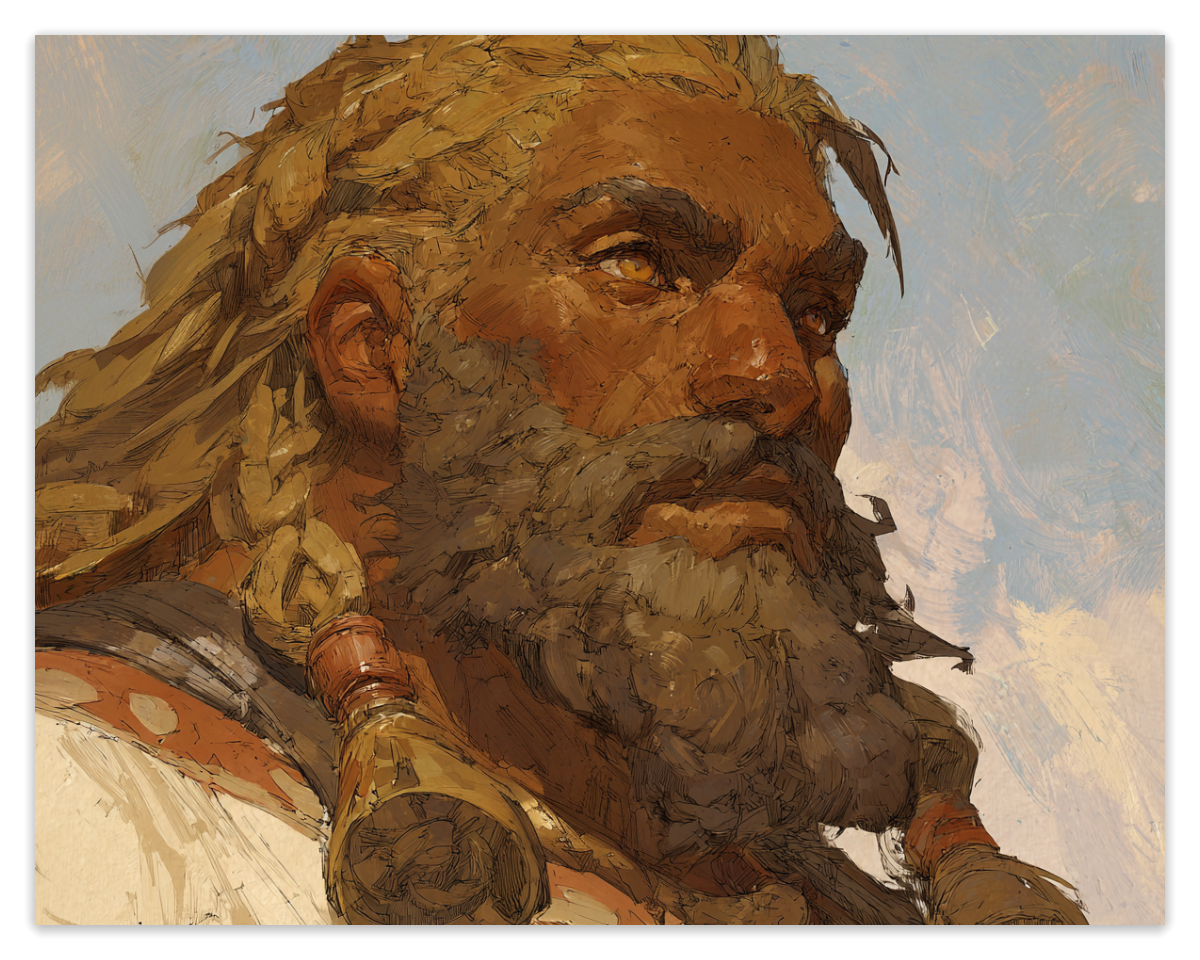
The most geographically isolated and culturally distinct of the four clans. Their desert terrain demanded horizontal ingenuity: the patient engineering of a people who must move water through stone across enormous distances or not survive at all. Their proximity to Qarasi oasis communities has produced the most sustained cross-cultural relationship any Dwarven clan maintains with a non-Dwarven people, organized around the one thing both communities care about with equal seriousness: water in a landscape that hides it. The Sandbeard position on the Thaumacore reconstruction debate is characteristically direct: it concerns a catastrophe that destroyed an empire in regions they did not live in, and they are happy to be consulted but not interested in carrying a grief that was never specifically theirs. The younger Sandbeard engineers who have worked alongside Emberclan and Stoneheart counterparts on joint contracts are somewhat less certain of this position. They have seen the Chromavein deposits and formed opinions about what they saw. For now, those opinions stay close.

Affinity Disposition: Skewed
Dwarves show elevated rates in Metal, Earth, and Thunder expressions, consistent with their geological heritage, craft tradition, and the specific qualities of long-lived underground communities. Fire sits above average, reflecting the forge tradition and Emberclan influence on population-level tendencies. Light sits at the low end, which Dwarven scholars read as consistent with the divine estrangement, though the causal mechanism remains debated. Empyreal is effectively absent: the lowest recorded rate among mortal races, non-zero but functionally negligible. Dwarven scholars attribute this to the estrangement; the institutions that have noticed do not discuss it with them.
This table reflects population-level Spira tendencies; individual variation always applies, and significant variation exists between clans.
| Spiritual Expression | Distribution (%) |
|---|---|
| Nature | 7.0 |
| Wind | 6.5 |
| Anima | 7.0 |
| Mind | 7.5 |
| Fire | 8.0 |
| Metal | 11.0 |
| Earth | 10.0 |
| Aqua | 6.5 |
| Electricity | 7.5 |
| Ice | 7.0 |
| Thunder | 8.5 |
| Darkness | 7.5 |
| Light | 6.0 |
| Empyreal | 0.0 |
Ordinary Life
The archive and the catastrophe are not the whole of Dwarven existence. They are the frame within which ordinary life happens, and ordinary life happens constantly. A Dwarf who spends four centuries processing ancestral grief and nothing else has no debt record, no apprentices, no marriage, no hospitality obligations, and no opinions about which clan makes the worst beer. The archive is the load-bearing structure, and what gets recorded in it is the life.
Marriage: The Iron Quest
Marriage in Dwarven culture is a formal alliance between two lineages, documented in both archives. The tradition governing it originated with the Ironbeards and spread across all four clans during the New Age. Before a betrothal is formalized, the suitor must complete the Iron Quest: acquiring a worthy artifact to present to the family of the person they are asking to marry, not to the individual themselves. The artifact must be found, earned, or crafted rather than purchased, and is evaluated by family elders against the difficulty of acquisition, the quality of the object, and what the process reveals about the suitor's character under pressure.
Once accepted, the artifact enters the family archive as a physical record of the betrothal. It will be there long after both individuals are dead and their descendants are managing the family affairs. Ironbeard communities are the most rigorous about artifact quality. Sandbeard communities, given their trade economy, are the most sophisticated about evaluating how something was acquired versus what it is worth on a market.
Apprenticeship
Taking an apprentice is the most serious commitment a Dwarven master will make, because the archive makes the consequences of not completing the transmission permanent and visible. A master who accepts an apprentice has formally committed, in a document that will outlast them both, to transmitting the craft tradition. A master who dies before the transmission is complete carries an incomplete inscription. A master who takes an apprentice at four hundred and fifty is making a public claim about how much time they have left, and the community takes note.
What makes masters cautious makes them, once committed, entirely serious. An apprentice accepted by a Dwarven master has been accepted by someone who has staked their inscription on the relationship.
Hospitality
Dwarven hospitality begins at the threshold, literally. A guest invited into a clan-hold is asked, at the entrance, to give their name. The host acknowledges it formally with a phrase translating roughly as ‘your name enters with you.’ While the guest is inside, the host's archive standing is associated with what happens to them. The obligation runs in both directions. A guest whose name has been acknowledged is expected to suspend prior disputes for the visit; one who violates the terms of hospitality carries the archive annotation of having accepted a threshold obligation and broken it. The Dwarven word for this violation translates roughly as ‘stone-breaker’ and travels inter-clan faster than almost any other reputation marker. Sandbeard households are regarded by every other clan as the best to stay in. Since the Spreading, sustained cross-cultural trade hosting has produced a hospitality tradition whose warmth the other clans respect and find slightly irritating.
Humor
Dwarves find three things reliably funny. The first is craft failure: specifically the failure of other people's craft in ways that confirm things Dwarves have been quietly noting for years. A Myûr-built aqueduct that collapses after forty years is not, to a Dwarf, a tragedy. It is the punchline to a joke that started the day it was commissioned. The second is impermanence. A city called the Eternal Citadel of Radiant Dawn that has been rebuilt three times since a Dwarf in the room was born is not offensive. It is quietly hilarious. The third requires knowing the archive: a sentence referencing a specific inscription from three centuries ago, applied precisely to the present situation. Outsiders hear nothing. Everyone else in the room checks their memory for the reference, laughs if they find it, and looks it up later if they don’t.
Modern-Day Dwarves
In the 4th Age, Dwarves occupy a paradoxical position: politically minor, infrastructurally essential. The roads, vaults, aqueducts, and tunnel networks that undergird Myûric civilization in large parts of Auridia were built by Dwarves, maintained by their descendants, and only partially understood by the Myûric administrators who now nominally govern the regions they run through. This creates a quiet leverage that Dwarven clan leaders understand and exploit carefully. They do not hold political seats in the Concordiax or major Myûric kingdoms. They hold contracts, maintenance knowledge, and the specific expertise required to keep essential infrastructure functional.
The Myûr experience the Dwarves as reliable and somewhat opaque partners they cannot easily do without, and whose internal politics resist outside auditing. The Dwarves experience the Myûr as the temporary dominant civilization in a world that has had temporary dominant civilizations before and will have them again, and they maintain their archive records accordingly: because the archive will outlast the Concordiax the same way it outlasted Solosomor.
What Dwarves think the next few centuries are for: the archive grows. The infrastructure holds. The reconstruction debate gets resolved one way or another, and the clans that prepared for either outcome outlast the ones that didn’t. They have been through the end of the world before. They have opinions about how to be ready for the next one.
The Prismaturgy aversion remains deeply entrenched. A Dwarven Prismaturge is culturally transgressive. Clan Law in most communities does not formally criminalize Prismaturgy, but the social pressure requires no formal mechanism to be effective. Dwarves who develop Prismal sensitivity and stay tend to find a quiet accommodation: practicing narrowly, in contexts useful to the clan, without the matter ever being formally named. The clan does not acknowledge it. The practitioner does not announce it. The archive records nothing. That silence is its own form of tolerance.
Language Notes
Dwarves operate with three distinct linguistic registers, each with a specific function and social domain. Which register is in use, and why, is one of the first things distinguishing a Myûr who has genuinely spent time in Dwarven communities from one who has only worked with them commercially. Clan origin shapes speech in ways that cut across all three registers: Ironbeards speak Stonetongue with commercial directness, pruning subordinate clauses; Stonehearts speak it with a precision borrowed from Stonescript, often completing sentences in a way that sounds more formal than the topic warrants; Emberclan speech carries the rhythm of forge-counting, a stress pattern tied to the beat of hammer work; Sandbeards speak it with the most Diplomata influence of any clan, their phrasing shaped by generations of trade with non-Dwarven speakers.
Stonetongue
The spoken language of Dwarven communities, called Stonetongue in surface-adjacent regions and simply Dwarven within clan-holds. It developed in underground acoustic environments where sound behaves differently than in open air, and its phonology reflects this: rich in low-register consonants and resonant vowels that carry cleanly in stone channels and lose less information to echo. To surface ears it reads as unusually percussive. The rhythmic quality Myûr listeners describe as hammer-like reflects underground acoustic optimization, not stylistic choice.
Stonetongue has more words for kinds of stone, kinds of craft failure, and kinds of obligation than Diplomata can translate without circumlocution. The word for a debt outstanding long enough that its original circumstances are no longer living memory has no Diplomata equivalent. Dwarves speaking Diplomata in commercial contexts are using a translation instrument, and they know it. The gap between what was said in Stonetongue inside the clan-hold and what is said in Diplomata at the trade table is often significant.
Runescript
The formal written system of Dwarven culture, used for archive entries, structural markings on built objects, and the Runescript tattoos and inscribed scars that Stoneheart clan members carry as marks of archive contribution. Runescript is not a phonetic alphabet. It is a logographic system in which each sign carries a concept or cluster of related concepts, and meaning is built through the arrangement and relationship of signs rather than their sequence. A Runescript inscription can be read by anyone who knows the sign vocabulary, regardless of what spoken language they use.
Runescript predates the New Age and was in use across multiple civilizations during Solosomor's era. Stoneheart archivists have identified a small number of pre-collapse inscriptions with sign-choice patterns inconsistent with any known Dwarven scribal tradition. The records are flagged, cross-referenced, and not discussed in inter-clan contexts; no formal inquiry has been opened, and the category of explanation that would account for this has not been written down.
Stonescript
A formal register of Dwarven used exclusively in archive inscription, formally distinct from conversational Stonetongue in grammar, vocabulary, and legal standing. Stonescript is not spoken in ordinary life; using it in conversation is a social marker roughly equivalent to reading a legal contract aloud at a dinner table. It is the language of the inscription itself: precise, unambiguous, stripped of the idiomatic flexibility that makes Stonetongue effective for daily communication, and legally binding in its specific phrasing in ways that no other register of Dwarven is. Disputes about archive entries are resolved by evaluating the Stonescript text of the inscription, not by asking what the inscribing archivist meant. Stonehearts learn Stonescript from childhood. Ironbeards learn enough to read their own entries and negotiate commercial inscriptions. Sandbeards employ Stoneheart-trained scribes for any inscription of legal significance, which the Stonehearts have complicated feelings about.
Systems & Campaigns
- Pathfinder 2e Dwarf Ancestry
- Draw Steel Dwarf Ancestry
- Daggerheart Dwarf Heritage
- D&D 5e+ Dwarf Race
- Realmfall Saga Active