Ancestry · Iphexar · Midralis
Felarian
 Uncommon
“The Felarians are the only people in Midralis whose oral tradition contains a description of a deliberate act of creation that does not name the creator. They say only that there was a Presence. They say it in a tone that suggests this is considered sufficient. I have spent more time wondering whether the Presence itself is the reason for the discretion.”
— Eonlogos, Celosian ArchivistOverview
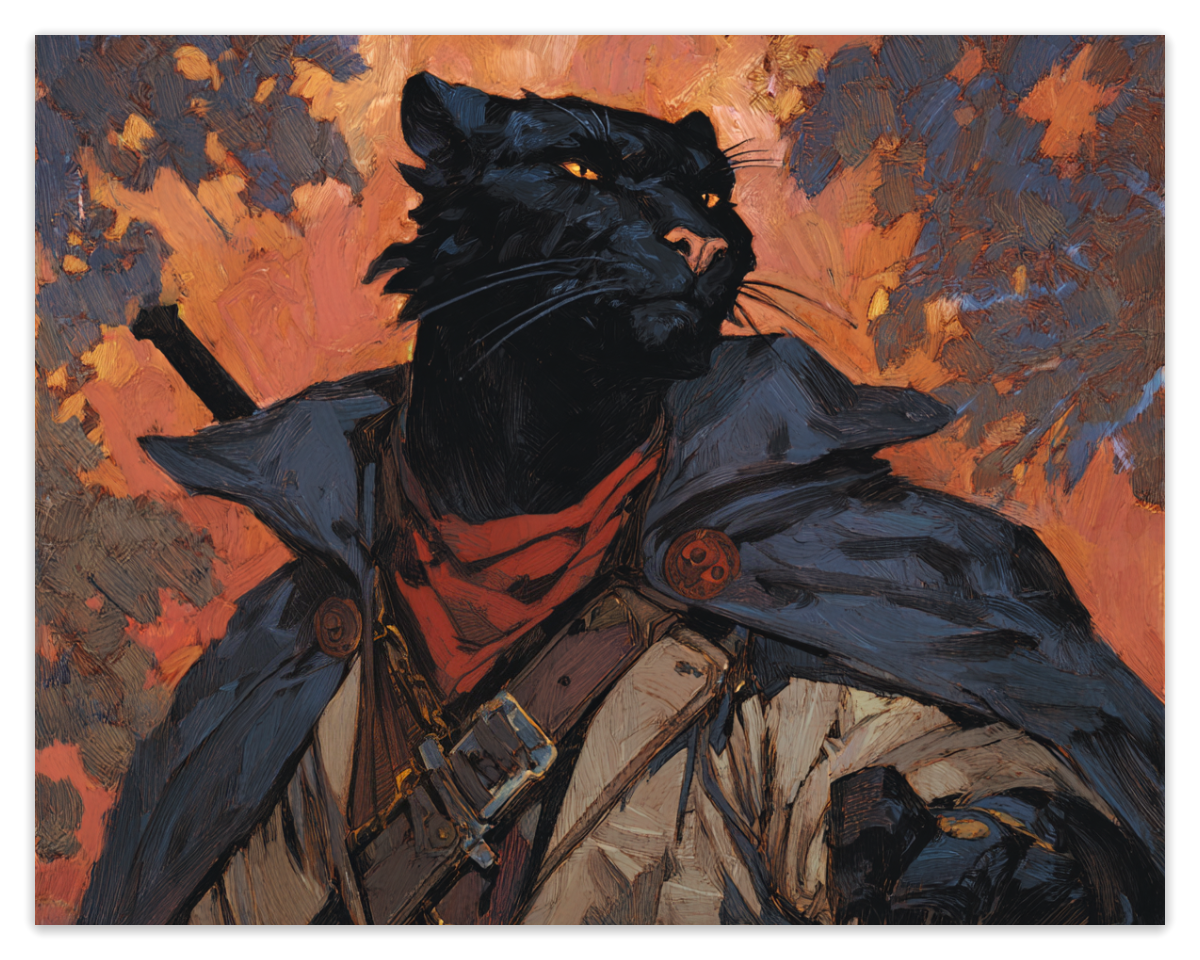
A Felarian elder receiving a visitor in a clan-hold has already performed a set of assessments before speaking: whether the visitor’s posture encodes the deference that means they know they are a guest rather than an auditor; whether their eyes move to the spaces in the room a Felarian would find significant; whether anything about their approach suggests they have been here before under a different name. Most visitors do not notice this happening. Felarians prefer it that way.
In Old Midralis, what is now an arid and semi-arid expanse was a vast, lush basin of savannah and dense greenery, temperate enough to sustain one of the most populous mortal civilizations on the continent. Felarians were the dominant people of that basin. When the Elemental Cataclysm struck and the slow desertification that followed remade the landscape over centuries, it did not merely displace Felarian communities. It collapsed a dominant population into a remnant one. The Uncommon rating is the scar of that collapse, not a reflection of what they were.
To Felarians, Vasterien is the grave of the civilization they had and the ground where they are building something smaller and more deliberate from what survived.
Hermit is the wrong word. The selective isolationism of 4th Age Felarian culture is a reasoned position on which aspects of the outside world are worth engaging with, and on whose terms. The Path-Prowlers, Felarians who have left Vasterien for extended integration into the wider world, are the face most of Midralis puts to the ancestry: scouts, mercenary rangers, guides, and occasionally diplomats operating on personal rather than clan mandate. They are also, as a rule, more capable in field situations than whoever hired them anticipated. This is not always obvious until something goes wrong. Most operate on genuinely personal terms. Some maintain informal ties to Felarian intelligence coordination: not as deployed agents, but because the instinct to report useful information back does not disappear with the formal mandate.
Physical Features
- Four distinct lineages with substantially different builds, heights, and coat patterns; see lineage profiles below
- Face humanoid in structure with feline overlay: prominent cheekbones, whisker-bearing muzzle shorter than animal cats; facial expression that reads clearly to other peoples
- Long expressive tail present in all lineages; a fundamental component of Felarii communication, not an ornamental feature
- Gait digitigrade; movement that other peoples consistently describe as silent even when they know a Felarian is present
- Lifespan 150–180 years; exceptional individuals reach 200
Fantastical Physical Traits
Several Felarian physical traits exceed standard humanoid biology.
- Low-light vision – Large vertical slit pupils adapted for dim and nocturnal conditions. Felarian visual acuity in darkness well exceeds humanoid baseline; they manage in conditions most other peoples cannot.
- Retractable claws – Hardened, curved, and capable of gripping vertical stone; Pantheran lineage claws approach full cliff-face habitation capability. Fine manipulation is fully intact. The extension reflex under extreme stress is involuntary and culturally managed from adolescence; an adult Felarian whose claws extend in a social context has disclosed their emotional state in a way the culture trains against.
- The communicative tail – The tail is a language channel, not a balance organ. In Felarii, tail movement carries meaning alongside voice. A Felarian using only words is giving the listener half the sentence, whether they know it or not.
Origin & History
The First Speakers
Felarian oral tradition is precise about one thing and guarded about another. The precision: an Awakening event occurred at a specific Place of Power in what is now Vasterien, during the Old Midralis period, in which the great cat lineages received the spark of sapience simultaneously or in rapid succession. The oral tradition names the generation. It describes the terrain. It encodes the emotional register of the event in the tonal patterns of the oldest Felarii songs.
The guarded part: the oral tradition identifies a Presence at the Place of Power. Something was there. Something acted deliberately. The oral tradition withholds the name. The gap is not one of loss. Gaps that represent genuine loss in Felarii oral tradition are encoded in dissonant tonal patterns that function as a cultural missing-page marker. The Presence is not marked as lost. It is marked as known and withheld. Felarian scholars who have examined the relevant song-tradition tend to reach the same conclusion. The name stays inside Felarian culture.
Old Midralis
What is now called Vasterien had no unified name in Old Midralis because it needed none: it was the great basin, a vast expanse of savannah, open woodland, wetland margins, and river-fed greenery. Felarian civilization was never organized the way the great empires of the era attempted to organize themselves. The basin’s distributed character rewarded distributed competence, and the four lineages maintained loose confederate relationships, meeting at shared sites for cultural exchange and dispute resolution. The Lost Place, the site of the original Awakening, was the closest thing this civilization had to a sacred center. It was not worshipped. It was remembered.
The Cataclysm and the Lost Place
The desertification of Vasterien was the slow consequence of the Cataclysm’s disruption of the region’s Prisma Current-sustained climate, a process taking centuries rather than years. Felarian oral tradition encodes it not as a single catastrophe but as a long diminishment: the green basin became the dry basin, and the dry basin became the desert margin.
The site of the original Awakening was in terrain the Cataclysm altered enough that its pre-Cataclysm location no longer corresponds to any identifiable feature in the current landscape. Felarian scholars have been searching for it since the Cataclysm remade the terrain. They have not found it. This is the organizing wound of Felarian cultural history: the loss of the one place that might have answered what they are and why they exist. The Presence cannot be questioned. The Place of Power where that questioning might have been possible is gone.
The Isolationist Era
As other civilizations began rebuilding after the Cataclysm and pushing into Vasterien’s margins, Felarian elders made a collective decision: secrecy over treaties. The Isolationist Era was a calculated assessment that the cost of being known exceeded the benefit of formal contact, not a reflexive withdrawal from the outside world. The Silent Claws emerged as the institutional expression of this decision: the defensive and intelligence apparatus that enforced the border between what Felarian culture permitted outsiders to know and what it kept inside. The ‘vanishing cat-ghost’ stories that spread through outsider accounts were a practical security apparatus, built by people who had decided that being underestimated was more useful than being respected.
Modern Era
Centuries of managed contact since the Isolationist Era began have produced a culture that knows exactly what it wants from the outside world and what it has no use for. Felarians trade with Vasterien’s border cities. Felarian scouts and rangers work for outside institutions that meet their standards. Felarian governance remains internal. The Concordiax’s attempts to extend Verbum licensing into Vasterien have produced the same courteous, firm, and final refusals every time. The Felarian position is that this conversation has been had before.
The Four Lineages
The four Felarian lineages are genuinely distinct, not cosmetically varied. They differ in build, sensory emphasis, territorial adaptation, and cultural role. They share language, the Awakening origin, and a broader Felarian framework. Agreement on what that framework requires is rarer than the shared origin suggests.
The Four Lineages
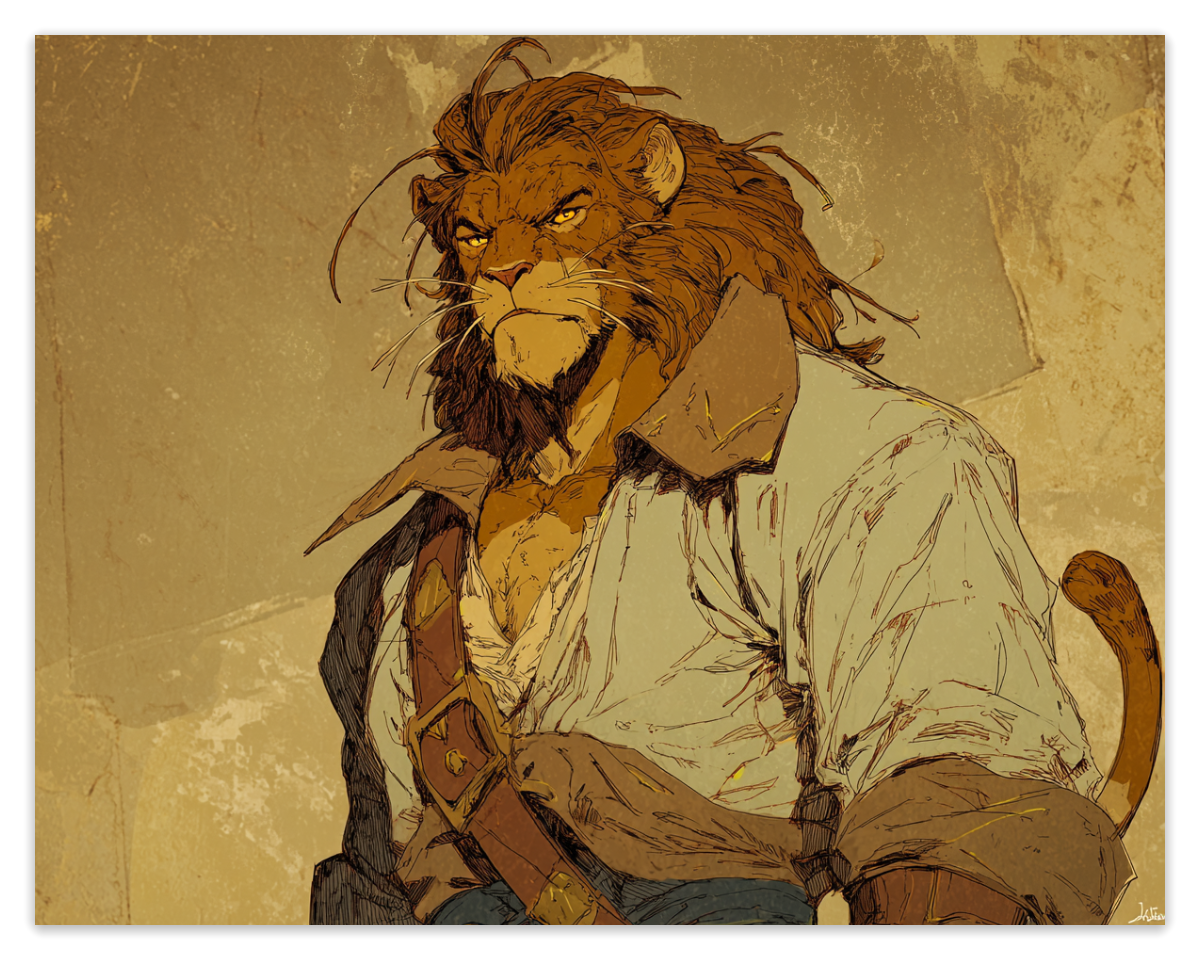
Leonian
The Pride-Keepers
The largest and most territorial lineage. When outside institutions deal with Felarian clans formally, they are usually dealing with Leonians, which suits Leonian temperament. Leonian culture is organized around collective honor: the clan’s reputation is the individual’s reputation, and actions that compromise it occupy the most serious category of transgression. The public formality of Leonian elders in external dealings is a performance of authority. Behind it sits a clan structure considerably more complex than the performance implies.
Physical Features
- Height 5’10”–6’2” (males), with females typically 5’6”–5’10”; broad-shouldered and built for visible presence over speed
- Full mane development in adult males; tawny gold ranging to deeper amber; mane volume is a legible social signal within Leonian communities
- Eyes most commonly amber or gold; fur dense at shoulders and chest
Predisposed Spiritual Expression


The Four Lineages
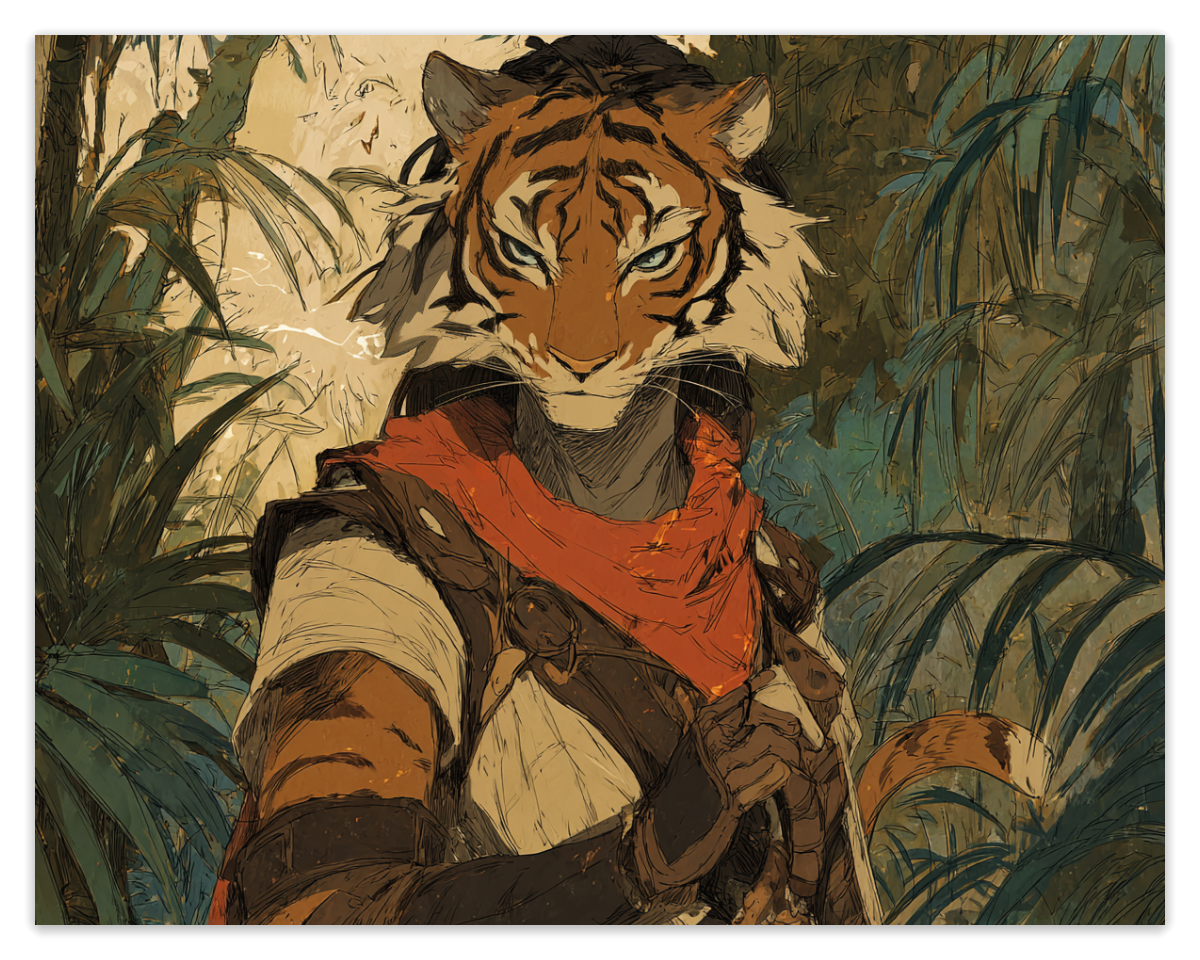
Tigerian
The Current-Readers
The heaviest-built lineage and the one with the strongest individual Prisma Potential in the population. Tigerian elders are the practitioners most likely to work directly with Prisma Currents. They hold the most detailed pre-Cataclysm geographic encoding of the Lost Place, which shapes their identity and frustration in equal measure. Tigerian culture runs toward urgency: theirs is the lineage that finds things, and the Lost Place is the one thing they have not found.
Physical Features
- Height 5’6”–6’0”; heaviest build of the four lineages; powerful through the shoulders and back
- Deep orange base coat with dark stripe patterns; stripes distinctive to individual lineages within the Tigerian population
- Eyes predominantly green or gold; the stripe patterning intensifies around the face and forearms
Predisposed Spiritual Expression

The Four Lineages
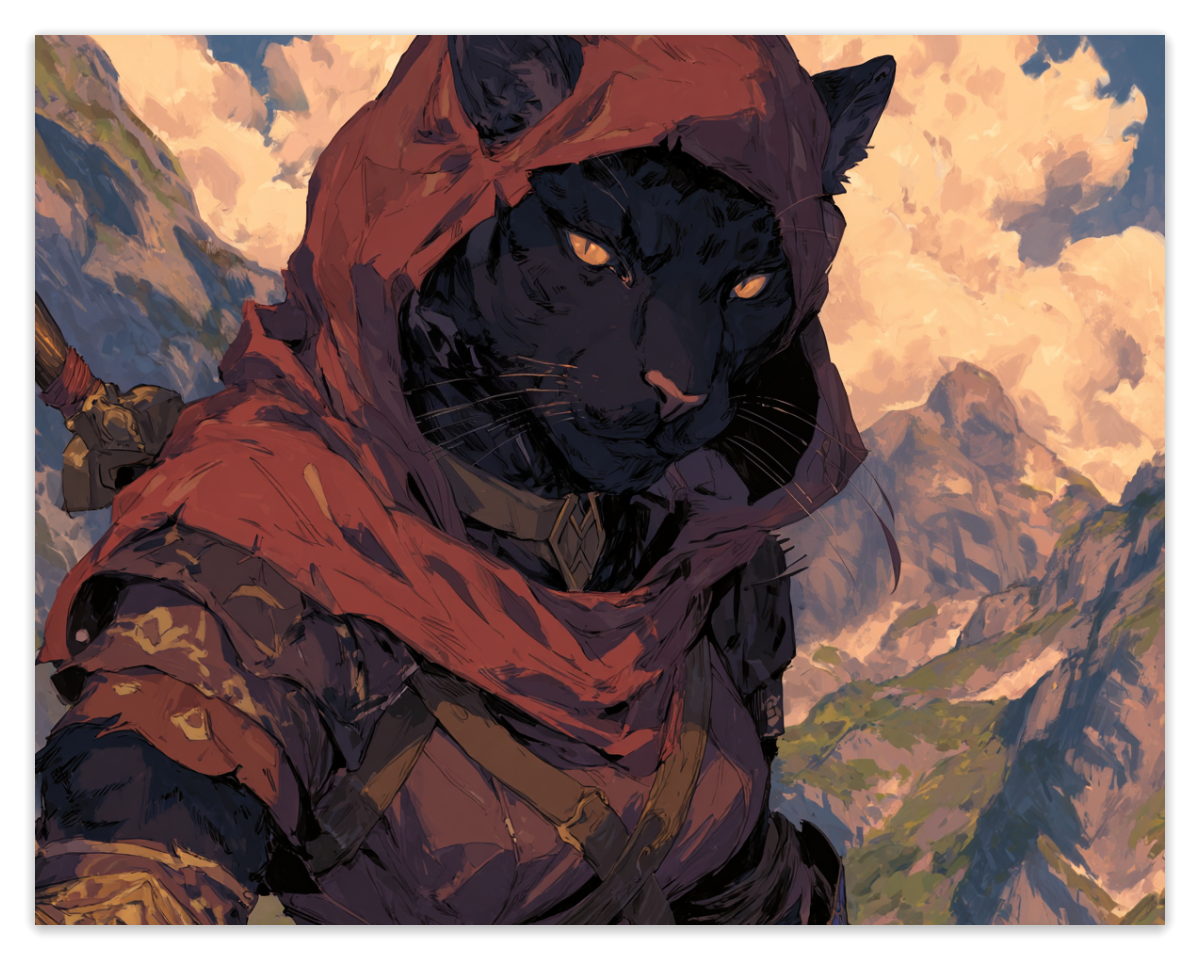
Pantheran
The Unseen Ones
The most solitary lineage, associated with cliff-aerie communities and the Isolationist Era’s defensive architecture. Of the four lineages, Pantherans range most widely: found across all regions of Vasterien and into Kält, wherever elevated or concealed terrain offers advantage. Silent Claws field operatives are disproportionately Pantheran by self-selection: a lineage whose defaults of solitary operation, patience, and ambush align naturally with that function.
Physical Features
- Height 5’2”–5’10”; lean and built for vertical terrain and sustained endurance over raw strength
- Deep black to dark charcoal coat with subtle rosette patterning visible in strong light; effective camouflage in rocky and low-light terrain
- Eyes typically blue or pale green; claws adapted for cliff-face grip; the most comfortable lineage in elevated terrain
Predisposed Spiritual Expression


The Four Lineages
Lynxian
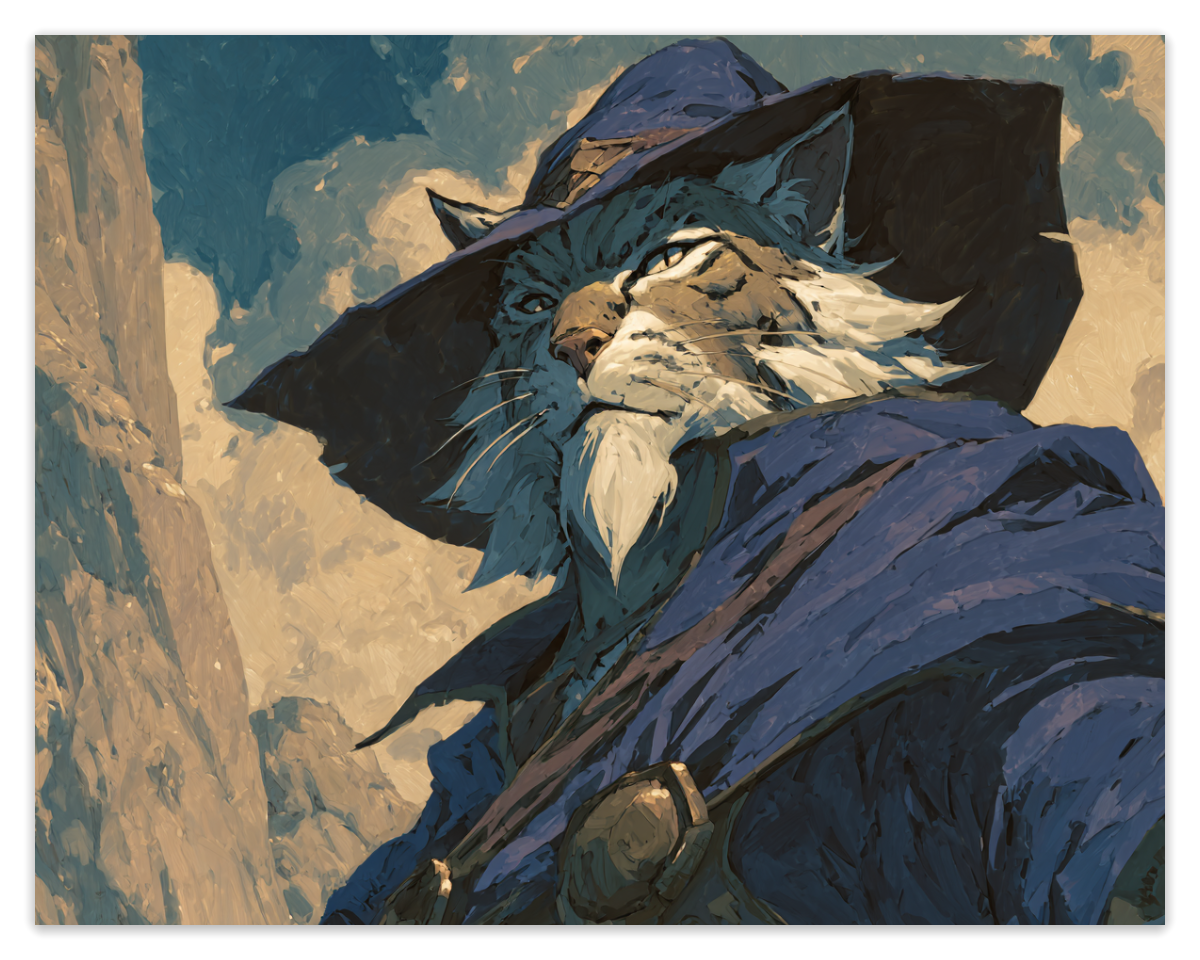
The Archive-Keepers
The smallest and most isolated lineage. Lynxian cultural scholars are the individuals most likely to know what the Awakening actually says about the Presence, and the ones most likely to carry that knowledge as a weight rather than a prize. Their relationship to the archive is custodial: responsibility to the thing being kept rather than pride of ownership.
Physical Features
- Height 4’10”–5’4”; compact build with the highest fur density of the four lineages, adapted for cold and altitude in southern Vasterien
- Grey-brown to silver-white coat; tufted ears distinctive among Felarian lineages; coloration lightens with age in some individuals
- Eyes pale blue or pale amber; exceptional cold tolerance; move quietly even by Felarian standards
Predisposed Spiritual Expression

The Silent Claws
The Silent Claws are the intelligence, security, and border management apparatus of Felarian selective isolationism: the institution that enforces the line between what Felarian culture permits the outside world to know and what it withholds. They maintain no standing army, no formal uniform, no institutional hierarchy outsiders have successfully mapped. What they have is presence: in the terrain, in the information networks, in the capacity to resolve a problem before it reaches a threshold requiring formal response. Outsiders who have dealt with the Silent Claws sometimes understand afterward that they had.
Maintaining this apparatus since the Isolationist Era has normalized certain ways of thinking about information, trust, and observation deeply enough that they shape childhood before they shape operational practice. Felarian children grow up knowing they are sometimes watched in ways they cannot see. This is framed as care rather than surveillance: the clan’s awareness of them is the clan’s investment in them. The household weight that active Claws work places on Felarian families has a particular quality: the condition of maintaining ordinary domestic life alongside the knowledge that one member is managing something the household will not be told about, whose resolution arrives as a change in the operative’s demeanor, not as news.
The Silent Claws’ reach extends beyond Vasterien’s borders. Some Path-Prowlers in cities beyond Vasterien maintain informal ties to Silent Claws coordination, voluntarily and without formal acknowledgment from either side. The Concordiax knows Felarian intelligence capability exists. What it cannot map is the scope.
Ordinary Life
Felarian culture is a strategic posture and a civilizational wound. The day-to-day is something else: people who argue about whose turn it is to maintain the perimeter markers, who make pointed jokes at each other’s expense in the tail register so the target knows and cannot formally object, and who have complicated feelings about their children’s choice of partner.
The Claw and Coming of Age
Claw extension is involuntary under stress and culturally managed from adolescence. An adult Felarian whose claws extend in a social context has disclosed their emotional state in a way that Felarian culture has been working against since before Vasterien was Vasterien. The adolescent failure Felarian coming-of-age stories are full of is a claw extension at a formal inter-lineage meeting, during a negotiation, in any context where Felarian composure is the point being made. The failure is not violence. It is visibility. For a people whose entire civilizational architecture is built around managing what outsiders can read, involuntary visibility carries real weight.
Felarians who have achieved genuine claw control have trained the reflex out before stress arrives. The work happens prior, not concurrent with the moment. They do not look calm. They are calm, or close enough that the difference produces no evidence. Other Felarians understand this distinction. It matters.
Courtship
Felarian courtship runs in the tail register. Outsiders present for it have no idea it is happening. A Felarian unavailable for courtship signals this in a tail position that translates roughly as ‘I see what you are doing and I am not available for it’, which outsiders miss, producing the particular comedy of watching someone wander off still unaware. The verbal register of a courtship exchange is indistinguishable from route discussion. Felarian culture conducts courtship rather than performing it, through channels observers without Felarii cannot read.
The Loose Claw
The Felarian term for this failure does not translate into Diplomata. The nearest approximation is ‘the one whose claw slipped.’ A Loose Claw is a Felarian who gave an outsider information that should have stayed inside. The slip can be small. The category is large.
The clan responds through absence rather than punishment, because formal punishment requires formal acknowledgment. The Loose Claw faces no accusation, no confrontation, no formal marking. What changes is their position: they are kept away from situations where the slip could recur. The warmth directed toward them is sincere. The positions offered are real. All of it is organized around one principle that is never stated. All of it is understood.
Affinity Disposition: Skewed
Nature and Darkness are the most common Spiritual Expressions among Felarians. Wind follows closely. Earth sits above the general mortal average. Light and Metal are the rarest within the lineage: present, but uncommon in a way that has held consistently across all four lineages for as long as records exist. Whether this reflects something in the Awakening event, something in Felarian ancestry itself, or the operation of chance across a long-lived population, the 4th Age has no settled answer.
The rarity carries social weight regardless of its origin. A Felarian working in Darkness is unremarkable; the expression is common enough to pass without comment. A Felarian working in Light will be noticed, not because Light expression is forbidden or distrusted, but because it is rare enough that the community takes notice. A Felarian Metal practitioner is rarer still, and occupies a particular position in a people who have historically preferred to leave as little permanent trace as possible, and whether the rarity shapes the preference or the two coincide is a question Felarian scholars have not resolved.
This table reflects population-level Spira tendencies; individual variation always applies.
| Spiritual Expression | Distribution (%) |
|---|---|
| Nature | 11.0 |
| Darkness | 10.5 |
| Wind | 10.0 |
| Earth | 9.0 |
| Anima | 8.0 |
| Fire | 7.5 |
| Mind | 7.0 |
| Aqua | 7.0 |
| Electricity | 7.0 |
| Thunder | 6.5 |
| Ice | 6.0 |
| Metal | 5.5 |
| Light | 4.5 |
| Empyreal | 0.5 |
World-Side Relations
With the Concordiax
Both sides understand the terms. The Concordiax wants Verbum licensing access to Vasterien’s communities, Prismal survey rights in the region, and the administrative transparency it has achieved with most other Auridian populations. Felarian clans have declined all three, consistently, without distress. The Concordiax’s frustration is practical: it has no enforcement mechanism in terrain it does not control, against a population whose security apparatus it cannot map.
With Vasterien’s Border Cities
The border city relationship is productive and pragmatic. Giris has a stable Felarian commercial presence built over centuries: scouts and rangers hiring out, trade goods moving in both directions, cultural exchange that neither side advertises. The arrangement holds because it runs on Felarian terms: no administrative oversight, payment in currency or goods rather than obligation, and the clear premise that a Felarian in Giris is there because they chose to be and will leave by the same logic.
With the Prismaturge’s Guild
The Guild relationship is more complicated than the Concordiax one, because the Guild wants something the Concordiax does not: the deep Current anomalies in Vasterien’s interior that Felarians know about and have not shared. The Guild has sent survey expeditions into Vasterien’s margins. Some returned with data suggesting something significant at depth. Others did not return. Neither outcome is discussed in Guild public records. Felarian clans have offered no explanation. Both sides are maintaining the fiction that there is nothing to discuss, and both know it is a fiction.
With Kält and the Dwarves
The Lynxian lineage’s high-altitude territory in southern Vasterien runs along Kält’s borderlands, making this the most sustained Felarian contact with Dwarven communities. The relationship is workable rather than warm, but that sells short what develops over centuries between two peoples who both care about keeping records and neither wants formal institutional contact. There are individual Lynxian-Dwarven working relationships in which the comparison of methods has happened. The people involved do not describe them to their respective communities.
With the Zalakiri
The feud dates to Old Midralis, ran through the 2nd Age and into the 3rd, and was paused by Giris’s economic pressure rather than resolved. In the 4th Age the truce holds nominally: confrontations are logged as territorial disputes by both sides. The hostility is intact. The question is what breaks the arrangement and whether Giris can manage the fallout when it does.
Language Notes
In Felarii, tonal, gestural, and postural components carry meaning in their own right, not as supplements to the verbal register. Those working through Diplomata receive the verbal register only. A Felarian speaking Felarii to another Felarian in a room of Diplomata-fluent listeners is conducting a conversation with a significant portion of its content in channels those listeners cannot receive: emotional register in the tail, layers of meaning in the tonal component that the verbal component is designed to be incomplete without. Genuine fluency requires native acquisition or immersive study sustained longer than most outside learners manage.
The oldest stratum of Felarii, the tonal patterns encoding the Awakening and the cultural memory of Old Midralis, is not taught as a language system but as a practice. Cultural scholars learn to produce and interpret particular song-patterns rather than speak in a generalized archaic register. The oldest patterns exceed what ordinary linguistic competence can access; they require the lineage transmission that carries the interpretive context. Lynxian scholars, holding the most intact pre-Cataclysm archive, have the deepest current access to this stratum.
Systems & Campaigns
- Pathfinder 2e Catfolk → Felarian
- Draw Steel TBD
- Daggerheart TBD
- D&D 5e+ Tabaxi / Leonin → Felarian
- Realmfall Saga Active