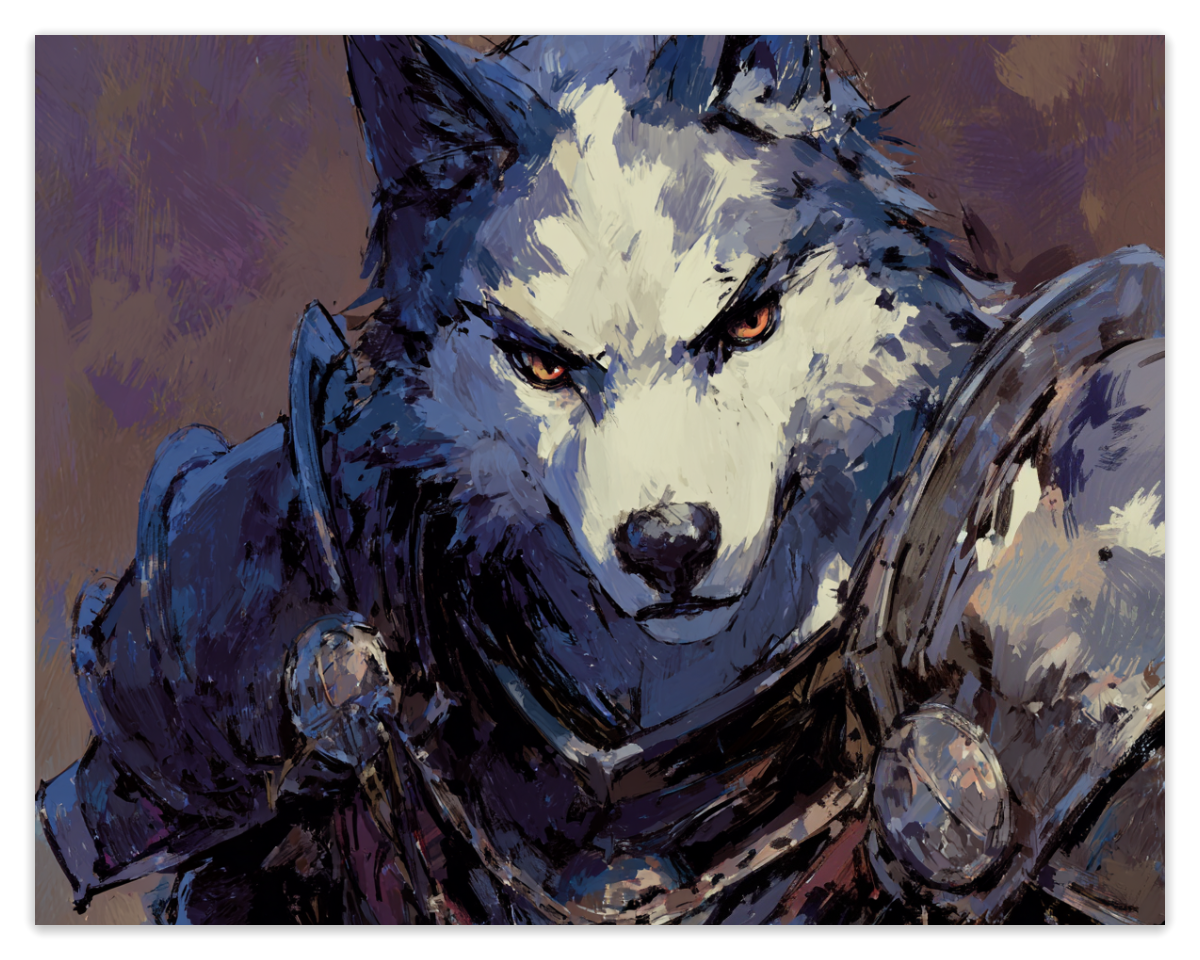
Ancestry · Iphexar · Midralis
Canith
 Uncommon
“There is no better companion when something goes wrong. The quality of attention a Canith brings to a crisis, the willingness to absorb cost on behalf of others, the institutional memory of how to improvise when everything else has failed: these are genuine and not easily found elsewhere. What the public record does not capture is that the same people who will carry you out of a burning building will carry out the wrong thing entirely if the wrong person has their loyalty. The difference between the two situations is not the Canith. It is whoever they chose.”
— Eonlogos, Celosian ArchivistOverview
A Canith who sits down at your table for the first time has already done three things you did not see: assessed whether you are the kind of person who keeps their word, noted who in the room looks like they are carrying something they have not named yet, and decided, provisionally, whether they are interested in knowing you. None of this reads as calculation. It reads as warmth, which is the point. Whether you call that instinct or practice or generations of cultural transmission reaching back before the Cataclysm is a philosophical question the Canith will engage with cheerfully and at length, usually after the problem is solved.
Caniths are not a ruling people. This is a statement about orientation, not capability. What they are is something the setting often finds more useful and occasionally more unsettling: the people everyone calls when formal institutions have failed. Showing up when things go wrong, uninvited and effective and without requiring credit, for as long as there have been cities in Auridia to call them, has given the Canith something that thrones do not confer. Every inter-state dispute of real consequence will have a Canith arbitration offer on the table by the second week. Every city-state administration in Auridia has at some point dealt with a Vanguards recognition question and found it harder to resolve than expected. Every orphan taken in by a Canith family enters a web of loyalty that will outlast the original crisis by generations. You do not acquire this kind of structural presence by being useful occasionally. You acquire it by being the people who showed up when nobody else did, consistently, for long enough that the world organized itself around the expectation.
What Caniths are not, and have never been, is naive about what this position represents. The city-state whose arbitration outcomes are recognized under Canith process, or whose Vanguards branch is staffed by people with pack bonds that predate the guild, has given the Canith something that cannot be taken back without cost. The Canith who understand this, and most do, have decided, collectively and without explicit deliberation, that the most effective use of this position is not leverage but continued reliability. This is a choice. It is also a choice that looks, from outside, indistinguishable from simple goodwill.
Physical Features
- Eyes large and expressive; the quality of attention visible and immediately legible across ancestry lines
- Tail is a full communication channel in Bacanis: carries meaning alongside speech, readable unconsciously between Caniths; a diplomat running a Bacanis conversation with their tail while speaking Diplomata is not unusual
- Bacanis carries tonal and pace information that Diplomata flattens; the emotional register of code-switching between the two languages is audible to anyone paying attention
- Size and coloration varies significantly by sub-type; see sub-type profiles below
Origin & History
The Blessing of Candus
In the twilight centuries of Old Midralis, the being the old records call Candus found a scattered wolf pack that refused to abandon a ruined farming village during a harsh winter. What followed is described simply as a blessing. The wolves became something else: speaking, reasoning, bound by an oath they could now speak aloud. The newly awakened Canith pledged an oath: “No shelter left undefended.”
The story is clean. It is also lived in by a people who have had since before the Cataclysm to disagree about what it means. Some Caniths say Candus blessed them for staying. Others say the test was not staying but the specific decision to stay with strangers rather than kin: that any pack might defend its own, and that the blessing was in the refusal to distinguish. Others say the village was already dead when the wolves arrived, and that Candus blessed them not for usefulness but for the decision to remain present when usefulness was no longer possible. Some Fenar elders hold that the oath matters more than the blessing: that what Candus conferred was opportunity, and that the Canith became what they are through the oath’s demands rather than the blessing itself.
Packs on the March — Old Midralis Era
As the first packs left their origins, they came to be called Trailbounds: guides who led caravans through blizzards, tracked predators that stalked lonely roads, and settled disputes around campfires. Their reputation for fair bargains and fearless night watches spread across Old Midralis. Frontier hamlets invited Canith families to settle nearby in exchange for protection, mapping, and the establishment of relay kennels that carried urgent messages across vast distances. Small in number, they traveled constantly: solving problems, not ruling land.
The relay kennel system that emerged was not designed as infrastructure. It grew as a byproduct of Canith mobility: packs that traveled the same routes consistently and had the combination of trustworthiness and territorial knowledge that made them reliable message carriers. By the late Old Midralis period, the kennel relay network was functionally the fastest long-distance communication system on the continent.
The Stormward Years — The Elemental Cataclysm
When the Elemental Cataclysm struck, the Canith packs answered instinctively rather than strategically. Storm-packs herded stampeding wildlife away from magma vents and dug ash-barriers. Others lashed improvised pontoon bridges from orchard timber to evacuate river towns ahead of tidal surges. Others worked alongside Dwarves to prop collapsing tunnels with timber-wedge trusses still copied by miners today. Local chronicles across Auridia note simply: “When the elements raged, a Canith saved us.”
The Stormward Years produced a Canith cultural memory not of glory but of necessity: the knowledge that they were there when it mattered and that nobody had sent them. Their self-image as first-to-help rather than first-to-command was forged here.
The Holdfast — The Galekian Period
As the Galekian Empire rose and extended its dominion, the Canith packs found their informal helping tradition operating in increasingly hostile institutional terrain. The Empire tolerated the Canith as a peripheral nuisance it had not gotten around to formally suppressing, which suited the Canith perfectly. What developed was not a formal institution but a network: safe houses, coded communication using Bacanis register markers embedded in trade correspondence, and a loose hierarchy based on reliability through which resources, warnings, and people in need of help were distributed across Auridia’s width. Later historians would call this period and the packs who sustained it the Holdfast.
Founding the Vanguards of Valor
In the post-Galekian period, a circle of veteran Canith Holdfast operatives drafted a simple charter: “Any who would brave the unknown, aid the helpless, and return with honest account may wear the Vanguard’s medal of honor.” The formalization was gradual. Individual city-state authorities, impressed by the practical utility of having a registered pool of capable problem-solvers with a reputation for accountability, granted operational recognition. What had been an underground network of good-faith actors became a legitimate institution, not because the Canith decided to build one, but because the world kept needing what they had been providing informally and eventually someone put a sign above the door.
Caniths Today
In the 4th Age, the Canith occupy a position in Auridian society that no institution formally recognizes and none can comfortably do without. The Kennel Post still operates, now as a niche relay network absorbed into Vanguards infrastructure rather than the dominant correspondence service it once was. Pack Arbitration resolves disputes that courts cannot and provides resolutions that the Concordiax has learned to recognize as legally binding without examining the mechanism. The Foster Tradition has seeded, across every major population center in Auridia, a generation of people with pack bonds to Canith communities that formal institutional analysis has no category for. The Vanguards of Valor hold their charter, absorb new members from every ancestry on the continent, and are the first institution anyone contacts when something goes wrong outside the jurisdiction of existing frameworks.
The Canith position in the 4th Age is what showing up without requiring credit, across the full span of the New Age and before it, has produced. It is not a throne. It is not leverage, in the way that leverage is usually understood. It is a structural presence that has become part of how Auridia functions, such that the question of what would happen if the Canith withdrew from it is the kind of question institutional planners in multiple city-states have written internal memos about and then not filed anywhere anyone could find them.
The Three Institutions
Three institutions define Canith civic presence in Auridia. They emerged at different moments in Canith history, serve different functions, and are understood by outside institutions with different degrees of accuracy. Together they represent the institutional form of what a very long history of showing up consistently produces.
The Kennel Post
The Kennel Post predates the Cataclysm. It grew as a natural consequence of Canith mobility across Old Midralis: packs that traveled the same routes consistently, whose reliability was personal rather than institutional, who had the combination of trustworthiness and territorial knowledge that made them effective message carriers. Through the 1st and 2nd Ages of the New Age, the Kennel Post was the fastest and most dependable long-distance correspondence network in Auridia. Every city-state depended on it. The Galekian period tested it without breaking it.
The post-Galekian period changed its position permanently. As the Scrabblenot Skrit Vel expanded across Auridia in the 3rd Age and into the 4th, the Kennel Post lost its standing as the dominant relay service. The Skrit Vel is faster, more formally distributed, and operates at a scale the Kennel Post cannot match. Cities and trading houses that once ran their correspondence through Canith routes moved to the Skrit Vel as a matter of practical efficiency.
What the Kennel Post has retained is a niche that the Skrit Vel does not fill: correspondence that parties want handled with Canith discretion rather than Scrabblenot efficiency; routes in territories where the Skrit Vel does not operate; and the internal communications infrastructure of the Vanguards of Valor, which continues to run its operations on Kennel Post relays as a matter of institutional habit and, for some senior Vanguards, of deliberate principle. The Concordiax maintains a formal relationship with the Post and the polite fiction that this constitutes oversight. In practice, the Canith families who still staff active routes retain the accumulated pattern recognition of a network that has been carrying urgent correspondence since before anyone currently living was born.
Pack Arbitration
The second institution has no central building, no charter, and no official founding date. Pack Arbitration is the practice, formalized over centuries, of requesting Canith elders to serve as neutral arbitrators in disputes that the parties involved cannot resolve and do not trust institutional courts to handle fairly. The request can come from individuals, communities, guilds, city-states, and occasionally small nations. What Canith arbitrators do is read the social architecture of the dispute: the web of interests, injuries, and unspoken needs that the formal positions of the parties conceal, and facilitate the conversation that the parties cannot have without a trusted third party.
Pack Arbitration works because Canith reputation for impartiality is backed by the Bacanis distinction between genuine loyalty and performed loyalty, a distinction that Canith arbitrators make visible during the process. Parties who are performing positions they do not actually hold find themselves in the uncomfortable position of being accurately read by someone who has no interest in pretending not to notice. The Concordiax officially recognizes Canith arbitration outcomes as legally binding in most member states while simultaneously maintaining that Concordiax courts have ultimate jurisdiction, which the Canith arbitration tradition has never formally contested because the cases that reach Pack Arbitration are the cases Concordiax courts cannot handle.
The Foster Tradition
The third institution is the most diffuse and the most socially consequential. Canith communities formally take in orphaned, abandoned, and displaced children of any ancestry as a cultural practice so deeply embedded that “raised by Caniths” is a recognized social category across Auridia. The practice predates the Vanguards. Its origin is not formally documented because, from a Canith perspective, it required no founding: a community that understood itself as constituted by chosen bonds rather than blood lineage naturally extended that understanding to children who needed choosing.
What this has produced, across the full span of the New Age and before it, across every region of Auridia, is a network of people who were taken in by Canith families and carry a pack bond to the community that raised them for the rest of their lives. These are not Caniths. They are Myûr, Goblinoids, Mirthlings, Dwarves, and members of every other ancestry in Midralis who grew up inside Canith household culture, learned enough Bacanis to know what the grammar of loyalty actually means, and carry obligations that no institutional relationship fully captures. Many senior Vanguards were fostered by Canith families. The Canith are aware of this. They do not emphasize it in external communications.
The Four Sub-Types
The four Canith sub-types trace the diversity of canine character present in the first packs to receive the blessing. They are not subraces in the genetic sense. Inter-sub-type families are common and produce offspring of either parent type or occasionally something intermediate. They are, however, meaningfully distinct cultural and physical orientations that have developed across millennia of separate community practice.
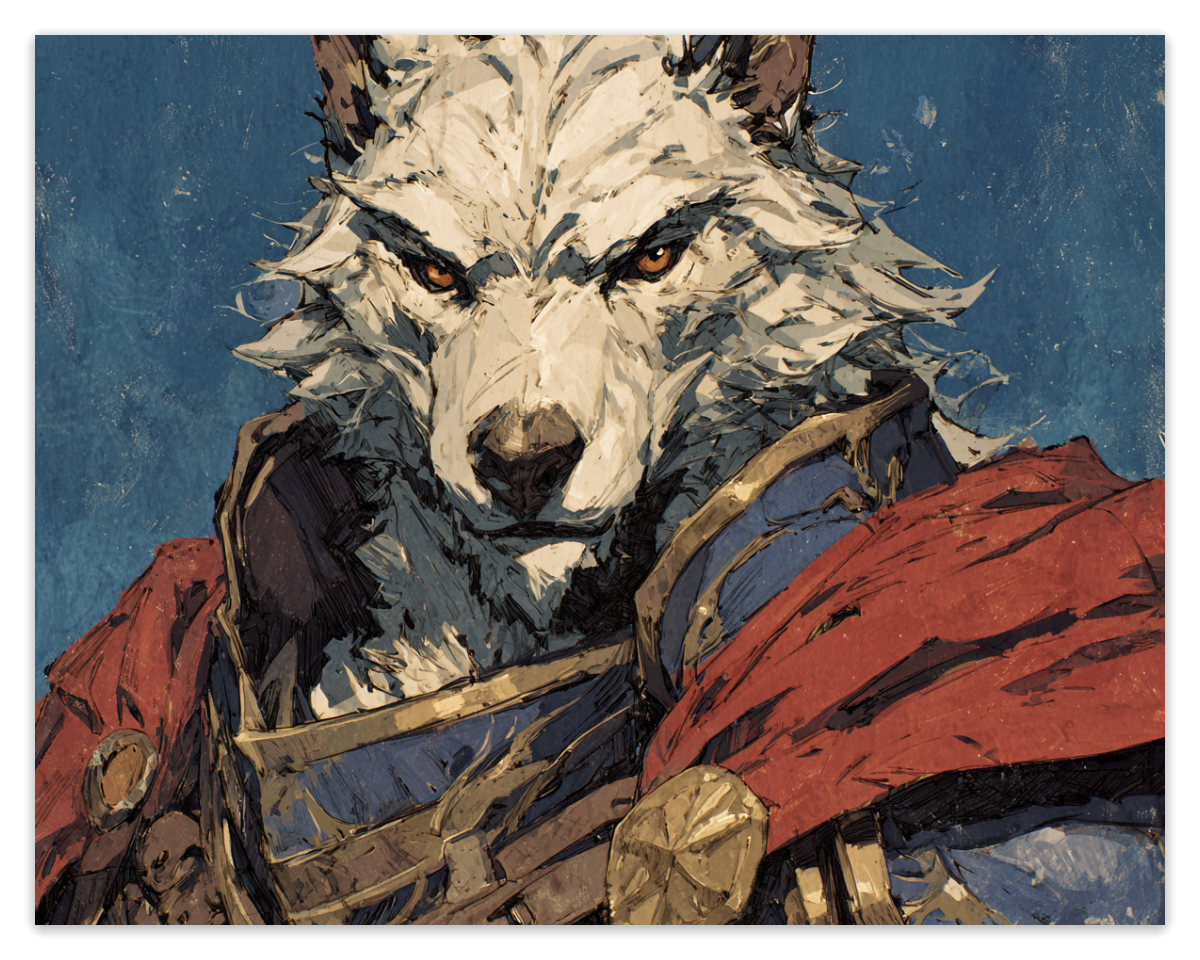
The Four Sub-Types
Fenar
Wolves · Warriors & Defenders
Physical Features
- Heavy-set, broad-shouldered; the largest sub-type on average; built for sustained endurance and sustained combat presence
- Deep grays, blacks, and winter whites; dense double coat; the coat that performs best in cold-exposure conditions
- Angular wolf features and prominent muzzle; the sub-type most immediately recognizable as Canith to non-Caniths
The most numerous sub-type and the one closest to the founding wolves. Fenar culture organizes around the concept of the defended perimeter: knowing what you are protecting and being prepared to stand between it and whatever threatens it. A Fenar who draws their weapon has decided the conversation is over, a decision they make deliberately and late. The time before that decision is spent ensuring it does not have to be made. They hold a disproportionate share of senior Vanguards positions not by institutional preference but because they are the sub-type most willing to absorb the cost of command decisions that others would prefer not to make: the call that gets people hurt, the choice that cannot be fully explained until years later, the specific weight of being the one who was responsible when something went wrong. Fenar leadership is earned through crisis. It is also marked by it.
Predisposed Spiritual Expression



Social Liability
The defended perimeter, taken far enough, becomes paranoia about what’s outside it. Fenar communities that have not been tested in a long time develop a specific institutional rigidity: all preparation, no adaptability. The elder who has been protecting the same perimeter for forty years has very detailed opinions about threats he understands and very little patience for the ones he does not.
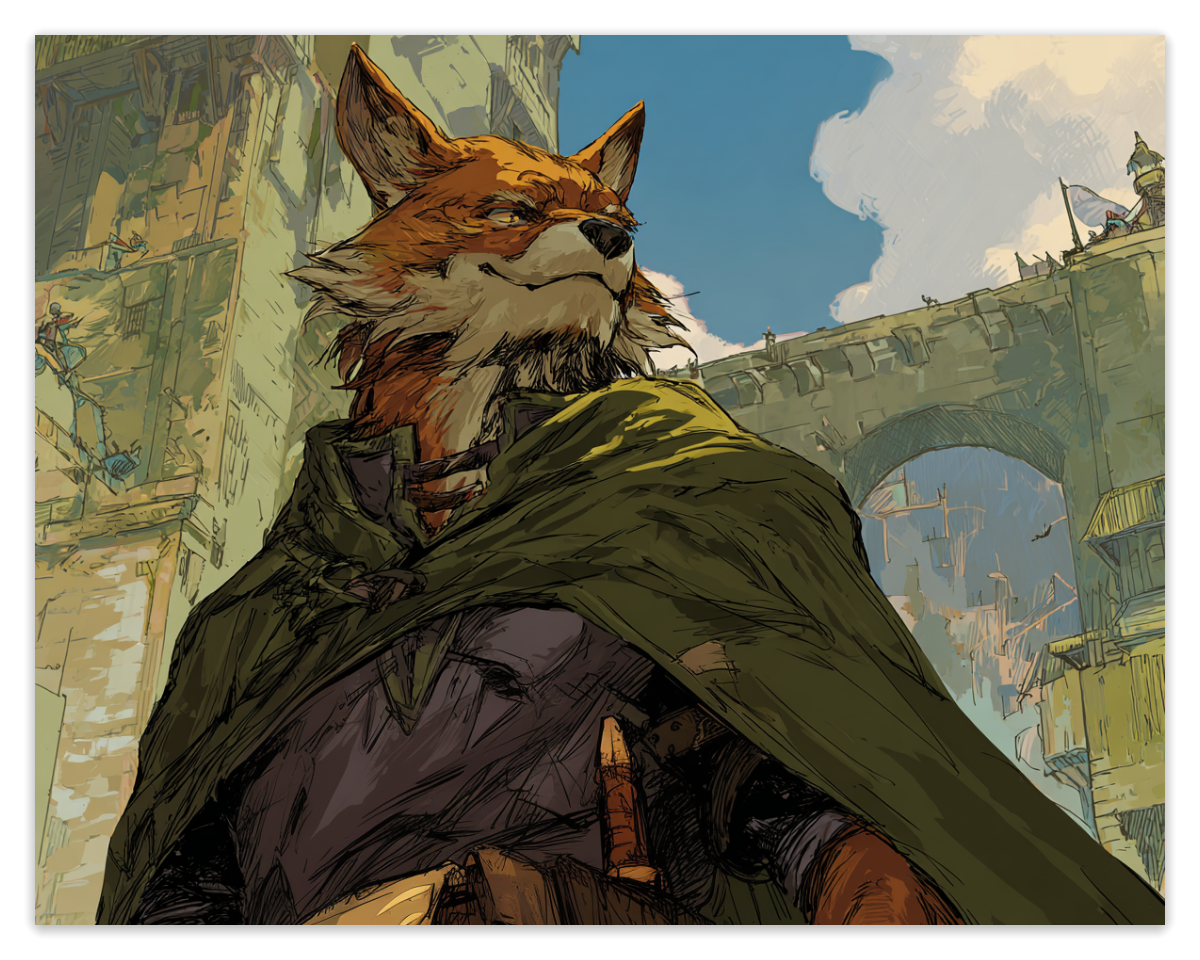
The Four Sub-Types
Lupine
Foxes · Scouts & Messengers
Physical Features
- Lean, quick-twitch build; lighter and faster than other sub-types
- Amber, rust, and deep orange; occasional silver-gray accents; the lightest coloration in the Canith population
- Fox-adjacent features: pointed muzzle, large mobile ears; the most physically differentiated from the founding wolves
Lupine culture prizes adaptability and information as primary values, not in the cynical sense of knowing things to use against people, but in the practical sense of a sub-type whose historical role has always been operating in uncertain territory where knowing what you do not know is as important as knowing what you do. Their quick wit is the social expression of the same cognitive agility that makes them effective in the field. The Lupine who has been in the field for a decade and survived through accurate environmental reading tends to develop an intellectual humility: the terrain is always more complex than the map, and the person who knows the map best is the person most vulnerable to what the map does not show.
Predisposed Spiritual Expression


Social Liability
The person who tracks three threads simultaneously has difficulty committing to one. Lupine intimacy, when it occurs, tends to feel provisional in ways that the Lupine themselves often cannot name: they are genuinely present, genuinely warm, and genuinely uncertain whether the warmth is an observation or a state. Long-term Lupine partners in non-Canith communities consistently report that knowing a Lupine very well is not the same as knowing a Lupine is fully there.
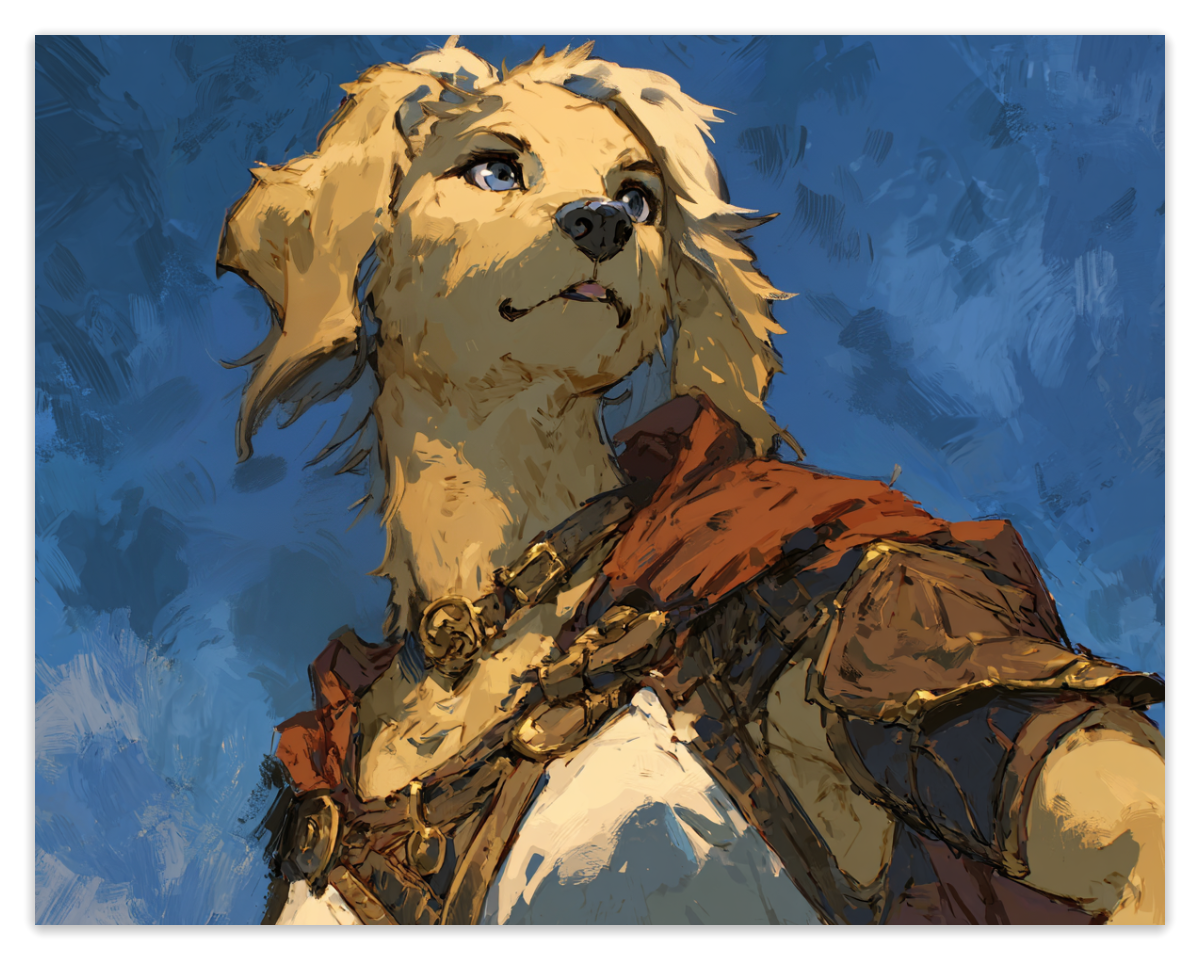
The Four Sub-Types
Brillor
Retrievers · Community Anchors
Physical Features
- Broad-shouldered and built for sustained physical endurance; sturdy without the weight of Fenar
- Warm gold and rich brown; some individuals carry bioluminescent markings that glow faintly in low light
- Expressive face with high emotional legibility; the easiest sub-type for non-Caniths to read accurately
The sub-type most oriented toward community infrastructure rather than individual excellence. Brillor culture is organized around anticipatory care: noticing what a situation needs before anyone has to ask, and providing it without making the provision a performance. Within the Vanguards, Brillor fill the roles that hold expeditions together when everything else has gone wrong: the quartermaster who kept emergency rations nobody knew about, the medic who documented everyone’s injuries before triage, the person who noticed the trap before the scout did and said so quietly rather than making a point of it. Their Anima Spiritual Expression, the highest in the Canith population, produces a sensitivity to the Spira of individuals and communities that Brillor cultural role makes direct practical use of.
Predisposed Spiritual Expression

Social Liability
The person who quietly saves everyone also, by virtue of doing it quietly, controls the terms of being saved. Brillor caretaking can become soft coercion without the Brillor noticing: the friend who always knows what you need is also the friend whose needs are never named, who creates a social debt through generosity that is real even though it was never intended, and who occasionally finds that the community that depends on them has stopped being able to function without them in ways that are not healthy for anyone involved.
The Four Sub-Types
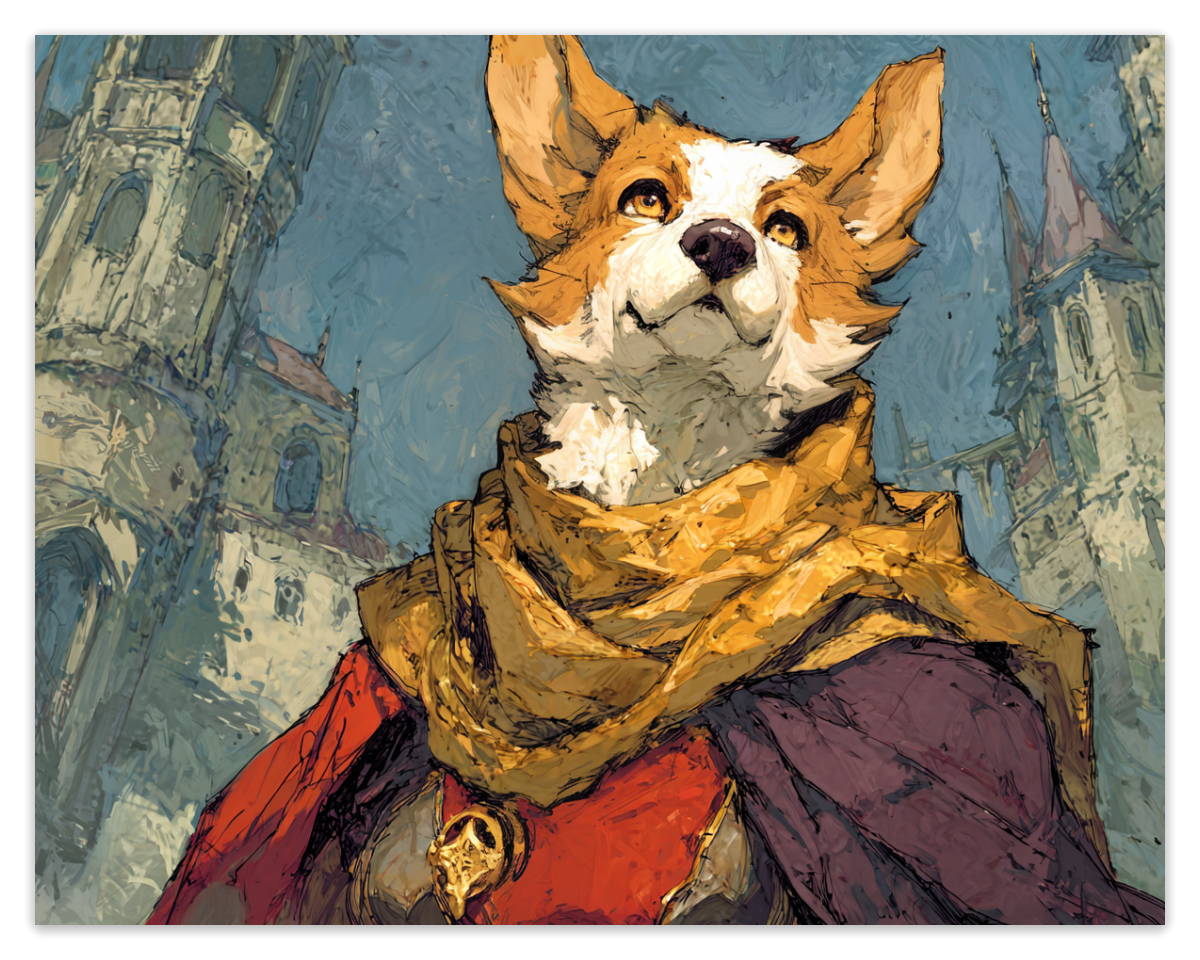
Corgi
Corgis · Diplomats & Bridge-Builders
Physical Features
- Compact build with unexpectedly sturdy proportions; low center of gravity; harder to move than they look
- Mixed color patterns; characteristically very large, highly mobile ears
- The sub-type whose physical scale most surprises non-Caniths on first meeting; the gap between apparent and actual presence is consistent
The least numerous sub-type and the one whose physical profile most surprises outsiders. What Corgi Canith lack in physical presence they make up for in social presence of unusual intensity. Their effectiveness in diplomacy comes not from mastery of persuasion technique but from a genuine curiosity about the person across the table and a genuine investment in finding a resolution both parties can live with. They are the sub-type most likely to identify a conflict before it becomes a crisis, most likely to convene the conversation that prevents the escalation, and most likely to maintain relationships across sub-type and community lines that make collective Canith action possible. Corgi social intelligence is relational and tactical: they read who is emotionally open, who needs to save face, who is performing a position they do not actually hold.
Predisposed Spiritual Expression

Social Liability
Bridge-building, taken far enough, becomes compulsive smoothing-over that buries rather than resolves. The Corgi whose instinct is always to find the middle ground develops a specific aversion to the conflicts that have no middle ground, and rather than acknowledge those conflicts for what they are, manages them into a temporary peace that eventually collapses at worse timing than the original confrontation would have. The room that a Corgi has kept comfortable for three years sometimes explodes precisely because the Corgi kept it comfortable for three years.
The Vanguards of Valor
The Vanguards of Valor is the most widespread adventurer institution in Auridia: a guild that operates across national borders, provides registered adventurers with access to formalized quest contracts, and maintains the public ledger of active members that every major Auridian city’s administration has learned to treat as a useful intelligence resource. Its founding was Canith. Its membership is open to anyone who meets its standards. Its cultural character remains, recognizably, a formalization of what Canith packs have been doing since the oath was taken.
The guild’s operational structure is branch-based. Each branch operates under the laws of its host country and maintains its own quest board, facilities, and membership records. This decentralization is a feature: it allowed the Vanguards to survive the Galekian period as an underground network precisely because no single point of failure could collapse the whole.
The Concordiax recognizes the Vanguards and has done so formally since the 4th Age’s institutional consolidation period. The recognition is genuine and the utility is mutual: the Concordiax gets what amounts to a continent-wide voluntary registry of capable individuals, complete with Prismal Signature data and Echo Magnitude estimates. The Vanguards get formal legitimacy and the specific protection of being too useful to antagonize. What the Concordiax does not get is operational authority. The Vanguards’ charter predates the Concordiax and has survived every legal challenge to the guild’s institutional independence. The Concordiax’s relationship to the Vanguards is the relationship of a patron who has persuaded themselves that their recognition constitutes control.
The Vanguards are not clean. Branch favoritism in senior appointments, pack dynamics that produce quiet exclusions of talented members who did not grow up in the right social circle, and the resentment of communities that felt abandoned once a contract ended and the Vanguards moved on: all of these exist, are acknowledged internally, and are addressed with uneven success by a guild whose governance culture is shaped by the same Canith social dynamics that produced the problems. Countries that have refused operational recognition are, from the Concordiax’s perspective, the most irritating administrative problem the institution currently faces. Several refusal countries made their decision precisely because a country without a Vanguards branch is a country whose adventurer population exists entirely off the ledger.
Ordinary Life
Canith identity is strongly tied to showing up when things go wrong. This is the public face, and it is accurate. It is also incomplete.
Pack Structure and Household
The Canith household is organized around the chosen pack rather than the biological family, though the two frequently overlap. A pack in the formal Bacanis sense is a group of individuals who have explicitly acknowledged mutual obligation: not just people who live together or care about each other, but people who have made the specific commitment that Bacanis grammar distinguishes from all other social bonds. The pack you were born into, the pack you chose, and the pack that chose you are three different things in Canith social reality, with different weights, different obligations, and different consequences when the bond frays.
Canith households tend toward the larger end of what other races consider a household. It is entirely common for a Canith living unit to contain the biologically related core, one or two foster children of any ancestry, a traveling companion who has been staying “for a few weeks” for seven years, and an elder who is technically independent but whose practical integration into the household is complete. This is not disorganization. It is the household expression of the same expansive loyalty that produces the Foster Tradition at the community level.
Courtship and Pack Formation
Canith courtship is, in its own way, explicit. The Bacanis register of offering a pack bond, the grammar that distinguishes this from friendship, from professional loyalty, from temporary alliance, is not subtle to a native speaker, and Caniths who are being courted know they are being courted. What varies is the response register, which can range from acceptance through a form of deferral that means “not yet, but possibly” to a gentle redirect that means “I value what we have and this would change it in a direction I do not want.” These distinctions are audible to Caniths and almost entirely lost in Diplomata, which has produced the particular category of Canith-adjacent heartbreak where a non-Canith partner missed the deferral as an acceptance and a long period of comfortable domesticity ends with a very surprising conversation.
Grief
Canith grief is loud and then quiet, in that order. The immediate response to loss in Canith communities is communal and unmuted: the howl that other races document in travel accounts with some variation of “I heard sound coming from the Canith quarter that I did not know how to name.” After the communal period, Canith grief becomes the process of redistributing what was carried by the person who is gone, so that nothing they held is dropped. A Canith who was responsible for particular things in the pack continues to be responsible for them after death in the sense that someone else takes them up deliberately, names the original carrier, and carries them forward under that name.
The Canith Who Refuses
Not every Canith wants to be useful. Not every Canith who wanted to be useful for decades still wants to be useful afterward. The Canith who has reached that limit is a real and recurring figure in community life, and the community’s response to them is one of the more honest things the culture produces.
The response is not contempt. It is also not uncomplicated warmth. It is a community confronting the question of whether the decision to stop is a tragedy or a choice, and finding that it cannot fully settle on either answer. The Canith who refuses has not violated an explicit code. They have withdrawn from the implicit expectation that underlies Canith social identity, the expectation that if you can help, you will, and in doing so, they have made that implicit expectation visible in ways the community finds uncomfortable. The people who care about them want them to rest. The people who care about them also, quietly, want them to come back. The person who burned out knows both of these things and has decided to bear the discomfort of refusing both rather than perform either one.
The Canith Who Chose Wrong
The shame attached to having given loyalty to a pack that turned out not to deserve it is one of the most privately held wounds in Canith emotional life. This is not about betrayal. Betrayal is something that happens to you, and Canith culture has functional ways of processing it. This wound is about having been wrong in your assessment of who was worth the loyalty in the first place. The Bacanis language has a word for this state. Diplomata does not. The closest approximation is “the one who chose badly” but that translation carries a moral judgment that the Bacanis term does not. In Bacanis, it is simply a description of a wound that exists, not an accusation.
Canith communities handle the Canith who chose wrong with a particular quality of care that looks, from outside, like ordinary warmth. The person who chose badly is not an object of pity. They are someone whose social reading, the most valued Canith competence, failed them in the most consequential possible context, and who now carries both the loss of what the loyalty was given to and the knowledge that they were wrong about it. The community can carry the practical weight of that. It cannot carry the knowledge for them.
Pack Loyalty and Its Distortions
Canith ethical orientation is organized around the primacy of the pack bond, meaning the people you have chosen and who have chosen you, over abstract principle. A Canith who has given their loyalty will not withdraw it because the situation became complicated. A Canith who has not given their loyalty will hold that line even when institutional pressure or social expectation demands otherwise.
The distinction between genuine loyalty and performed loyalty is one Caniths read with the accuracy of beings whose survival has historically depended on knowing the difference. Tyrants who attempt to use Canith pack bonds to bend them toward fanatic service tend to discover, at cost, that they have misread what they were dealing with. The danger is not Canith loyalty in general but Canith loyalty pointed at something that has manipulated the pack structure to serve its own ends. A Canith who has genuinely given their loyalty to something that should not have it is a difficult problem, because the loyalty itself is not the error. The assessment of what was worth it was.
The individual who has burned out on loyalty, who extended it too many times to things that did not hold or too thoroughly to one thing that eventually failed them, does not stop being Canith. They stop being available in the way that Canith culture assumes they will be. This is the most private failure mode in the culture and the one that produces the least tidy community response, because the community understands exactly what happened and cannot fix it from outside.
Affinity Disposition: Skewed
Thunder is the most common Spiritual Expression among Caniths. Nature follows closely. Wind and Electricity are both elevated above the general mortal average. Anima and Mind sit at moderate levels. Ice and Empyreal are the rarest within the lineage: present, but uncommon in a way that has held consistently across all four sub-types for as long as records exist. Whether this reflects something in Candus’s blessing, something in Canith ancestry itself, or the operation of chance across a long-lived population, the 4th Age has no settled answer.
The distribution carries social weight regardless of its origin. A Canith working in Thunder is unremarkable; the expression is common enough to pass without comment. A Canith working in Ice will be noticed, not because Ice expression is distrusted, but because it is rare enough that the community registers it, and because the detached-patience mode that Ice practitioners tend to develop sits at an angle to how most Canith communities operate. A Canith with significant Empyreal expression is rare enough that individual cases tend to be known by name within Canith scholarly circles.
This table reflects population-level Spira tendencies; individual variation always applies.
| Spiritual Expression | Distribution (%) |
|---|---|
| Thunder | 11.0 |
| Nature | 10.5 |
| Wind | 9.5 |
| Electricity | 9.0 |
| Anima | 8.0 |
| Mind | 7.5 |
| Fire | 7.0 |
| Light | 7.0 |
| Earth | 7.0 |
| Darkness | 6.5 |
| Aqua | 6.0 |
| Metal | 5.5 |
| Ice | 5.0 |
| Empyreal | 0.5 |
Language Notes
Bacanis encodes the texture of chosen-family relationships, meaning the distinction between the pack you were born into, the pack you chose, and the pack that chose you, in ways that Diplomata’s egalitarian relationship grammar cannot replicate. A statement of loyalty in Bacanis carries information about its nature, its depth, and its conditions that a Diplomata translation reduces to a single word.
The gap between Bacanis register and Diplomata is most consequential around the Canith social acts that require precision: proposals, apologies, oaths, adoptions, and the act of withdrawing a loyalty that was previously given. In Bacanis, each of these is grammatically distinct in ways that carry their full weight. In Diplomata, they flatten into approximations that lose the conditions. A Canith making a commitment in Diplomata knows they are making it in a language that cannot carry what they mean. A non-Canith receiving that commitment in Diplomata often does not know this. This asymmetry is one of the more consistent sources of Canith-adjacent misunderstanding in Auridian diplomatic and commercial life.
The Vanguards’ charter was written in Diplomata. Its values were conceived in Bacanis. The translation has been adequate since the charter was drafted. It has also produced, across generations of Canith administrative staff, a small tradition of people whose work is to make the Diplomata version carry as much of the original intent as the language allows.
Systems & Campaigns
- Pathfinder 2e Shoony + Awakened Animal → Canith
- Draw Steel TBD
- Daggerheart TBD
- D&D 5e+ N/A
- Realmfall Saga Active