Ancestry · Iphexar · Old Midralis
Dracovian
“The dragons asked one thing of their descendants before they were gone. They asked them to be worthy of the world that had been entrusted to them. The Galekian Empire spent seven centuries deciding what ‘worthy’ meant in practice. The Rending settled the question. What it cost to settle it is why there are so few Dracovians left, and why the ones who remain carry themselves the way they do.”
— Eonlogos, Celosian Archivist
Overview
Dracovians are the mortal descendants of the dragons who served as Midralis’s pre-Cataclysm celestial guardians: the great wyrms whose power and purpose defined the world’s relationship to Prisma energy before the Elemental Cataclysm pushed their lineage to the edge of extinction. What survived the Cataclysm were the Dracovians: fully mortal, carrying their draconic heritage in their scales, their Prismal capacity, their longevity, and the cultural memory of what their ancestors were and what those ancestors had asked of them.
The Galekian Empire was the answer one faction of Dracovians gave to that inheritance. The Rending, the civil war that destroyed the Empire from within, was the answer another faction gave. The Dracovians who exist in the 4th Age are the descendants of the faction that won that civil war, which means they are also the people who bear full knowledge of what the other faction did and what it cost to stop them. Rare population, exceptional power, and a cultural orientation built around the question of whether they are capable of being what the dragons hoped they would be, not as an aspiration, but as an ongoing daily reckoning.
They are not defined by guilt. The cultural emphasis is not on debt but on worthiness — on whether Dracovians can demonstrate through their actions that the draconic legacy was not wasted on them. This is a more demanding standard than guilt, because guilt can be discharged. Worthiness has to be continuously earned.
Origin & History
The Draconic Covenant — Pre-Cataclysm
Before the Elemental Cataclysm, the great dragons were Midralis’s most powerful natural force, not rulers in the political sense, but guardians whose presence organized the Prisma Current landscape of the entire world. Dracovians existed in this period as mortal communities descended from ancient unions with draconic populations, shaped by proximity to the most Prisma-saturated beings in existence, carrying in their mortal frames a compressed expression of what the dragons were at full scale.
The relationship was one of trust. Dragons did not govern Dracovian communities. They recognized them as kin — diminished in power and lifespan, but sharing the essential draconic relationship to Prisma energy and to the world’s wellbeing. When the Elemental Lords’ assault began, the dragons fought as Midralis’s defenders. The cost was catastrophic. Before the end became complete, the surviving dragons made a choice: they gathered what Dracovian communities remained and passed to them the understanding of what the guardian function meant, and the request, not a command, a request, that their mortal descendants honor it. This act of trust, sincere and unguarded, is the foundational event of all subsequent Dracovian history.
The Galekian Empire — ~700 to ~1100 N.A.
The Galekian Empire emerged approximately seven centuries after the Cataclysm from Dracovian communities of central Auridia. Its founding ideology was, in its early expression, sincere: the dragons had protected Midralis, the dragons were gone, and the Dracovians who carried their lineage were the rightful inheritors of the guardian function. What made it dangerous was the institutional architecture required to maintain it: a structure in which Dracovian authority over other peoples was not subject to challenge, because the draconic mandate was framed as natural law rather than political arrangement.
The Order of the Draconic Covenant was the Empire’s primary religious institution — a priestly body that maintained Dracovian theological tradition and interpreted the draconic legacy for the ruling class. Under its influence, the Empire’s interpretation of the guardian mandate shifted from protection to dominion. Non-Dracovian Prismaturgy practice was restricted. Shardbinder and Worldkeeper sites, established in the 1st Age as competing sources of authority, were targeted. Several were destroyed. The 200-Year War against Kyou was the Empire’s most catastrophic overreach: a campaign to extend the draconic mandate over a continent that had never been under Galekian authority, prosecuted for two centuries until Kyou’s successful defense broke both the army and the ideological claim that had justified it.
The Worldkeepers — The Dracovian Guardianship Legacy
The Accord of Balance, established at Year 0 N.A. as the Elemental Cataclysm ended, created two sister institutions: the Shardbinders, whose mandate was to guard the Drakonoshards and repel Elemental Plane incursions, and the Worldkeepers, whose mandate was investigation: to go where the veil between the Mortal Sphere and exterior dimensional spaces was thin, assess what pressed against it, and determine the nature of threats before a full Shardbinder response was committed.
Dracovians were disproportionately represented in the Worldkeepers for structural reasons: the draconic heritage that gave Dracovians their Prismal depth also gave them a particular sensitivity to the Spira of places, to the dimensional pressure that builds at veil-thin points, and to the resonance of spaces where something had recently passed through from outside. These were not trained skills. They were the residue of an ancestral function: the great dragons had monitored the veil as part of their guardianship, and their mortal descendants carried a compressed version of that sensitivity without always knowing what it was for.
The Galekian Empire’s relationship to the Worldkeepers began as co-existence and ended as suppression. As the Empire’s ideology hardened, the Worldkeepers’ independent mandate became a structural problem. Their knowledge of the veil, their multi-racial composition, and their investigative authority all represented the kind of institutional independence the Empire increasingly could not tolerate. By the late Empire period, active Worldkeeper cells were operating underground, their surviving personnel concealed within sympathetic communities — many of them Dracovian communities whose leadership had quietly broken from the Empire’s dominant faction decades before the Rending made that break explicit.
The Rending — ~1100 N.A.
The Rending was the civil war that destroyed the Galekian Empire from within. The honorable faction — Dracovians who had concluded that the Empire’s conduct had directly inverted the draconic mandate — spent generations building the coalition that ended it. The cost was catastrophic on both sides. A people that had already been reduced by the Elemental Cataclysm reduced themselves further. The Worldkeepers did not survive the Rending as a functioning institution: the war’s damage compounded the suppression damage, and the post-Rending diaspora scattered what remained.
The Dracovian communities that emerged from the Rending dispersed across a suddenly decentralized Auridia. The borders drawn in the post-collapse period were drawn specifically to prevent any single power from replicating what the Empire had achieved. Individual Dracovian families carried Worldkeeper lineage forward — operational knowledge, investigative techniques, the specific veil-sensitivity that had defined Worldkeeper capability — but the institution as a coordinated organization was gone.
In the 2nd and 3rd Ages, Dracovian communities rebuilt around a different institutional model: not empire, not centralized authority, but clans and strongholds built in regions of Prismal significance, oriented toward the guardian function as the dragons had originally described it. The Kält badlands became the primary Dracovian territorial concentration — terrain inhospitable to most other ancestries, containing Prisma Current configurations of the kind that Dracovians had a particular relationship to.
Lineage & Draconic Heritage
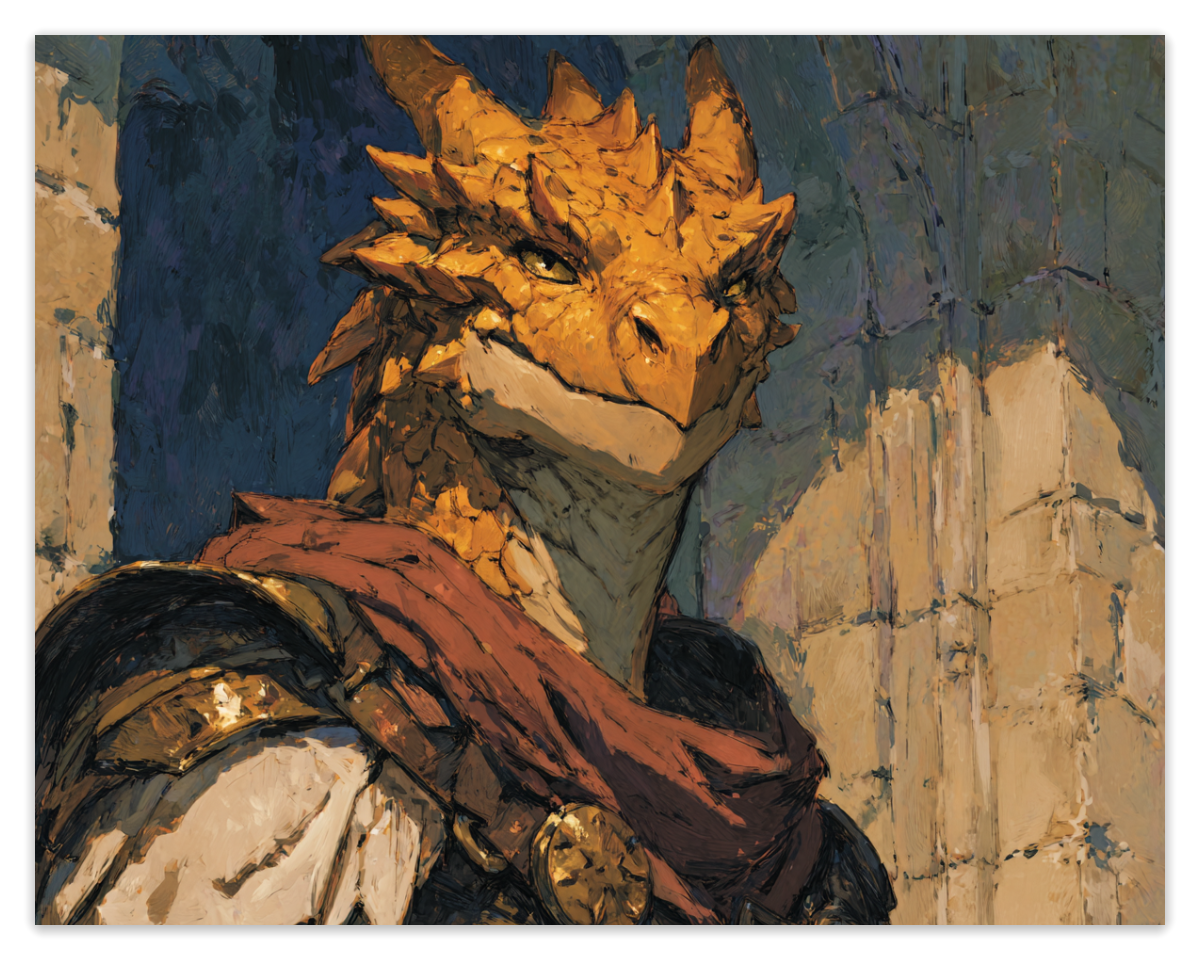
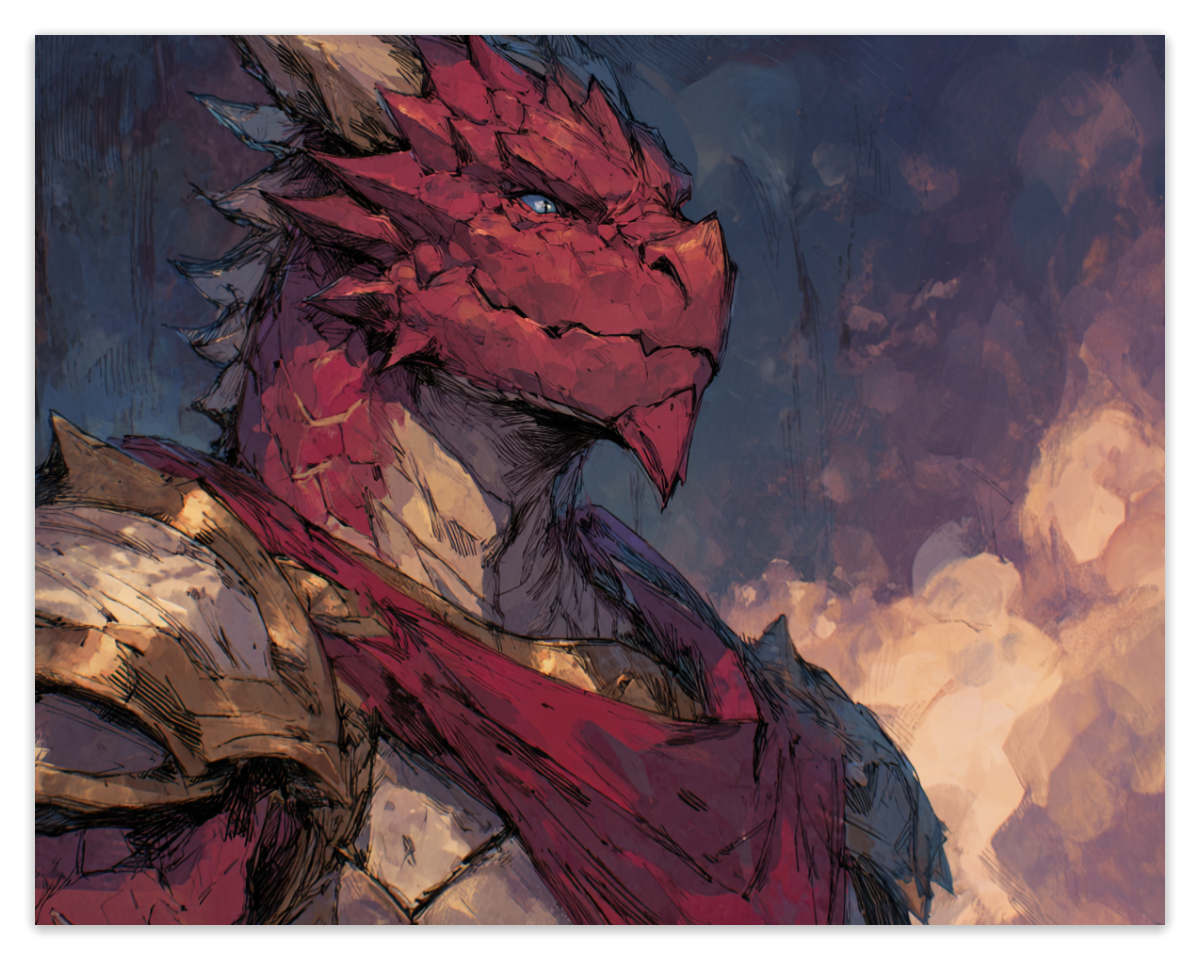
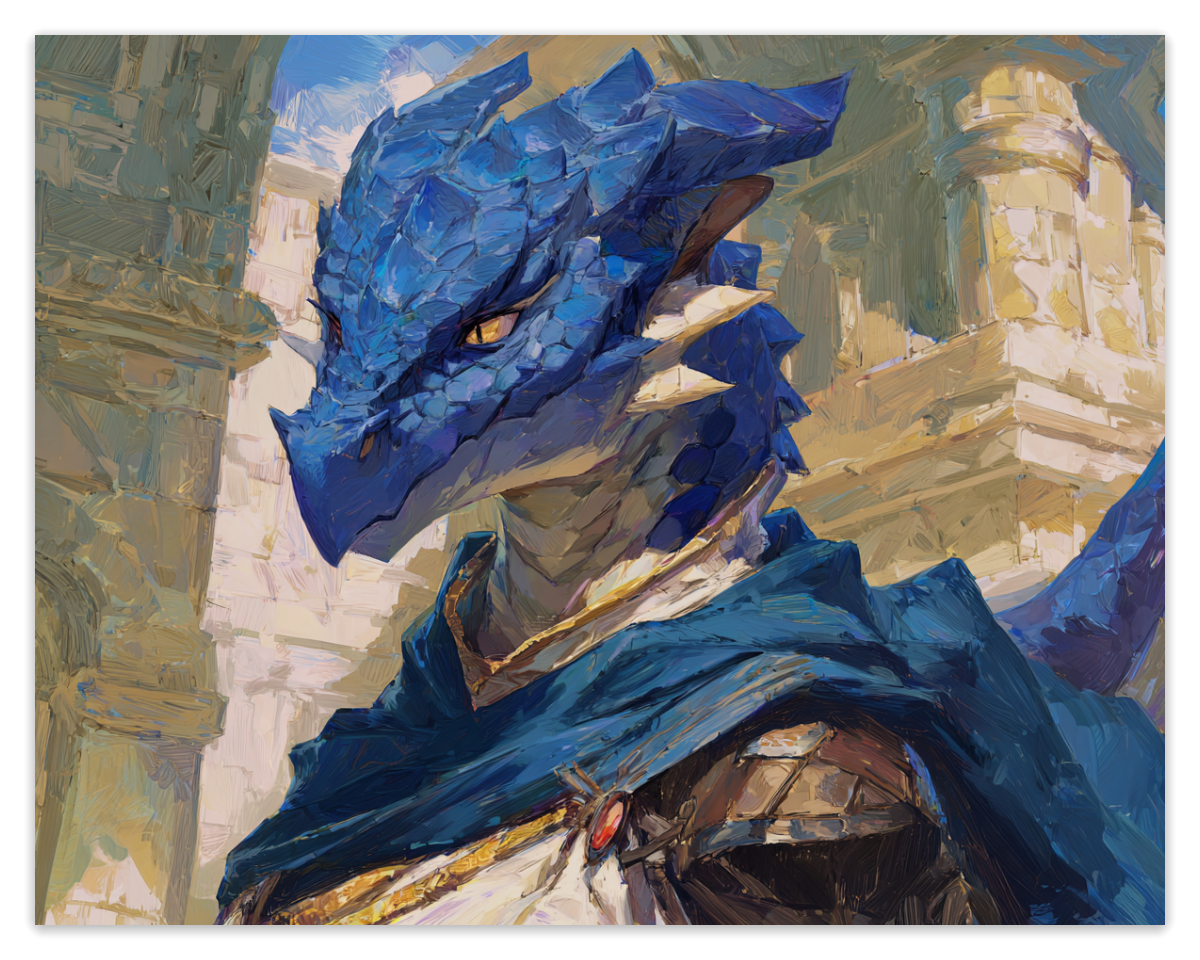
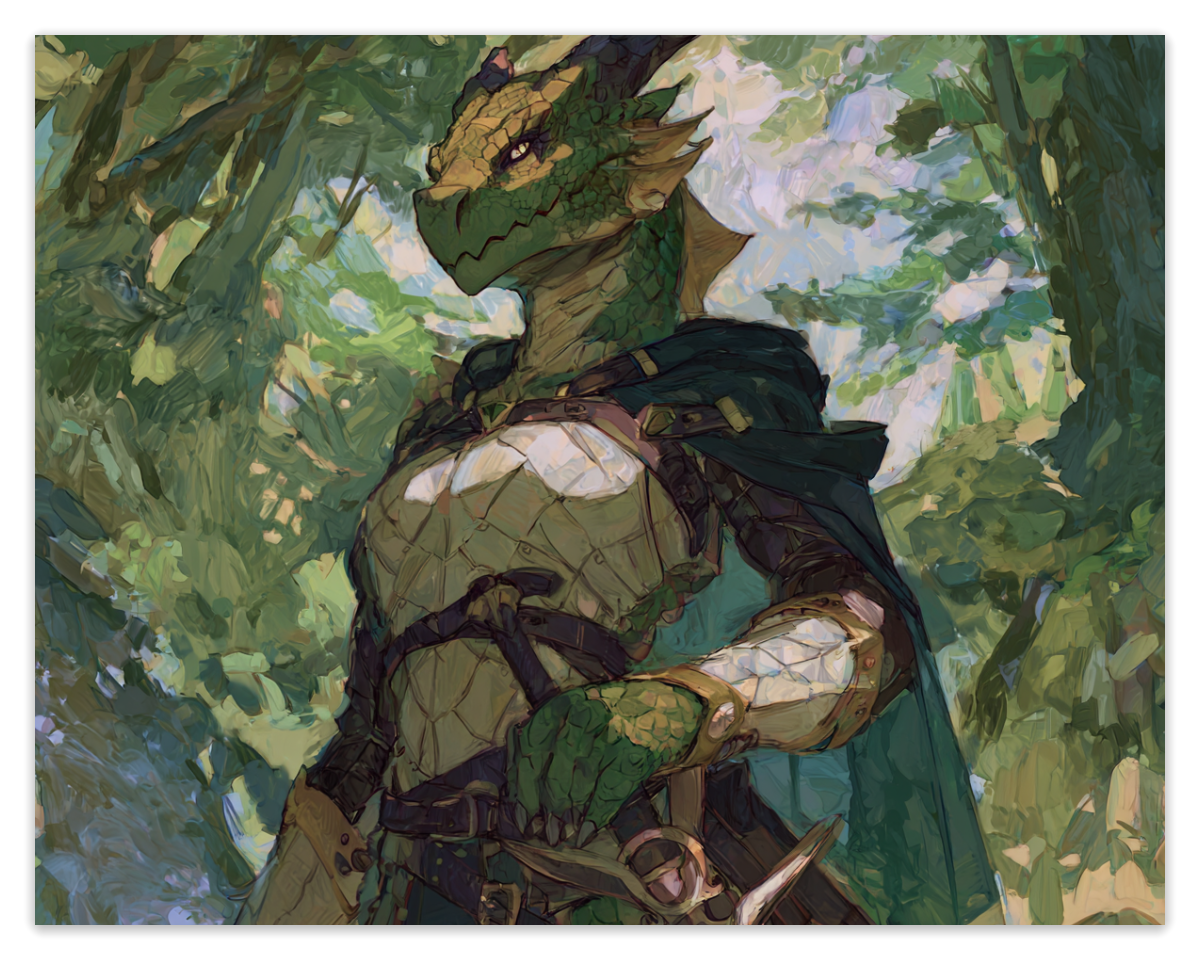
Scale coloration in Dracovians is not cosmetic variation. It is lineage: a direct inheritance from the specific dragon ancestor from whom a given Dracovian community descends. The dragons were twelve distinct lineages, each holding a specific cosmic function in the old world’s architecture, and each passing that function’s residue into the Dracovian communities that formed around them. A Dracovian’s scale color is the most visible expression of which of the twelve dragon lineages they descend from and what function their ancestors held.
The depth of lineage knowledge varies enormously. The oldest Kältian stronghold families maintain genealogical records tracing their lineage to specific named dragon ancestors. Most Dracovians outside the oldest families know their lineage name and coloration’s significance but not its content — the Galekian Empire’s theological framework systematically replaced the specific cosmic function understanding with a generalized draconic superiority narrative. The recovery of lineage knowledge is one of the quiet scholarly projects of the post-Rending era, carried by individual scholars, Skyberne Envoys, and the Worldkeeper lineages who have maintained the oldest pre-Galekian understanding.
The Eight Living Lineages
Eight of the twelve dragon lineages have living Dracovian descendants in the 4th Age. Each carries as inheritance a compressed expression of its ancestral dragon’s cosmic function.


The Three Extinct Lineages
Three dragon lineages have no living Dracovian descendants. Their lines ended entirely in the Elemental Cataclysm — meaning no Dracovian today carries their scale coloration, no community traces its heritage to them, and the cosmic functions they held are fully unguarded in the 4th Age. Dracovian scholars who have recovered enough of the old framework to understand what these lineages held describe this as the deepest wound in the world’s architecture.
The Aetharan held the veil itself — the membrane between the mortal sphere and the dimensional exterior. Their extinction is why veil-thin points have been increasing in frequency since Year 0 N.A., why the Shardbinders and Worldkeepers exist, and why no institution in the 4th Age can fully explain the trend. The Crystavel held the Prisma Current architecture, not users of Prismaturgy but the living maintenance of the network that Prismaturgy draws from. Their extinction is why certain Current configurations resist mapping and why the Ninefold Conservatory’s deepest theoretical registers remain incomplete. The Umbraeth held the threshold between the living and the dead. Their extinction is why that threshold has become inconsistent across the 4th Age — why practices that once worked reliably do not always work now.
The Nullveth Question
Culture & Society
Honor Reclaimed — The Central Orientation
The post-Rending Dracovian cultural framework is built around a single organizing question: are we worthy of what was entrusted to us? This is not asked abstractly. It is asked in every significant decision: political, military, personal. The distinction between stated values and demonstrated values is not philosophical in Dracovian culture. It is historical. It is what the civil war was about.
This produces a cultural relationship to honesty that outsiders sometimes experience as blunt to the point of discomfort. Dracovians generally say what they mean, hold others to what they have said, and treat the gap between stated and demonstrated values as a serious matter rather than a normal feature of social navigation. They are not naive about the complexity of circumstances — but they maintain that complexity does not excuse the gap; it just makes the gap harder to close.
The Kältian Communities — Primary Territory
The largest concentration of Dracovian communities in the 4th Age occupies the Kält badlands and adjacent terrain: the southern Auridian region where Prisma Current configurations run deep and strange and the terrain is hostile enough that the question of who else wants to be here rarely arises. Dracovian strongholds in Kält are built in regions of Prismal significance: not because Dracovians require Prisma-rich terrain to survive, but because their ancestral role as guardians was always oriented around the places where Prisma energy was most concentrated and most in need of stewardship.
The Kält Dracovian communities maintain careful relationships with the Dwarven cities in the region: the longest-established co-habitation relationship Dracovians have with any other people in the current era. It is functional and occasionally warm at the individual level. Institutionally, it is characterized by mutual respect for territorial boundaries and a shared interest in Kält’s stability that neither side needs to discuss explicitly.
The Skyberne Envoys
The Skyberne Envoys are the most visible face of contemporary Dracovian engagement with the wider world — young Dracovians who leave their communities for extended periods to serve as mediators, scholars, and occasionally investigators in situations where the combination of Dracovian Prismal capacity, longevity, and cultural authority is genuinely useful. The name references the old practice of draconic oversight from altitude: the sense that a Skyberne Envoy arrives at a situation with perspective that local actors cannot have.
In practice, Envoys operate as neutral parties in elemental disputes, as custodians of lost draconic knowledge, and as the primary interface between Dracovian communities and institutions like the Concordiax that Dracovians engage with selectively.
Physical Features
- Height & Build: 6’0”–7’0” average; heavily built relative to height; natural resilience is notable even without deliberate conditioning. Physical presence is substantial even by tall-race standards.
- Scales: Full-body coverage in overlapping patterns; coloration determined entirely by ancestral dragon lineage. The eight living lineages produce a palette ranging from crimson and ember through cobalt and navy, forest green, obsidian and gray, pale gold and ivory, deep teal, ash-silver, and amber-gold. Void-black Nullveth coloration appears rarely and carries complex cultural associations.
- Crest: Prominent bony ridge formations running from crown to back of neck; unique to the individual. Shape, pattern, and size are used in Dracovian culture as an identifying feature analogous to a face. Crests often reflect lineage, elemental affinity, or significant life events in their development.
- Eyes: Vertically slit pupils in vivid colors often matching or complementing scale coloration. Low-light vision well above humanoid baseline. The quality described as draconic presence begins in the eyes: the specific sensation of being regarded by something that is assessing you completely.
- Tail: Powerful and muscular; aids balance and agility. Fully prehensile in many individuals; tapers to a point with a fin-membrane in some lineages.
- Hands: Five-fingered with short, non-retractable claws. Fine manipulation intact; grip strength considerably above humanoid baseline.
- Voice: Vocal range extends below and above standard humanoid hearing. When speaking Draconic at full resonance, the subharmonic component is felt as much as heard: a Prismal vibration perceptible in the Currents around a speaker. This is not typically deployed in casual conversation, but its presence is perceptible.
Alignment
Dracovians trend toward lawful alignments, not because Dracovian culture is deferential to external authority, but because their internal code is demanding and consistently applied. A lawful Dracovian is not following rules set by institutions. They are following a standard they have set for themselves, which happens to be stricter than most institutional rules.
The Galekian Empire’s dominant faction was also lawful, in the sense that it operated through law and institutional structure. Post-Rending Dracovian culture carries the awareness that lawfulness is not the same as goodness, that law can be used to produce outcomes that are the opposite of what the underlying values required. The cultural response is not to distrust law, but to insist that law must be evaluated by what it produces, not by whether it was followed correctly.
Affinity Disposition
Dracovian Spiritual Expression distribution is the most extreme skew of any mortal ancestry in Midralis — Fire, Metal, and Electricity as co-dominant expressions, with Thunder elevated. Notably, Dracovians are the only mortal ancestry with a confirmed above-baseline Empyreal attunement (2.0), understood by Dracovian scholars as the residue of the dragons’ cosmological function. Aqua and Ice are notably suppressed; Nature is lower than most terrestrial races.
| Spiritual Expression | Distribution (%) |
|---|---|
| Nature | 6.0 |
| Wind | 6.0 |
| Anima | 7.0 |
| Mind | 7.5 |
| Fire | 11.5 |
| Metal | 10.5 |
| Earth | 7.5 |
| Aqua | 5.0 |
| Electricity | 10.0 |
| Ice | 5.5 |
| Thunder | 8.5 |
| Darkness | 6.5 |
| Light | 6.5 |
| Empyreal | 2.0 |
The Empyreal value of 2.0 is the sole exception to the standard 0.5 mortal baseline across Iphexar ancestries, reflecting Dracovian unique cosmological inheritance.
Conflicts & Connections
With the Concordiax
Institutionally complicated. The Concordiax’s Verbum licensing framework does not handle Dracovian Prismal capacity well at the upper ranges, and Dracovians regard practices rooted in their draconic ancestry as operating outside the Conservatory’s legitimate jurisdiction. The current arrangement is a negotiated ambiguity: Dracovians who choose to engage with the Ninefold Conservatory’s framework do so voluntarily; those who do not are not formally in violation of anything, because the Concordiax has not pressed the question in a way that would require a definitive answer. Both sides understand that pressing it would produce a conflict neither wants resolved on the other’s terms.
With the Sskar
One of the few inter-ancestry relationships that operates from shared cosmic understanding rather than political calculation. Both peoples carry guardian functions that predate the current world’s institutions, both have been shaped by catastrophic loss, and both maintain obligations that the world at large does not recognize as obligations. This shared structure creates a quality of mutual recognition that does not require explanation. It does not produce automatic alliance, their specific functions and territorial concerns rarely intersect directly — but it produces a quality of interaction that both peoples describe as different from their relationships with peoples who do not share that structural orientation.
With Kält and the Dwarves
The most stable long-term co-habitation relationship Dracovians currently have with any other people. Functional, occasionally warm at the individual level, institutionally characterized by mutual respect for territorial boundaries and shared investment in Kält’s stability. Dwarven communities have long memories and remember the Galekian period, but they also have long memories of the Rending and of what the honorable faction chose. The relationship is not uncomplicated. It is, in the current era, genuinely good.
With the Shardbinders
Historically complex: the Galekian Empire systematically destroyed or absorbed Shardbinder sites as competing sources of authority, while the honorable faction included Dracovians who maintained relationships with Shardbinder scholars and actively protected what sites they could during the Rending. In the 4th Age the relationship is one of cautious mutual respect. Shardbinders acknowledge the distinction between Galekian-era and post-Rending Dracovians; Dracovians do not pretend that distinction erases the historical record. Both institutions are currently interested in the same Galekian-era archives, for reasons that overlap more than either has fully disclosed to the other.
With the Worldkeepers
The deepest institutional relationship in Dracovian history, and the most painful loss. Dracovian Worldkeeper lineages — families carrying the investigative tradition and veil-sensitivity techniques from the Accord-era institution — are the oldest surviving thread of Worldkeeper knowledge in Midralis. These lineages know this. Some are aware of each other. None have reconstituted anything resembling unified command. The question of whether the Worldkeeper mandate is still being fulfilllled, in any meaningful sense, by the Dracovian lineages that carry it is one those lineages discuss quietly and with considerable weight.
With the Broader Auridian World
The Galekian Empire fell fourteen centuries ago. Some communities still remember, not abstractly, but in specific inherited grievances tied to specific things the Empire did in specific places. A Dracovian traveling through Auridia in the 4th Age moves through a landscape of variable reception: genuine respect in some regions, studied neutrality in others, and in a few places an inherited wariness that three thousand years of post-Rending conduct has not fully discharged. Dracovians who are surprised by the wariness have not been paying attention to their own history.
Language Notes
Draconic (ancestral language) is preserved in Dracovian communities as both a living tongue and a cultural institution. Draconic at full resonance is not simply speech: the subharmonic component produced by Dracovian vocal anatomy creates a Prismal vibration that practitioners can feel in the Currents around a speaker. Historical Draconic texts carry legal and theological weight in Dracovian communities: the draconic covenant was spoken in Draconic, and the specific phrasing matters in ways that translation cannot fully preserve.
Draconic is not a secret language. Dracovians do not prevent others from learning it. But a non-Dracovian who speaks Draconic fluently has, in Dracovian cultural terms, engaged seriously with something Dracovians take seriously. And this produces a different quality of reception than most other demonstrations of cross-cultural engagement. The Ninefold Conservatory maintains a Draconic study program. Dracovians regard Conservatory-trained speakers with a mixture of appreciation for the effort and mild skepticism about whether the institutional context produces genuine understanding of what the language is for.
Systems & Campaigns
- Pathfinder 2e Dragons (Battlezoo) › Dracovians
- D&D 5e+ Dragonborn › Dracovian
- Draw Steel TBD
- Daggerheart TBD
- Realmfall Saga Active